
Wasp Control
2 hours emergency response across London — from £159
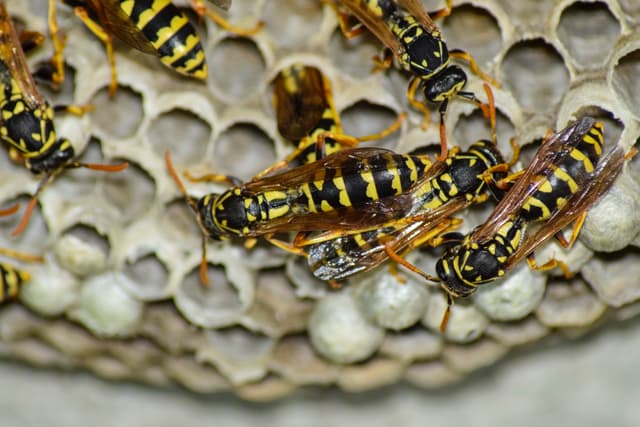
Common and German wasps become aggressive in late summer, posing serious sting risks around London properties.
How to identify wasps
- Size
- Workers 12–17mm, queens up to 20mm
- Colour
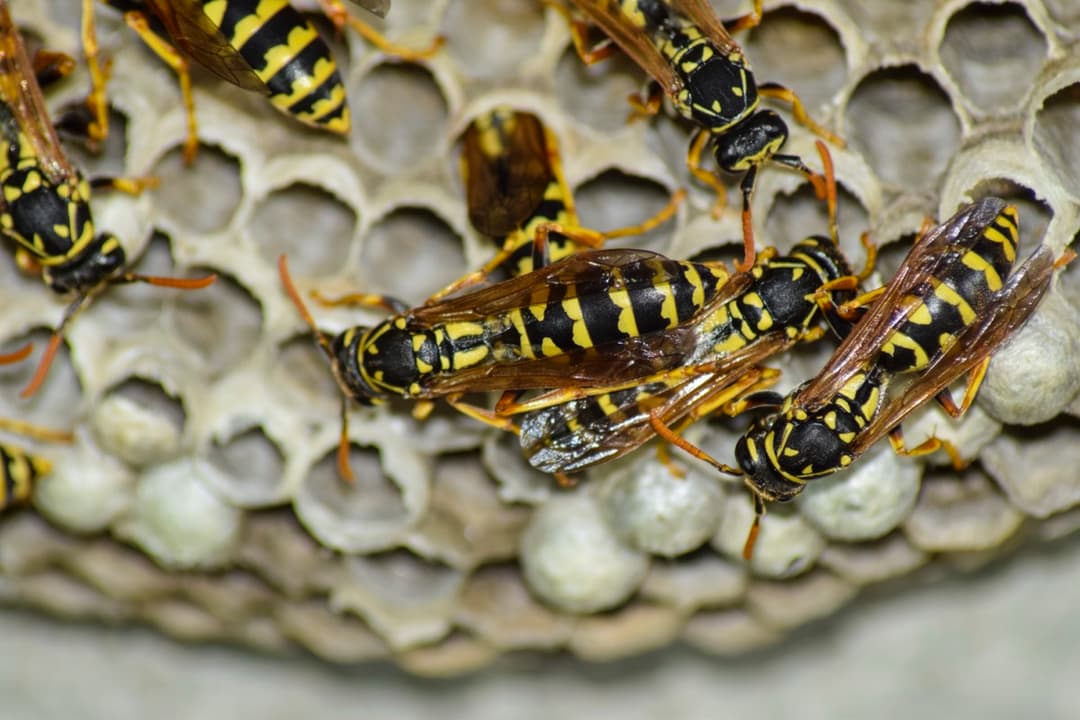
- Bright yellow with sharp black banding
- Active
- Peak activity June-September, most aggressive August-September
- Smooth body with a narrow, defined waist
- Papery grey nest, from golf-ball to football-sized
- Steady traffic in and out of one point on the roofline
- Aggressive close to the nest, especially late summer
Commonly confused with: Often confused with honey bees. Wasps are hairless, brightly banded and have a pinched waist; bees are furry and browner.
The wasp lifecycle
Queen emerges
March–AprilFounds the nest alone
First workers
May–JuneNest expands rapidly
Peak colony
July–AugustUp to 6,000 wasps
Decline
September–OctoberWasps turn to sugar and become aggressive
Signs of wasps in your property
Health risks and property damage
Health risks
- Painful stings with venom injection
- Severe allergic reactions (anaphylaxis)
- Multiple stings from single wasp
- Secondary infections from scratching
- Potential fatalities in allergic individuals
Property damage
- Structural damage from nest building
- Staining from nest materials
- Garden fruit damage
- Outdoor activity disruption
What to do before we arrive
Do this
- Keep everyone well clear of the entry point, especially children and pets
- Close windows on the side of the property nearest the nest
- Note exactly where wasps are entering — it speeds up treatment
- Call promptly; nests grow quickly through summer
Avoid this
- Do not block the entry hole — wasps will chew through into the room
- Do not attempt a DIY spray on a nest above ground level
- Do not disturb the nest at dusk when the whole colony is home
- Do not swat wasps near the nest; crushed wasps release an alarm pheromone
How we treat wasps
Professional nest treatment with specialized equipment and protective gear
Every treatment includes a follow-up visit and a written prevention plan. Our success rate on wasps is 100%, and we attend within 2 hours emergency of your call.
Keeping wasps out for good
Where we find them
Wasps facts
Wasp Control near you
We treat wasps across central London. Pick your area for local response times and pricing.
Frequently asked questions
How quickly can you treat wasps in London?
We aim to attend within 2 hours emergency of your call anywhere in London, with a 24/7 line for urgent cases.
How much does wasp treatment cost?
Wasps treatment starts from £159. The final price depends on the size of the property and the extent of the infestation, and we confirm it in writing after the survey — there is no call-out charge.
How do I know if I have wasps?
The most reliable signs are: Increased wasp activity around property; Visible nest in eaves/trees; Chewed wood pulp (nest material); Wasps entering/exiting specific areas. If you are seeing any of these, book a survey rather than waiting — wasps rarely resolve on their own.
How do you treat wasps?
Professional nest treatment with specialized equipment and protective gear Our success rate on wasps is 100%, and treatment includes a follow-up visit and a written prevention plan.
Are wasps dangerous?
Wasps are rated high risk. The main health concerns are painful stings with venom injection, severe allergic reactions (anaphylaxis), multiple stings from single wasp. They can also cause structural damage from nest building.
How can I stop wasps coming back?
Seal potential nesting sites; Remove food sources (fallen fruit); Cover food and drinks outdoors. We include a prevention plan with every treatment and can arrange scheduled monitoring for properties that have had repeat problems.