
Fly Control
24 hours response across London — from £149
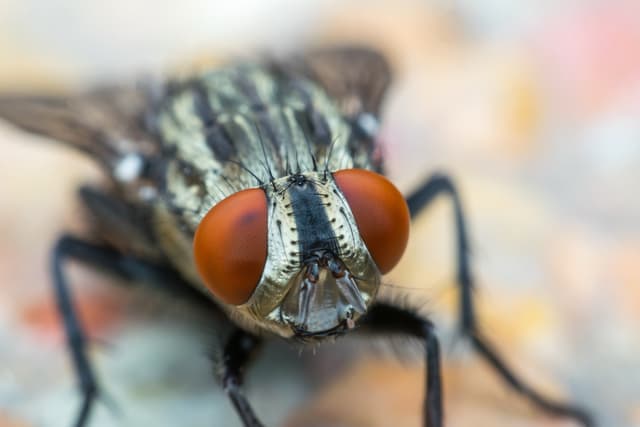
House flies, fruit flies, and drain flies spread disease and contaminate food in London properties.
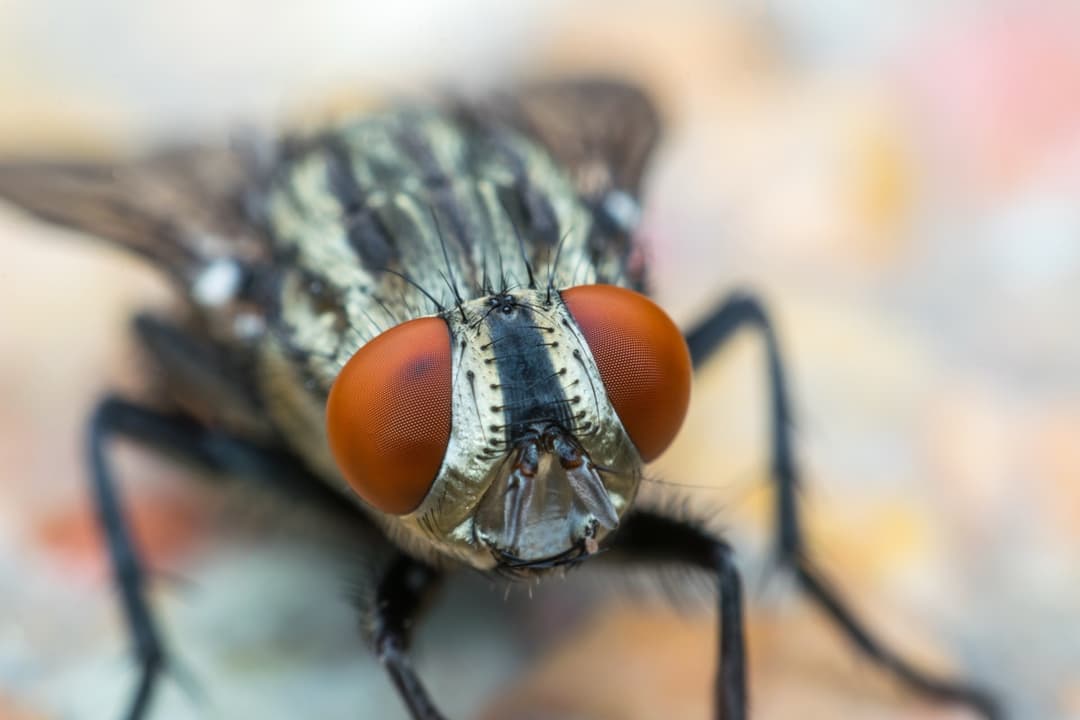
How to identify flies
- Size
- House flies 6–7mm; blow flies 10–14mm
- Colour
- Grey with dark stripes; blow flies metallic blue or green
- Active
- Peak activity summer months, some species year-round
- Four dark stripes on the thorax of a house fly
- Clusters at windows and around light fittings
- Small dark specks on surfaces and light shades
- Maggots indicate a breeding source within a few metres
Commonly confused with: Cluster flies and house flies are often reported interchangeably. Cluster flies arrive in autumn in large numbers and are sluggish; house flies are active year-round.
The fly lifecycle
Egg
8–20 hoursLaid in batches of 100–150
Larva (maggot)
3–7 daysFeeds on the breeding material
Pupa
3–6 daysDark brown capsule, often away from the source
Adult
2–4 weeksCan lay within 48 hours of emerging
Signs of flies in your property
Health risks and property damage
Health risks
- Disease transmission (over 100 pathogens)
- Food contamination
- Salmonella and E.coli spread
- Dysentery and typhoid transmission
Property damage
- Food spoilage and contamination
- Reputation damage for food businesses
- Unpleasant odors and staining
- Customer complaints and health violations
What to do before we arrive
Do this
- Find and remove the breeding source — bins, drains, or something dead in a void
- Clean bin areas with a degreaser, not just water
- Check drains and gullies for organic build-up
- Keep a note of which room they cluster in
Avoid this
- Do not just spray adults; the source will keep producing more
- Do not ignore a sudden indoor swarm — it usually means a dead animal in a void
- Do not leave standing water in trays or drip pans
- Do not rely on window fly-papers as a control method
How we treat flies
Integrated approach using traps, residual sprays, and breeding site elimination
Every treatment includes a follow-up visit and a written prevention plan. Our success rate on flies is 88%, and we attend within 24 hours of your call.
Keeping flies out for good
Where we find them
Flies facts
Fly Control near you
We treat flies across central London. Pick your area for local response times and pricing.
Frequently asked questions
How quickly can you treat flies in London?
We aim to attend within 24 hours of your call anywhere in London, with a 24/7 line for urgent cases.
How much does fly treatment cost?
Flies treatment starts from £149. The final price depends on the size of the property and the extent of the infestation, and we confirm it in writing after the survey — there is no call-out charge.
How do I know if I have flies?
The most reliable signs are: Adult flies around food/waste areas; Maggots in organic matter; Dark spots (fly specks) on surfaces; Increased activity around bins. If you are seeing any of these, book a survey rather than waiting — flies rarely resolve on their own.
How do you treat flies?
Integrated approach using traps, residual sprays, and breeding site elimination Our success rate on flies is 88%, and treatment includes a follow-up visit and a written prevention plan.
Are flies dangerous?
Flies are rated medium risk. The main health concerns are disease transmission (over 100 pathogens), food contamination, salmonella and e.coli spread. They can also cause food spoilage and contamination.
How can I stop flies coming back?
Proper waste management; Install fly screens; Eliminate breeding sites. We include a prevention plan with every treatment and can arrange scheduled monitoring for properties that have had repeat problems.