
Clothes Moth Control
48 hours response across London — from £169
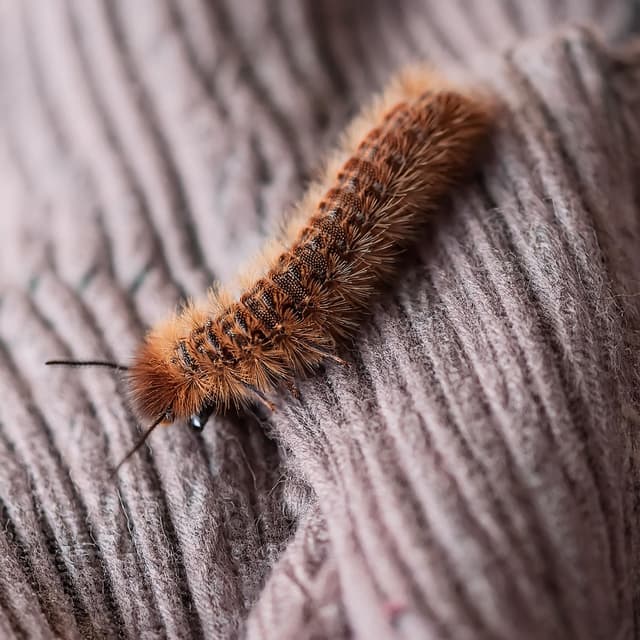
Webbing clothes moths and case-bearing clothes moths cause extensive damage to natural fiber clothing and furnishings.
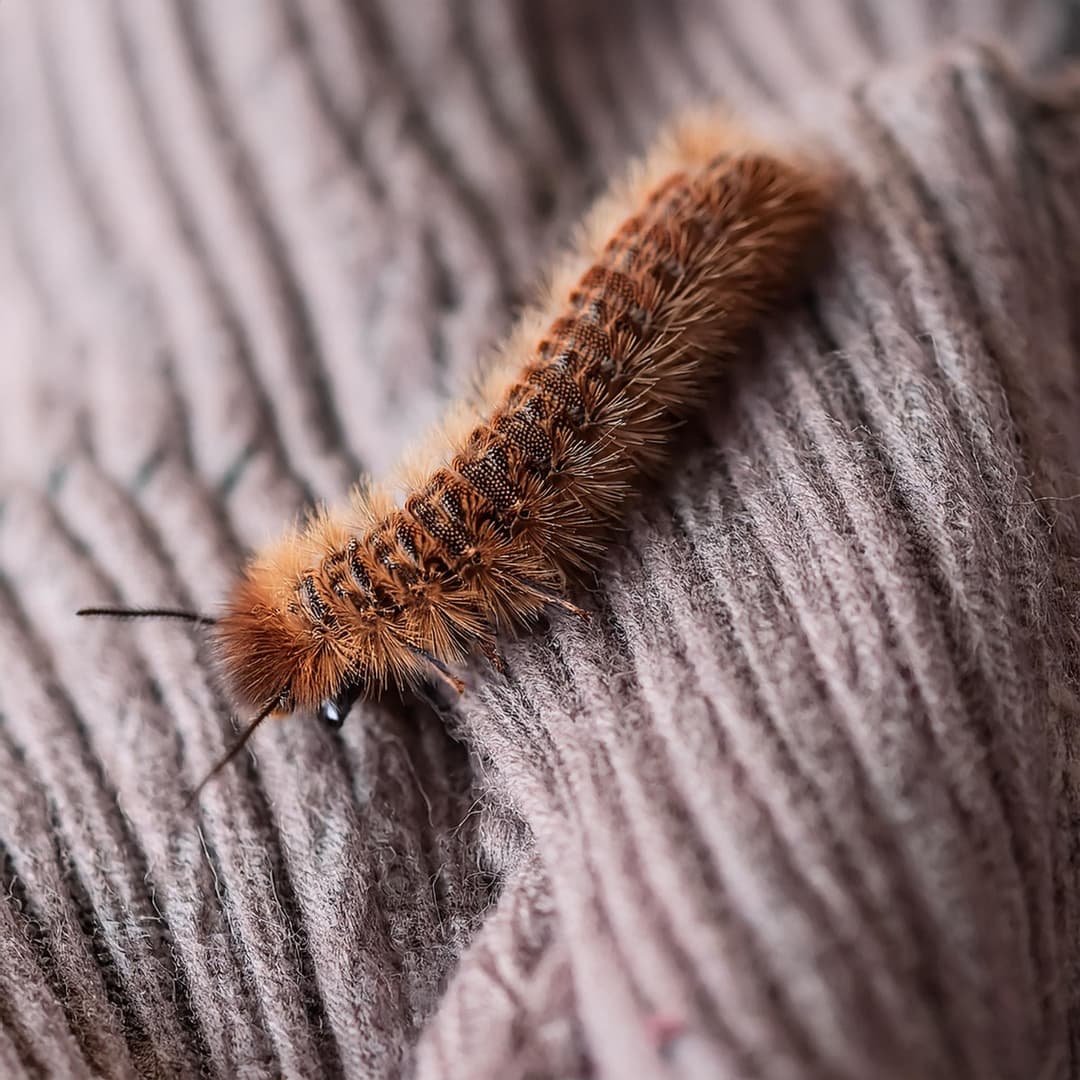
How to identify clothes moths
- Size
- Adults 6–8mm wingspan; larvae up to 10mm
- Colour
- Adults straw-gold; larvae cream with a brown head
- Active
- Year-round indoors, peak activity spring/summer
- Adults scuttle rather than fly towards light
- Irregular holes in wool, cashmere and silk
- Silken tubes or cases in undisturbed folds
- Damage concentrated under collars, cuffs and in carpet edges
Commonly confused with: Confused with food moths, which are larger and more strongly patterned. Clothes moths avoid light; pantry moths fly towards it.
The clothes moth lifecycle
Egg
4–10 daysLaid directly on natural fibres
Larva
6 weeks to 2 yearsThe only stage that causes damage
Pupa
8–10 daysIn a silken case within the fabric
Adult
2–4 weeksDoes not feed; exists only to breed
Signs of clothes moths in your property
Health risks and property damage
Health risks
- Minimal direct health risks
- Allergic reactions to moth scales
- Respiratory irritation (sensitive individuals)
Property damage
- Expensive clothing damage
- Carpet and rug destruction
- Curtain and upholstery holes
- Irreplaceable textile damage
What to do before we arrive
Do this
- Empty affected wardrobes completely before we arrive
- Freeze small affected items for 72 hours to kill eggs and larvae
- Vacuum carpet edges and under heavy furniture thoroughly
- Check stored items, rugs and under-bed storage as well as wardrobes
Avoid this
- Do not rely on cedar or lavender alone — they deter but do not kill
- Do not return cleaned clothes to an untreated wardrobe
- Do not overlook carpets and underlay; they are a common reservoir
- Do not treat only the visible damage; larvae are usually elsewhere too
How we treat clothes moths
Targeted insecticide treatment combined with pheromone monitoring and prevention advice
Every treatment includes a follow-up visit and a written prevention plan. Our success rate on clothes moths is 94%, and we attend within 48 hours of your call.
Keeping clothes moths out for good
Where we find them
Clothes Moths facts
Clothes Moth Control near you
We treat clothes moths across central London. Pick your area for local response times and pricing.
Frequently asked questions
How quickly can you treat clothes moths in London?
We aim to attend within 48 hours of your call anywhere in London, with a 24/7 line for urgent cases.
How much does clothes moth treatment cost?
Clothes Moths treatment starts from £169. The final price depends on the size of the property and the extent of the infestation, and we confirm it in writing after the survey — there is no call-out charge.
How do I know if I have clothes moths?
The most reliable signs are: Small holes in natural fiber clothing; Adult moths flying around wardrobes; Silky webbing on fabrics; Small caterpillars in clothing. If you are seeing any of these, book a survey rather than waiting — clothes moths rarely resolve on their own.
How do you treat clothes moths?
Targeted insecticide treatment combined with pheromone monitoring and prevention advice Our success rate on clothes moths is 94%, and treatment includes a follow-up visit and a written prevention plan.
Are clothes moths dangerous?
Clothes Moths are rated medium risk. The main health concerns are minimal direct health risks, allergic reactions to moth scales, respiratory irritation (sensitive individuals). They can also cause expensive clothing damage.
How can I stop clothes moths coming back?
Regular vacuuming of wardrobes; Cedar blocks and lavender sachets; Proper clothing storage. We include a prevention plan with every treatment and can arrange scheduled monitoring for properties that have had repeat problems.