
Termite Control
12 hours response across London — from £499
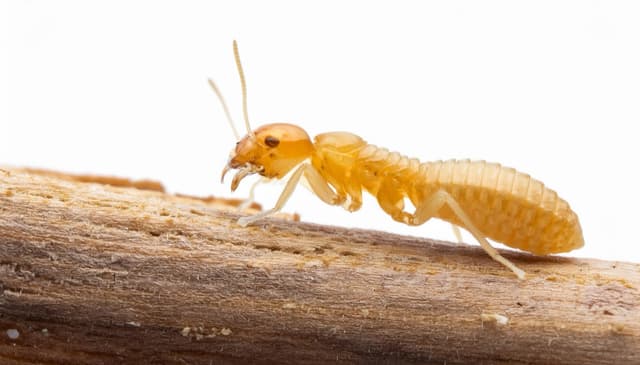
Wood-destroying insects that can cause catastrophic structural damage to London properties.
How to identify termites
- Size
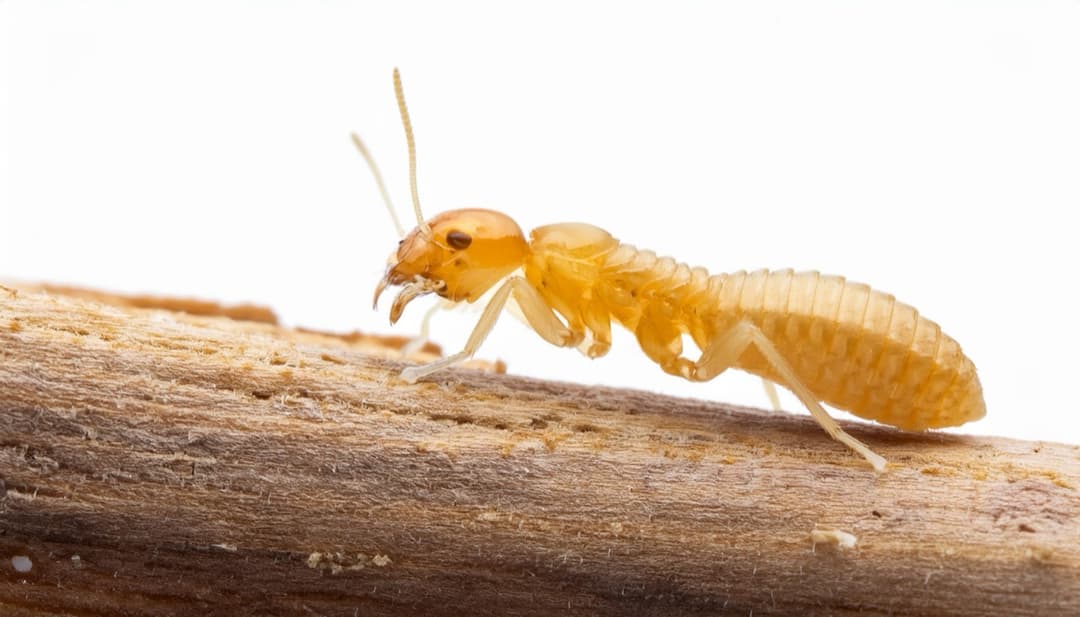
- Workers 3–5mm; swarmers up to 10mm
- Colour
- Workers creamy white; swarmers dark brown
- Active
- Active year-round, swarming in spring
- Straight antennae and a uniform, un-pinched waist
- Mud tubes running up brickwork and foundations
- Discarded wings near windowsills after a swarm
- Hollow-sounding timber and blistered paint
Commonly confused with: Very commonly confused with flying ants. Termites have straight antennae, equal-length wings and no waist; ants have elbowed antennae and a pinched waist.
The termite lifecycle
Egg
26–30 daysLaid continuously by the queen
Nymph
Several monthsDevelops into worker, soldier or swarmer
Worker
1–2 yearsDoes all the feeding and tunnelling
Swarmer
SeasonalLeaves to found a new colony
Signs of termites in your property
Health risks and property damage
Health risks
- No direct health risks
- Structural collapse hazard
- Respiratory irritation from treatment
Property damage
- Severe structural damage
- Foundation weakening
- Expensive repair costs
- Complete timber destruction
What to do before we arrive
Do this
- Keep any discarded wings or insects for identification
- Photograph mud tubes before disturbing them
- Reduce soil and mulch contact with the damp-proof course
- Book a survey immediately — damage compounds quietly
Avoid this
- Do not break open mud tubes; it scatters the colony
- Do not treat with a surface spray — it never reaches the nest
- Do not delay a survey; structural repair costs far more than treatment
- Do not stack firewood against the building
How we treat termites
Comprehensive termiticide treatment and ongoing monitoring systems
Every treatment includes a follow-up visit and a written prevention plan. Our success rate on termites is 97%, and we attend within 12 hours of your call.
Keeping termites out for good
Where we find them
Termites facts
Frequently asked questions
How quickly can you treat termites in London?
We aim to attend within 12 hours of your call anywhere in London, with a 24/7 line for urgent cases.
How much does termite treatment cost?
Termites treatment starts from £499. The final price depends on the size of the property and the extent of the infestation, and we confirm it in writing after the survey — there is no call-out charge.
How do I know if I have termites?
The most reliable signs are: Mud tubes on walls; Hollow-sounding wood; Discarded wings near windows; Soft clicking sounds in walls. If you are seeing any of these, book a survey rather than waiting — termites rarely resolve on their own.
How do you treat termites?
Comprehensive termiticide treatment and ongoing monitoring systems Our success rate on termites is 97%, and treatment includes a follow-up visit and a written prevention plan.
Are termites dangerous?
Termites are rated high risk. The main health concerns are no direct health risks, structural collapse hazard, respiratory irritation from treatment. They can also cause severe structural damage.
How can I stop termites coming back?
Eliminate moisture sources; Regular structural inspections; Remove wood-to-soil contact. We include a prevention plan with every treatment and can arrange scheduled monitoring for properties that have had repeat problems.