
Fruit Fly Control
24 hours response across London — from £119
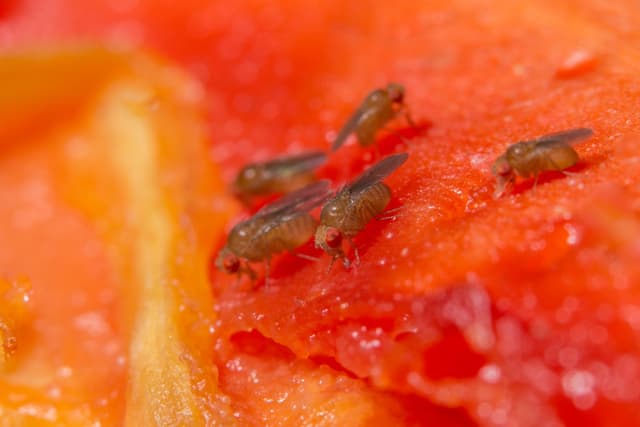
Small flies that breed in fermented fruits and vegetables, common in kitchens and food preparation areas.
How to identify fruit flies
- Size
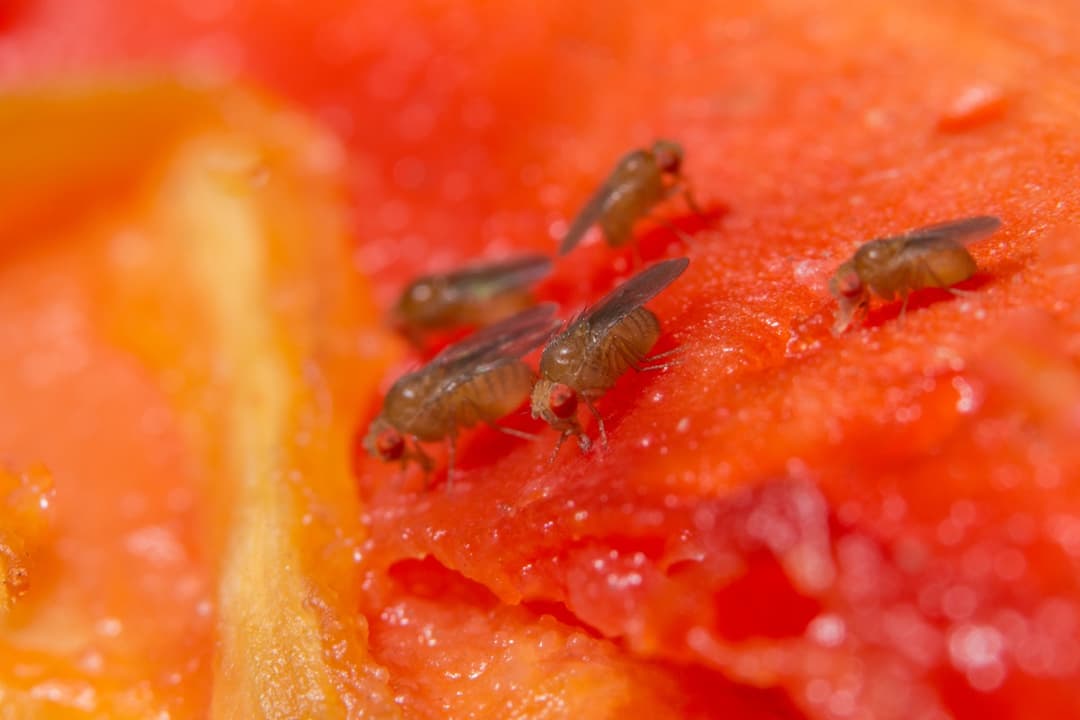
- 2–4mm
- Colour
- Tan-brown body with distinctive red eyes
- Active
- Year-round indoors, peak in warm weather
- Hover around ripening or fermenting fruit
- Bright red eyes visible even at small size
- Breed in drains, drip trays and recycling
- Appear within days of a spill or overripe fruit
Commonly confused with: Confused with drain flies, which are fuzzy and moth-like. Fruit flies are smooth with red eyes.
The fruit fly lifecycle
Egg
24 hoursUp to 500 laid on fermenting material
Larva
4–5 daysFeeds on yeast in the surface film
Pupa
4–5 daysOften on a dry surface nearby
Adult
2–4 weeksCan breed within 2 days of emerging
Signs of fruit flies in your property
Health risks and property damage
Health risks
- Food contamination
- Bacterial transmission
- E.coli and Salmonella spread
- Kitchen hygiene issues
Property damage
- Food spoilage
- Restaurant health violations
- Customer complaints
- Rapid reproduction
What to do before we arrive
Do this
- Remove overripe fruit and empty the recycling
- Clean drains and floor gullies with an enzyme product
- Check drip trays under fridges and beer lines
- Wipe down bin lids and the area beneath them
Avoid this
- Do not just spray adults — the breeding film survives
- Do not pour bleach down drains expecting it to clear the biofilm
- Do not overlook mop heads and cleaning buckets
- Do not leave glasses or bottles standing overnight in bars
How we treat fruit flies
Source elimination with targeted fly traps and sanitation
Every treatment includes a follow-up visit and a written prevention plan. Our success rate on fruit flies is 90%, and we attend within 24 hours of your call.
Keeping fruit flies out for good
Where we find them
Fruit Flies facts
Fruit Fly Control near you
We treat fruit flies across central London. Pick your area for local response times and pricing.
Frequently asked questions
How quickly can you treat fruit flies in London?
We aim to attend within 24 hours of your call anywhere in London, with a 24/7 line for urgent cases.
How much does fruit fly treatment cost?
Fruit Flies treatment starts from £119. The final price depends on the size of the property and the extent of the infestation, and we confirm it in writing after the survey — there is no call-out charge.
How do I know if I have fruit flies?
The most reliable signs are: Small flies near fruit bowls; Hovering around drains; Visible in kitchen areas; Sweet fermenting odors. If you are seeing any of these, book a survey rather than waiting — fruit flies rarely resolve on their own.
How do you treat fruit flies?
Source elimination with targeted fly traps and sanitation Our success rate on fruit flies is 90%, and treatment includes a follow-up visit and a written prevention plan.
Are fruit flies dangerous?
Fruit Flies are rated medium risk. The main health concerns are food contamination, bacterial transmission, e.coli and salmonella spread. They can also cause food spoilage.
How can I stop fruit flies coming back?
Store fruit in refrigerator; Clean spills immediately; Empty bins regularly. We include a prevention plan with every treatment and can arrange scheduled monitoring for properties that have had repeat problems.