

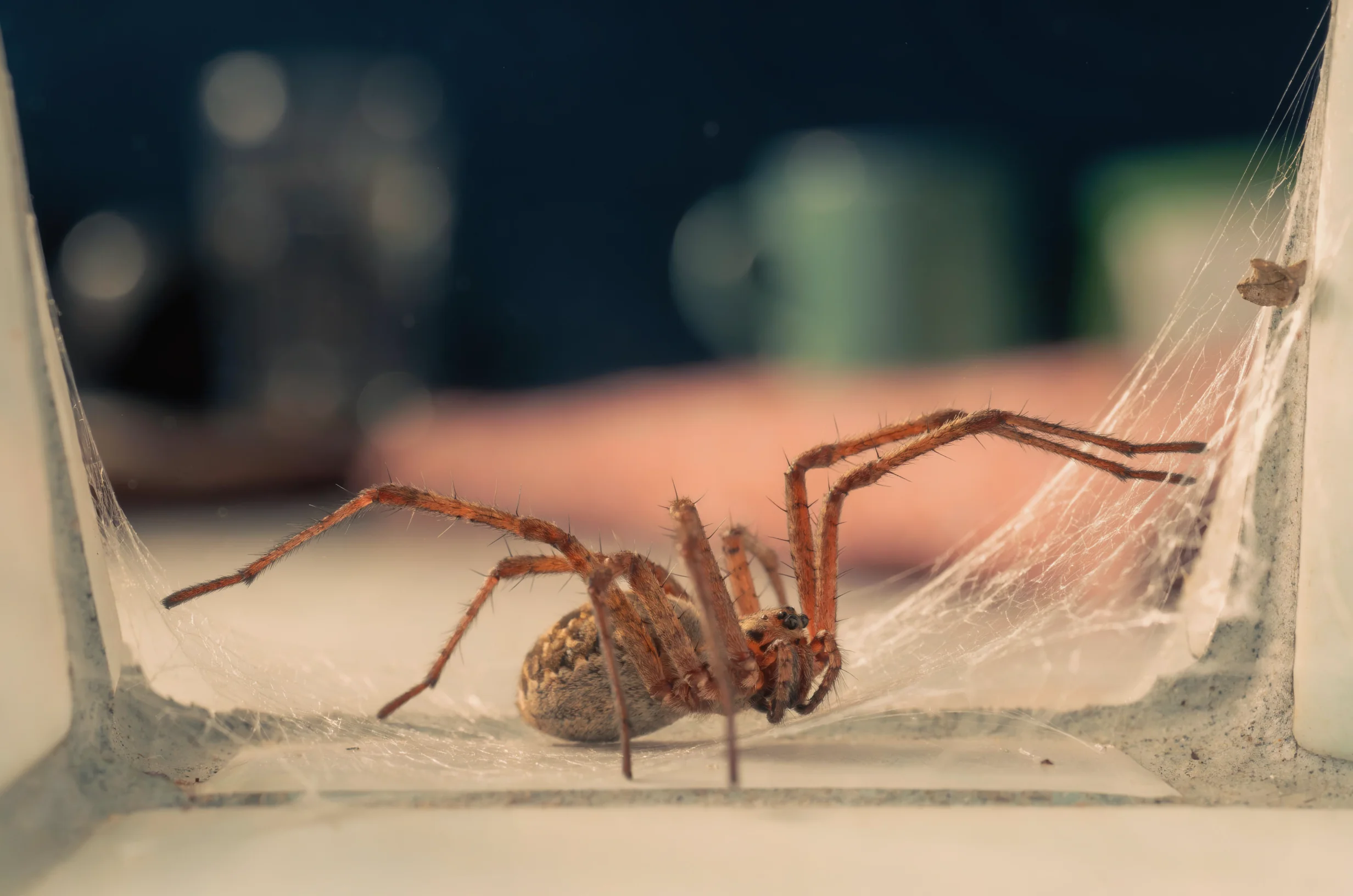
Spider season 2026 is already underway across Britain, and this year the reports have arrived with an unusual detail attached. A warm spring produced more insects, more insects produced more spiderlings that survived to adulthood, and by early September households from Dorset to Derby were describing an influx rather than the usual trickle. Dr David Gee, a zoology lecturer at the University of Derby, told BBC News that the hot conditions earlier in the year had led to higher insect populations, which gave spiders more food and a higher survival rate.
For anyone searching for the most common house spiders in the UK, the practical question underneath the headlines is simpler: what is actually on my skirting board, and does it matter? In central London the answer is shaped by something the national picture misses. Period properties, basement flats, shared stairwells and the urban heat island all change which species turn up, when they turn up, and how many of them you see.
What is happening in the 2026 spider season
Spider season usually starts at the end of August and runs until mid-October or November. Professor Richard Hart, who spoke to BBC Newsround about the pattern, put it plainly: "Spider season varies a little from year to year, most likely because of the weather, but by the start of September it is usually well underway."
The mechanism behind the sightings is not invasion. It is courtship. The spiders crossing your living room floor in September and October are mostly adult males, wandering in search of females. The Wildlife Trusts describe giant house spiders as misunderstood autumn visitors, noting that the ones you notice darting across the carpet are usually males on the search for a mate, and that most of the time the species is tucked away behind furniture, under floorboards or in loft corners.
Two things separate this year from a typical one. First, the spring warmth. Second, a longer-term shift. Dr Gee said spiders usually found in the south are heading north into more homes across the UK, describing it as a function of global warming. That matters in London because the capital already sits at the warm end of the national range.
Confirmed facts and reported signals
Confirmed: spider season runs from late August into November, and male spiders become more active in autumn because they are searching for females. Confirmed: a warm spring in 2026 raised insect numbers, which raised spider survival rates. Reported: that this adds up to an unusually visible year. The "influx" framing comes from one expert's assessment rather than a national survey, so treat it as a strong signal rather than a measured count.
The species you are most likely to meet indoors
Of roughly 650 spider species recorded in Britain, only a handful turn up regularly inside homes. The Natural History Museum's identification hub groups them into recognisable families: the Tegenaria house spiders, daddy long legs spiders, lace-web spiders, missing sector orb weavers, zebra jumping spiders and the false widow group.
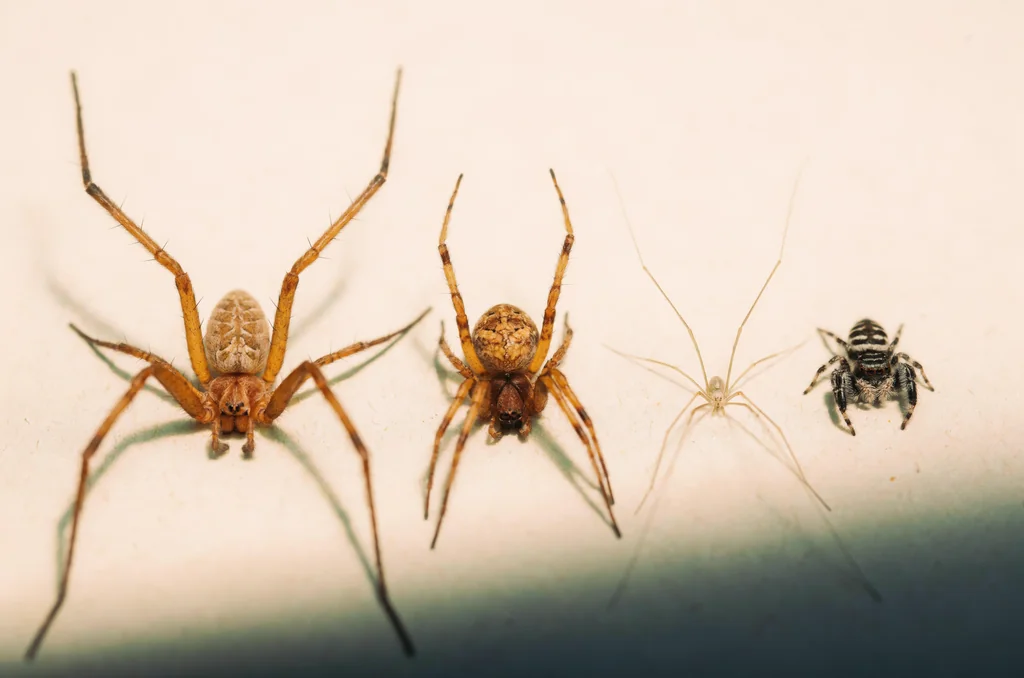
Here is what that looks like in practice, ranked by how often London households actually report them.
Giant house spider (Tegenaria species). The one that causes the phone calls. Long, hairy, banded legs, a body that can look alarmingly substantial, and a turn of speed across carpet that surprises people. Males are the wanderers. They are harmless, and they are far more interested in escaping you than in approaching you.
Common house spider (Tegenaria domestica). Smaller and less dramatic than its giant relative, pale to dark brown with darker markings. The Guardian's autumn species roundup quotes an expert explaining the name: "They're not called house spiders because they have to live in your house. It's just because it's the commonest species you would see inside the house."
Cellar spider (Pholcus phalangioides). The long-legged, trembling spider that hangs upside down in ceiling corners, often in bathrooms and under stairs. It is one of the most tolerant species of dry indoor conditions and one of the few that will happily stay put year-round.
Daddy long legs spider. Frequently confused with the cellar spider and with harvestmen, which are not spiders at all. The confusion is harmless; none of the three bites people in any meaningful way.
False widow species. The group that generates the most anxiety and the most misinformation. The Natural History Museum documents four false widow species commonly found in UK homes. They are not aggressive, bites are rare, and serious reactions are rarer still. They do, however, look distinctive enough to be worth identifying properly rather than guessing.
Zebra jumping spider. Small, black and white striped, active in daylight, and often seen on windowsills and walls. It comes indoors through open windows and doors over summer and into October.
Lace-web spiders. Three species commonly found in the UK, sometimes indoors, spinning messy sheet webs in corners and behind furniture.
Missing sector orb weaver. A harmless indoor visitor in autumn, recognisable by the web that lacks one sector.
Telling the harmless from the worth-a-second-look
The honest answer for a London household is that almost everything you see indoors is harmless. The two that deserve a proper look rather than a reflex reaction are false widows, because identification matters for peace of mind, and any spider you cannot identify at all in a property with small children, because uncertainty is its own kind of stress.
Why London properties see them differently
A Victorian terrace in Islington and a detached house in rural Devon do not present the same spider habitat, and the difference is not just about density of people.
Period property gaps. Original floorboards, deep skirting voids, cellar hatches, sash window weights and unsealed service runs give spiders exactly the sheltered, humid, undisturbed routes they prefer. A modern sealed flat offers far fewer.
Basements and lower-ground floors. Common in Kensington, Chelsea, Camden and Westminster conversions, these spaces stay cooler and damper than the rest of the building, which suits cellar spiders and Tegenaria alike.
Shared stairwells and communal areas. In mansion blocks and converted houses, spiders move between flats through shared circulation space. Treating one flat rarely solves a building-wide pattern.
The urban heat island. Central London runs warmer than surrounding counties, and warmer conditions extend the active period for insects and the spiders that feed on them. This is the same mechanism behind the national trend Dr Gee described, concentrated in the densest parts of the city.
Autumn heating. Switching the heating on in late September does not drive spiders indoors, but it does make indoor conditions more hospitable once they are in, and it dries out the damp corners some species avoid.
That combination explains a pattern London pest technicians see every year: the same species as the rest of the country, arriving in properties with more entry routes and staying longer.
What to do this week if you are seeing more of them
Most autumn spider activity needs no intervention at all. If you want to reduce sightings without chemicals, the useful work is environmental.
- Check the obvious entry points. Sash window gaps, air bricks without mesh, gaps under external doors, and unsealed pipe runs where services enter the building. These are the routes that matter most in period property.
- Reduce the food supply. Spiders follow insects. Clustering flies, fruit flies and moths around a kitchen or bin store will hold spiders in that area. Deal with the insects and the spiders thin out.
- Clear the harbourage. Cardboard stacks, stored boxes against external walls, and undisturbed clutter in cellars and under stairs give spiders somewhere to sit out the day.
- Vacuum rather than spray. Routine vacuuming of skirting lines, corners and under furniture removes webs and egg cases without introducing anything into a home with children or food preparation areas.
- Leave the outdoor ones alone. Garden orb weavers and their webs are doing useful work. Moving them is rarely necessary and usually temporary.
If you want a structured way to work through a property, a simple room-by-room check works better than a general tidy: entry points first, then harbourage, then food sources, then repeat in a fortnight. That sequence catches the pattern rather than the individual spider.
When a sighting stops being routine
A single large spider on a Tuesday evening is not a pest problem. The signals that change the picture are different: repeated sightings of the same species in the same area over weeks, webs reappearing within days of clearing, spiders appearing in food preparation or child sleeping areas, or a bite you cannot attribute to anything else. In those cases, identification comes before treatment.
When to bring in professional help
Spider control in a domestic setting is rarely about the spider. It is about what the spider is telling you. A persistent indoor population usually means an entry route you have not found, a damp or harbourage condition you have not addressed, or a secondary insect problem feeding it.
That is where a professional survey earns its place. A technician can identify the species properly, trace the entry points in period construction that are easy to miss, and confirm whether you are looking at a spider issue or an insect issue with spiders on top. For households with young children, or for restaurants and food businesses where any visible pest activity carries a compliance risk, that clarity matters more than the treatment itself.
If you are seeing repeated activity in a specific part of London, local routes exist for City of London spider control, Kensington spider removal, Hampstead spider control, Holborn house spider service and Fulham spider control. For a wider household pest issue, the London pest control service covers the full range.
Any treatment in a home with children or food preparation areas needs a clear safety conversation first: what is being used, where, how long to keep the area clear, and what the follow-up looks like. Ask those questions before booking, not after.
What the wider pest picture says about autumn 2026
Spider season does not happen in isolation. IBISWorld's 2026 UK pest control analysis notes that warmer, wetter winters are shortening pest dormancy and lengthening breeding seasons, pushing rodents and insects deeper into towns and cities. The British Pest Control Association has made a similar point about climate adaptation, warning that wetter winters, flash flooding and overwhelmed drainage create conditions for increased pest activity.
For London households, the practical read is that autumn is no longer a single spike. It is the point where summer insect populations, autumn spider activity and the start of rodent movement indoors overlap. A spider sighting in October is often the first visible sign that a property has more than one thing going on.
There is also a service-access angle. BPCA research published in September 2026 found that 46% of all UK local authorities signpost residents to BPCA members through their websites, rising to 52% of English unitary authorities, at a time when many councils no longer provide pest management services directly. If your council used to handle this and no longer does, that is why.
Questions London households ask every October
Are giant house spiders dangerous? No. They are large, fast and harmless to people. The Wildlife Trusts describe them as far more interested in escaping from people than in scaring them.
Why are they so big this year? Size reflects a good feeding season. A warm spring meant more insects, which meant more food and higher survival through to adulthood.
Do I need treatment for one spider? No. Single sightings are normal autumn behaviour. Treatment makes sense when activity is repeated, localised and persistent.
Are false widows a real risk in London? They are present and they are worth identifying correctly, but bites are rare and serious reactions rarer. The Natural History Museum's false widow guidance is the sensible reference point.
Will spider repellents and conkers work? There is no reliable evidence that conkers deter spiders. Physical exclusion at entry points does more than any repellent.
Should I seal my windows and vents? Seal the gaps, not the ventilation. Air bricks and trickle vents exist for a reason; mesh over the opening keeps spiders out without blocking airflow.
What to watch over the next few weeks
Spider activity should taper through November as the mating period ends and temperatures drop. Two signals are worth tracking. First, whether sightings continue past mid-November, which usually points to an indoor breeding population rather than seasonal wandering. Second, whether you start seeing rodent evidence alongside the spiders, since the same autumn conditions drive both indoors.
The useful action right now is a single walk around your property checking entry points and damp corners. If you find repeated activity, webs returning within days, or spiders in a child's room or a food area, that is the point to get an identification and a proper look rather than reaching for a spray.