

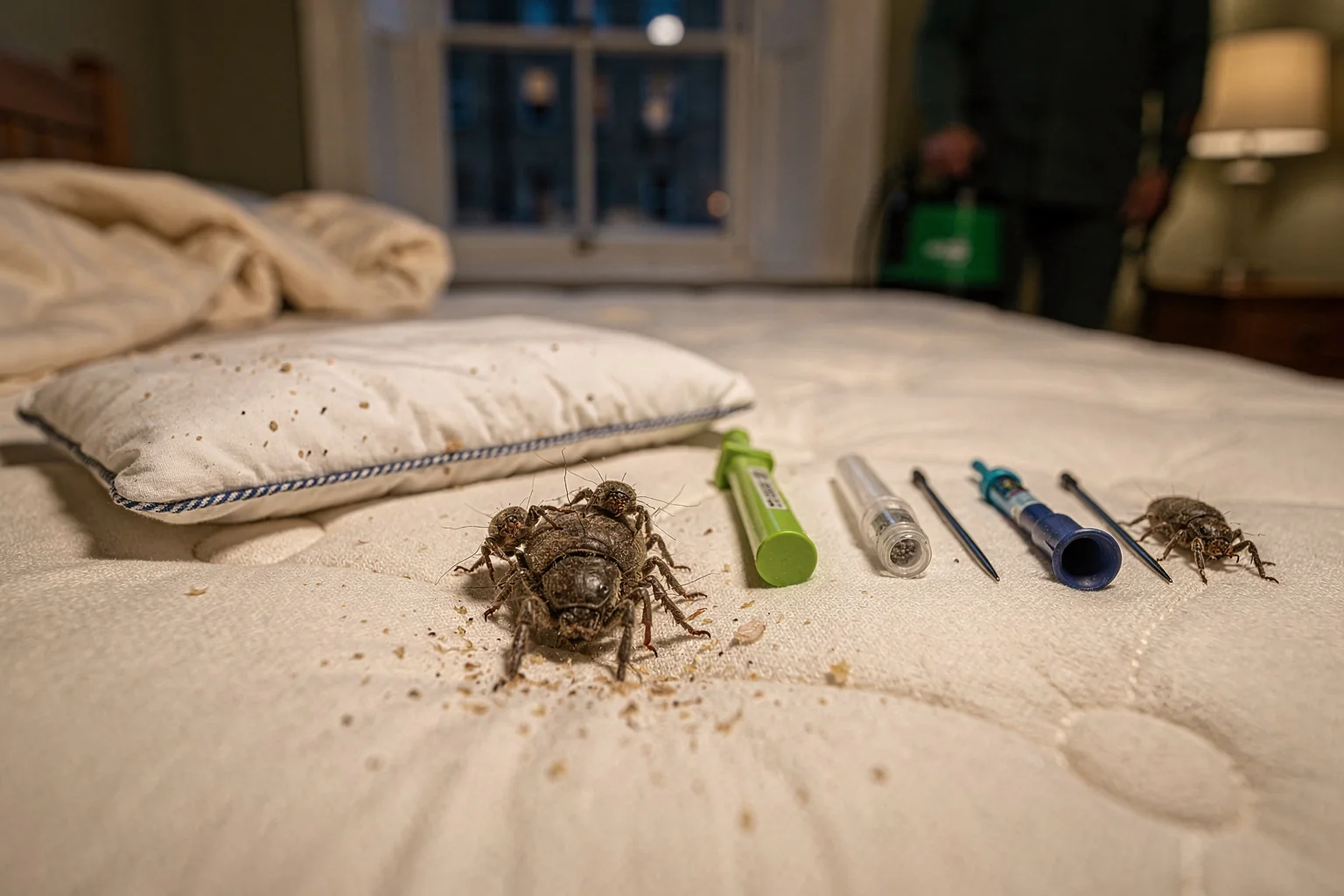
Most people who search for dust mites in bed are looking for the wrong thing. They want a photograph of a mite, or a bite mark they can match against a chart. Neither exists in any useful form, because the animal is roughly a third of a millimetre long and it does not bite at all. What you can actually find is evidence: a pattern of symptoms, a texture in the bedding, a dust signature that behaves differently from ordinary household dust.
The seven signs below are ranked by how much they tell you, not by how dramatic they look. The first three are strong enough to act on. The middle two are supporting evidence that only means something alongside the others. The last two are the ones people overreact to, and one of them usually points at a different pest entirely.
A quick note on scale before we start. A single gram of house dust, about the weight of a paperclip, can hold thousands of mites, and an established mattress population runs into the millions, according to the University of Kentucky entomology factsheet. You are never looking for one. You are looking for a colony.
1. You wake with a blocked nose that clears by mid-morning
This is the sign that ranks first because it is the hardest to explain away. A blocked or runny nose, sneezing, and itchy eyes that are worst in the first twenty minutes after waking and settle once you leave the bedroom point at something in the bed rather than something in the air.
The mechanism matters here. It is not the living mite that triggers symptoms. It is the proteins in the mite's droppings and in fragments of dead bodies, which become airborne when you move in your sleep and again when you strip the bed. Allergy UK notes that a significant share of house dust mite exposure happens in bed, which is why symptoms often worsen overnight rather than during the day.
The common mistake is treating this as a seasonal cold or a pet allergy. If the pattern repeats for more than two weeks, follows you from bed to sofa, and eases when you sleep elsewhere, the bed is the source.
Verdict: Strongest single indicator. Log it for a fortnight before spending money on anything.
2. The mattress surface feels gritty under a dark cloth
Take a dark cotton cloth, dampen it slightly, and wipe firmly across the top of the mattress, then along the seams and piping. Ordinary dust looks grey and even. Mite-heavy dust looks pale, slightly granular, and it clings to the fabric rather than brushing off.
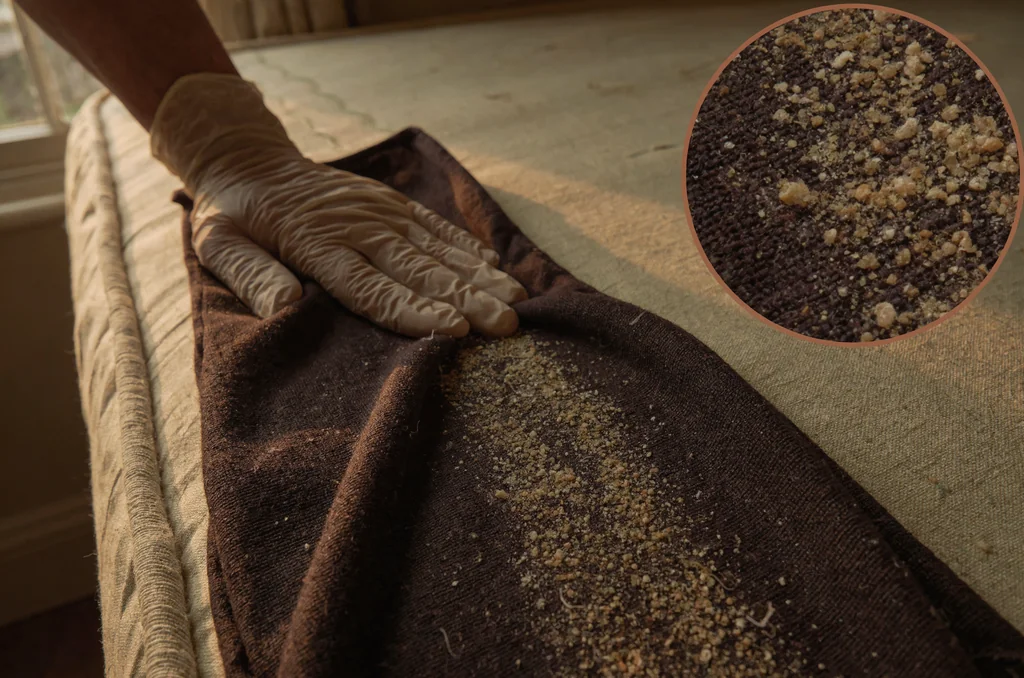
This works because the top few inches of a mattress is where the food supply sits. Dead skin cells, body oils and moisture collect in that upper layer, and the mites follow the food. Clemson University's household insect programme describes the top part of a fibrous mattress as a favourite site during warm, humid spells, with the deeper layers acting as a refuge when conditions turn dry.
Do the same wipe on a pillow and on the sofa cushion you sit on most. If all three come up gritty, you have a household-level population rather than one bad mattress.
Verdict: Cheap, repeatable, and the closest thing to a home test. Do it monthly through autumn.
3. Symptoms spike within two weeks of the heating going on
Dust mite numbers do not stay flat through the year. They build through late summer and early autumn as indoor humidity rises, then the first cold snap pushes people to close windows and switch the heating on. Warmer, stiller, more humid bedrooms are exactly the conditions the mites need.
This is why late September and October produce a wave of calls that look like a sudden infestation but are really an existing population becoming noticeable. The mites were always there. The bedroom climate just stopped suppressing them.
The practical threshold: if your symptoms track the calendar rather than your cleaning routine, you are dealing with a humidity problem as much as a pest problem. A cheap hygrometer in the bedroom tells you more than any spray. Mites need roughly 70% relative humidity or higher to thrive, so a room that sits in the 50s is a poor habitat regardless of how old the mattress is.
Verdict: Strong seasonal evidence. Fix the humidity and you cap the population.
4. Your symptoms are respiratory, not skin-based
Dust mite reactions are overwhelmingly nasal, ocular and bronchial. Sneezing, a runny nose, itchy watery eyes, and for people with asthma, a tightening in the chest or a night-time cough. What you will not get is a line of itchy welts on your arms and legs.
That distinction is the single most useful thing in this article. Bites mean something else. If you are waking with clusters of small red bumps, often in rows of three, the likely culprit is a bed bug, and the treatment is completely different. The bed bug service page covers what those inspections involve, and our bed bug removal guide walks through what works in London flats specifically.
People also confuse mite reactions with scabies, flea bites and even heat rash. The tell is location and timing. Mite symptoms are worst where you sleep and worst in the morning. Bites are worst where skin meets the mattress and often appear in the morning too, which is why so many people get it wrong.
Verdict: Decisive for ruling things out. No bites means no bed bugs.
5. The bedroom smells faintly musty even after airing
A persistent damp, dusty smell in a bedroom that has been aired and cleaned is a humidity signal. Mites do not produce a smell you can detect, but the conditions they need, warm and humid with poor air exchange, do.
This sign ranks in the middle because it is real but non-specific. Old carpets, blocked vents, a bathroom on the other side of the wall and drying laundry indoors all produce the same smell. What makes it useful is the combination: a musty bedroom plus morning congestion plus gritty mattress dust is a coherent picture.
The mistake here is reaching for an air purifier as the first purchase. Air purifiers catch airborne particles, and mite allergens do become airborne, but they settle again within about twenty minutes of disturbance. You are treating the symptom in the air rather than the reservoir in the bed.
Verdict: Supporting evidence only. Useful alongside signs one to three.
6. You can see dust plumes when you make the bed
Shaking a duvet in a shaft of morning light and watching a visible cloud rise is the sign people react to most, and it is the least informative on this list.
Yes, that dust contains mite allergens. But it also contains textile fibres, skin cells, pollen and whatever else has settled. Every bed produces some visible dust when disturbed, including beds with no mite problem at all. A visible plume tells you the bedding has not been laundered recently, which is worth knowing but is not a diagnosis.
Where it becomes meaningful is intensity and speed of return. If the plume is heavy, and the same cloud appears three days after a full hot wash and dry, the reservoir is in the mattress and pillows rather than the sheets.
Verdict: Weak on its own. Only useful as a before-and-after measure.
7. You have found actual mites under magnification
This is the one that sends people out to buy a USB microscope, and it is last for a reason. House Dust Mites are less than 1/100th of an inch long, translucent, and they look like slow-moving specks of dust. Under a cheap handheld scope you will mostly find carpet beetle larvae, booklice, or nothing at all.
If you do want to look, the technique that works is tape. Press clear tape onto a mattress seam, stick it to a white card, and examine it in good light. You are looking for a slow crawl, not a scurry. Anything that moves quickly is not a dust mite.
The bigger point is that identification rarely changes the action. Whether you have confirmed mites or strong circumstantial evidence, the response is the same: reduce humidity, launder bedding hot, encase the mattress, and vacuum the seams weekly. The Better Health Channel house dust mite guidance sets out that routine in full, including the detail that mattress and pillow covers need washing every two months, not just fitting once.
Verdict: Interesting, rarely necessary, and a common source of wasted evenings.
What actually reduces the population
Ranked by effect per pound spent, the measures that move the needle are unglamorous.
Wash bedding at 60°C on a long cycle. Mites begin dying around 58°C, and a cool 40°C wash that leaves sheets smelling fresh does very little to the population. If the fabric cannot take heat, fifteen minutes in a tumble dryer above 54°C achieves the same kill.
Encase the mattress, pillows and duvet in breathable mite-proof covers, and wash those covers every two months. This is the single most effective measure for the bed itself, and it means you no longer need to vacuum the mattress surface at all.
Get bedroom humidity below 60%. Open windows daily, avoid drying laundry on radiators, and use extraction in any adjoining bathroom. This is the measure that stops the problem returning.
Vacuum weekly, including mattress seams and upholstered furniture, and expect allergens to stay airborne for up to twenty minutes afterwards. If you have asthma, wear a mask or ask someone else to do it.
Remove soft toys from the bed, or wash them weekly at the same temperature as sheets. Freezing them overnight does not work, because it kills the mite but leaves the allergen behind.
When the bedroom needs more than a deep clean
Most dust mite problems are managed, not eliminated. You are reducing the population to a level your immune system stops reacting to, and that is a realistic goal.
There are two situations where a professional inspection earns its cost. The first is when you cannot tell mites from bed bugs and the bites or marks are ambiguous, because the two require opposite responses and treating the wrong one wastes weeks. The second is a persistent problem in a period property with old carpets, poor ventilation and a damp history, where the humidity source needs finding before any surface treatment will hold.
For confirmed, stubborn mattress populations, professional dust mite control covers what a technician assesses and treats, including the humidity and ventilation checks that a shop-bought spray cannot address.
If you want a rough answer before anyone visits, a simple scoring sheet works: one point each for morning congestion, gritty mattress dust, a seasonal spike, and bedroom humidity above 60%. Three or more points and it is worth an inspection. Fewer than that, and a hot wash, new covers and better ventilation will usually settle it.
Questions that come up at the inspection
Can dust mites live in my hair or on my skin? No. They feed on shed skin flakes in dust, not on living skin. They live in the mattress, not on you.
Do I need to throw the mattress away? Rarely. A mattress with a mite population can be encased and kept. Replacement makes sense when the mattress is old, damp-damaged or already failing structurally.
Will a steam cleaner solve it? Steam kills mites on contact at the surface, but it adds moisture, which is the opposite of what you want in a bedroom. Use it sparingly and ventilate afterwards.
How often should sheets be changed? Twice weekly is ideal for allergy sufferers. Industry surveys suggest only around 28% of Britons change bedding weekly at all, which is one reason bedroom populations build so quietly.
Is it worth testing the air? No. Mite allergens settle rather than stay suspended, so an air test tells you very little. Test the mattress surface instead.
The two things to do today
If you take one action from this list, make it the humidity reading. A bedroom that sits under 60% relative humidity will not support a large population no matter how old the bedding is, and it costs nothing to check.
The sign people overreact to is the visible dust plume. It looks alarming in morning light and it proves almost nothing on its own. The sign people underreact to is the blocked nose that clears by mid-morning, which is quiet, easy to blame on a cold, and the most reliable indicator you will get.
If you are waking congested, the mattress wipes gritty, and the bedroom has felt damp since the heating came on, that combination is worth acting on now rather than in another month of guessing.