

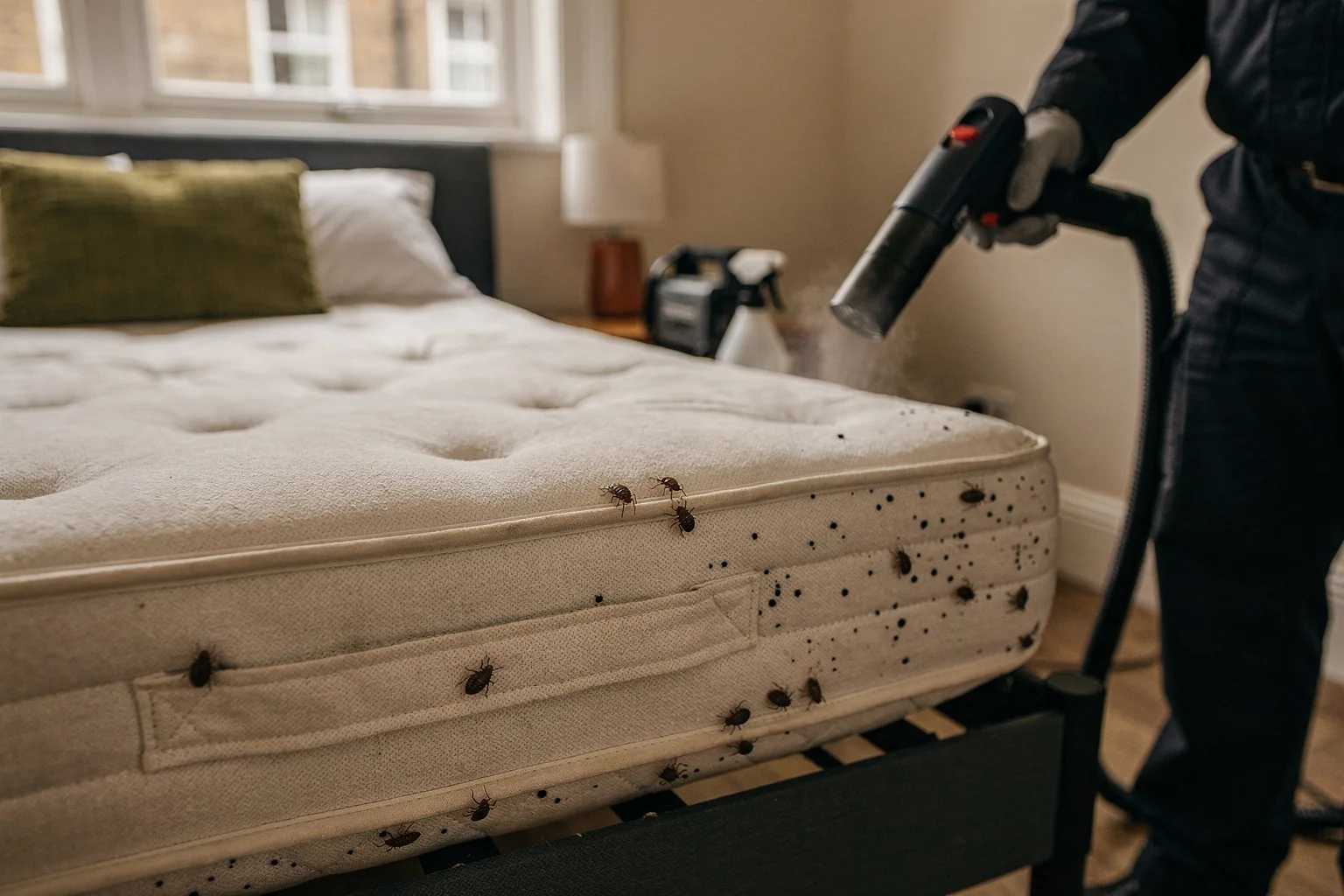
If you have found bed bugs in a UK flat, the first thing worth knowing is that they are beatable. Dr O'Donovan, a licensed UK medical doctor, puts it plainly in his step-by-step guide: "You can get rid of bed bugs, but it just takes the right plan, time, as well as consistency." That plan looks different in a London flat than in a detached house, and it depends on whether you are dealing with a few insects in one bedroom or a building-wide problem moving through shared walls.
The video above walks through identification, stopping the spread, and safe treatment. What it cannot cover is the London-specific picture: period conversions with gaps behind skirting boards, shared walls in mansion blocks, and the fact that many bed bug populations in the UK now shrug off the shop-bought sprays that used to work. This article fills that gap.
What bed bugs actually look like in a UK flat
Adult bed bugs are roughly the size and shape of an apple seed, flat and reddish-brown, and they swell and darken after feeding. Nymphs are much smaller and pale, which is why people often miss them until the infestation is established.
Dr O'Donovan's clinical breakdown of the signs is worth memorising, because bites alone are unreliable evidence. He notes that bites "often occur on skin which is exposed while sleeping," such as the face, neck and arms, and that they are "often in a line or grouped together." He also flags the physical evidence that matters more than the rash: "spots of blood on your bedding," small brown spots that are bed bug excrement, and live insects visible around seams, under loose wallpaper, and in sofa frames.
In a London flat, check these places first:
- The piping and underside of the mattress, and the seams of the divan base
- Behind the headboard, especially where it is screwed to the wall
- Gaps where skirting boards meet floorboards in period conversions
- The folds of curtains that touch the floor
- Bedside socket faceplates and the recess behind them
One detail that catches people out: bites look different on different skin. On white skin they usually appear red, while on black or brown skin they may look purple and be harder to spot. That is a dermatology point, not a pest-control one, but it explains why some households notice the problem weeks later than others.
Why bed bugs are harder to kill in the UK than they used to be
The single biggest change in UK bed bug control over the past few years is resistance. Many populations now carry genetic mutations that make them effectively immune to pyrethroid insecticides, the chemical family behind permethrin and cypermethrin sprays sold in supermarkets and online.
This is not a fringe claim. Reporting in Metro in July 2026 described infestations "soaring in the UK as the critters are becoming more resistant to the chemicals used to kill them," and quoted Professor Lee warning that people are "falling back on cheaper sprays, including shop-bought foggers and aerosols" when professional help is what the situation needs.
Worse, a failed DIY attempt can spread the problem rather than shrink it. Dr Richard Naylor, bed bug technical expert at The Bed Bug Foundation, told Good Housekeeping that "spraying weak over-the-counter insecticides at bed bugs can cause them to disperse," pushing insects out of the mattress and into more hiding places around the room. In a flat, that often means the next room.
Professor Hart, also quoted in that piece, frames the practical conclusion: "Successful control increasingly relies on a combination of careful inspection, physical removal, heat treatments where appropriate and targeted professional pest control, rather than simply relying on sprays."
That is the honest position. A single can of spray is not a treatment plan.
The heat-and-laundry routine that genuinely kills bed bugs
Heat is the most reliable tool a household has, because it kills every life stage including eggs when the temperature and duration are right. The NHS guidance is specific: wash affected bedding and clothing on a hot wash at 60°C, then tumble dry on a hot setting for at least 30 minutes.
For items that cannot be washed, seal them in a plastic bag and leave them for long enough that anything inside dies off. Shoes, bags, soft toys and books fall into this category.
A domestic steam cleaner helps in the places a washing machine cannot reach. Steam penetrates fabric seams and cracks where bed bugs hide, and it kills on contact without leaving insecticide residue around a child's bedroom. Move slowly and let the steam do the work rather than rushing the head across the surface.
What heat does not do is reach inside a shared wall cavity or the void beneath floorboards. In a converted Victorian flat, that is frequently where the surviving population sits.
Chemical treatment, heat treatment, or both
Professional bed bug work in the UK generally falls into two categories, and the choice matters for how long you need to be out of the property and how many visits are involved.
| Approach | How it works | Typical visits | Best suited to |
|---|---|---|---|
| Residual insecticide | Controller applies liquid spray or powder to harbourage areas | 2–3 over several weeks | Contained infestations, single room, confirmed susceptibility |
| Professional heat treatment | Room heated to 50°C+ for several hours, killing all life stages | Usually one, with follow-up check | Multi-surface infestations, resistant populations, occupied flats |
The BPCA describes the standard insecticide route as "the application of a residual insecticide, either as a liquid spray or powder," and notes that self-treatment with amateur pesticides is "highly unlikely to be successful." That is a professional body being blunt about DIY limits, not a sales pitch.
Heat is growing fast for exactly the reason resistance is growing. JG Pest Control reported bed bug callouts up 22 per cent year on year, from 3,730 to 4,559, with heat treatments up 36 per cent, from 1,534 to 2,085. Heat now accounts for 46 per cent of their bed bug work, up from 41 per cent a year earlier.
Costs vary by region and room count. One UK pest control guide puts professional chemical treatment at roughly £200–£400 per room, with heat treatment typically costing more because of the equipment and time involved. Treat any figure as a starting range to check locally rather than a quote.
Preparing a London flat before treatment day
Preparation is where most failed treatments are lost. A technician can only treat surfaces they can reach, and clutter gives bed bugs somewhere to sit out the process.
Work through this before the visit:
- Strip all bedding and bag it for a 60°C wash and hot tumble dry.
- Clear the floor around and under the bed. Boxes, bags and laundry piles are harbourage.
- Vacuum thoroughly, then seal and bin the vacuum bag or empty the canister outside.
- Dismantle the bed frame if you can, and check the joints and bolt holes.
- Wash or steam soft furnishings near the bed, including curtains that touch the floor.
- Tell the technician about any adjoining rooms, shared walls, or neighbouring flats with known problems.
That last point is the one Londoners most often forget. In a mansion block or a converted terrace, bed bugs travel through voids, pipe runs and shared floorboards. If the flat next door is untreated, your treatment can be undone within weeks. If you rent, speak to your landlord or managing agent before treatment so the whole affected area is dealt with at once. Dr O'Donovan makes the same point for tenants: if you are in rented accommodation or university housing, raise it with your housing provider or local council as well as with a pest professional.
Where bed bugs hide in period conversions and mansion blocks
Central London housing stock creates specific problems. Victorian and Edwardian conversions were built before modern sealing standards, and the gaps that let in draughts also let in bed bugs.
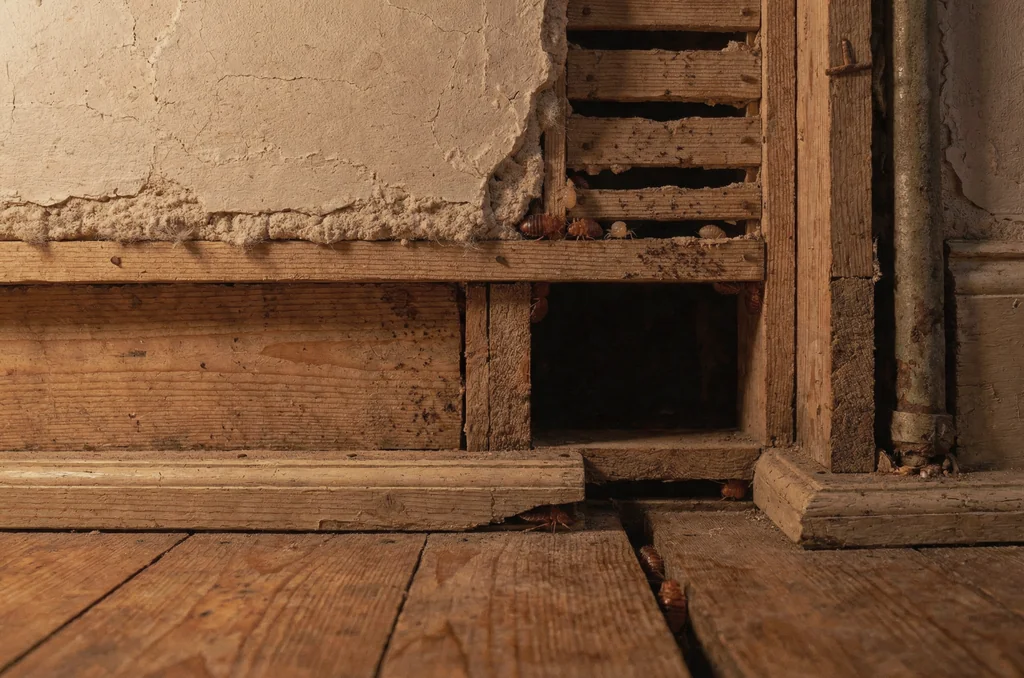
The highest-risk zones are:
- Lath-and-plaster walls. Original plaster sits on timber strips with a void behind it. Bed bugs shelter in that void and emerge at night.
- Original floorboards. Gaps between boards give access to the joist space, which can run the length of a flat.
- Shared service risers. Pipework and conduit passing between floors gives insects a route from one flat to another.
- Built-in wardrobes. Fitted furniture against an external wall leaves a cold, dark gap that rarely gets inspected.
- Second-hand furniture. A pre-owned sofa or bed frame brought into a flat is a common starting point for an infestation.
If you are dealing with a confirmed problem in a flat in an area like bed bugs Kensington and Chelsea or bed bugs Westminster, ask the technician how they plan to treat voids and shared structures, not just the mattress. A surface-only treatment in a period conversion tends to produce a repeat callout.
When DIY stops being the sensible option
There is a clear line between a problem you can manage and one that needs a professional, and it is usually about spread rather than severity.
Call in help if any of these apply:
- You have found bed bugs in more than one room
- You have already tried a shop-bought spray and the bites have continued
- You live in a flat with shared walls and the neighbouring unit is affected
- You have an infant, a pregnancy, or a household member with a skin condition or respiratory sensitivity
- You need the problem resolved before a tenancy change, sale, or guest arrival
The last point matters commercially. A short-let or hotel room with a confirmed infestation cannot simply be sprayed and reopened. Professional treatment with a documented follow-up is what protects the property and the guests.
For a confirmed infestation, bed bug control London services typically combine inspection, targeted treatment and a follow-up visit to confirm the insects are gone. If you want to understand which retail products are worth buying for the interim period, our guide to the best bed bug spray covers what is actually effective in London flats.
Stopping bed bugs coming back after treatment
Elimination is one job. Staying clear is another, and it comes down to a handful of habits.
After treatment, keep the bed isolated. Pull it away from the wall, keep bedding off the floor, and consider interceptor cups under the legs of the bed frame so any surviving insect is trapped rather than fed. Leave the treatment in place for the full follow-up period your technician specifies, even if the bites stop.
When you travel, check the hotel room before unpacking. Lift the sheet at the head of the bed and look along the mattress seam. Keep your suitcase on a hard surface or a luggage rack rather than the floor or the bed. On return, wash everything that was in the case on a hot cycle and vacuum the case itself.
Be careful with second-hand furniture. Inspect seams, joints and the underside of any upholstered item before it enters your home, and treat anything suspect before it goes into a bedroom.
Finally, if you live in a block, report the problem. Bed bugs in flats are a building issue as much as a household one, and treating one unit while the neighbours do nothing rarely holds.
Questions people ask before booking treatment
How long does professional bed bug treatment take to work? Chemical treatments usually need two to three visits over several weeks, because eggs that survive the first application hatch afterwards. Heat treatment works in a single session, with a follow-up inspection to confirm.
Do I have to leave my flat during treatment? It depends on the method. Heat treatment requires the room to be empty of people and pets for several hours. Residual insecticide treatments usually require a shorter absence while surfaces dry. Your technician will give you a specific timeframe.
Can I stay in the flat while it is being treated? For most chemical treatments, yes, once the drying period has passed. Sleeping in the treated room is normally fine after that point, but follow the instructions you are given rather than a general rule.
Are the treatments safe around children and pets? Professional-grade products are applied to targeted harbourage areas rather than broadcast across a room, and child-safe options are available. Tell the technician about young children, pets and anyone with respiratory conditions before the visit so the product choice and placement can be adjusted.
Will my landlord pay for bed bug treatment? It depends on the tenancy and the cause. In many cases a landlord is responsible for treating an infestation that affects the structure of the property or was present before you moved in. Raise it in writing with your landlord or managing agent, and contact your local council's environmental health team if they do not act.
If you have found live insects, blood spotting on the sheets, or bites appearing in lines across your arms and neck, the next step is a proper inspection rather than another can of spray. A technician can confirm the species, map where the insects are harbouring, and tell you whether a single room or the whole flat needs treating.
References
- How to treat Bed Bugs — at home can be really stressful. And if you've ever heard people say they're impossible to get rid of, it can feel even worse. But here's the truth. You can get rid of bed bugs,
- Doctor explains BED BUGS — pictures and even under loose wallpaper here you're seeing a picture of bed bugs that are infesting a sofa you may have bed bugs if you've noticed little bites which often occur
- How to Eliminate Bed Bugs — Waking up with itchy bites or spotting tiny bugs in your bed? Don’t panic, there are effective ways to deal with bed bugs without using harsh chemicals. In this video, you’ll