
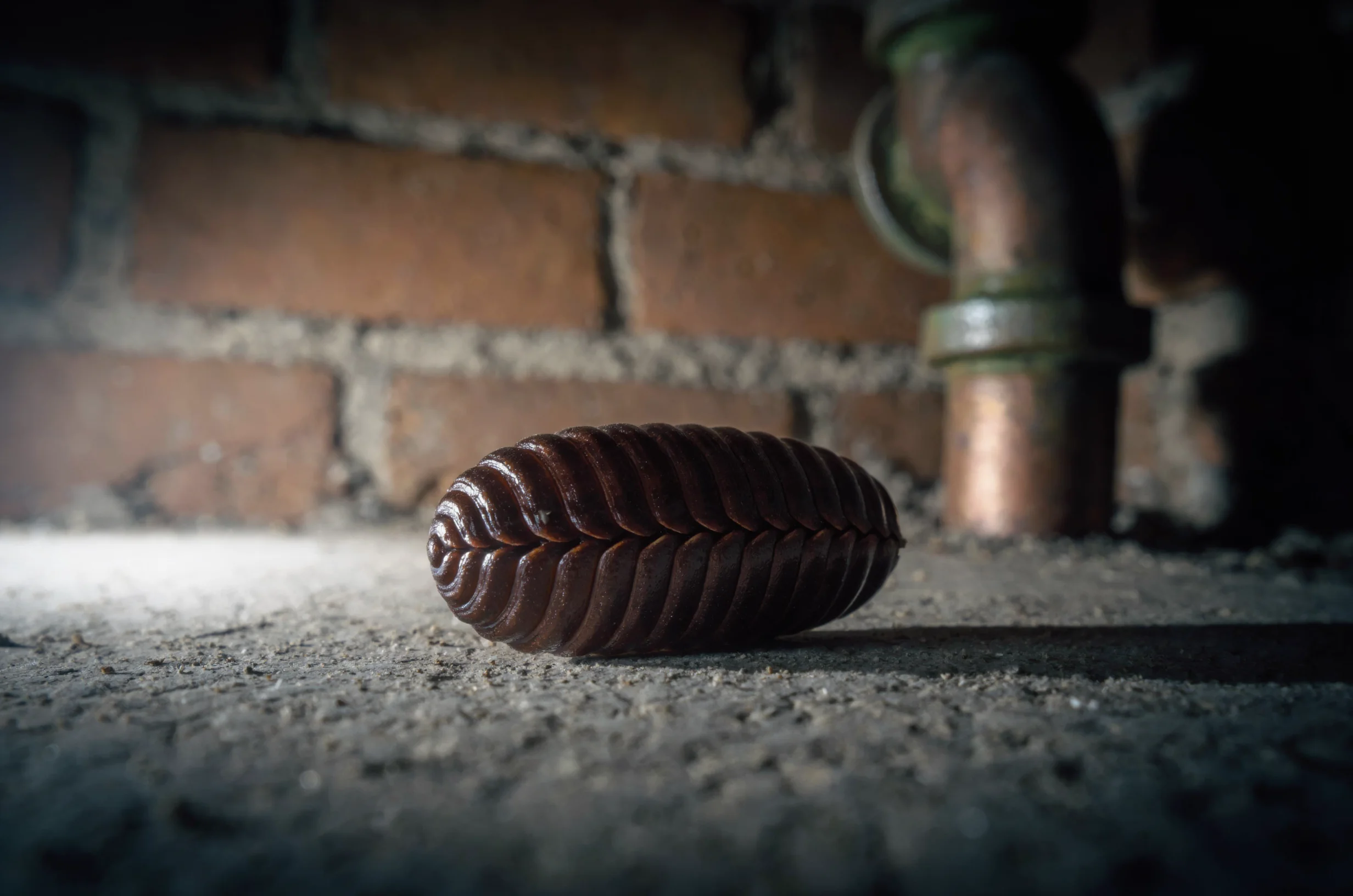
Photograph the object where you found it before cleaning. If you are asking “what does a cockroach egg casing look like”, look for a small brown capsule with a ridged seam along one long edge. This protective case is called an ootheca, and it holds a group of eggs. Its shape can resemble a tiny purse, grain of rice or bean, depending on the species. A careful inspection can help you distinguish it from food debris and other insect remains, although appearance alone cannot confirm whether eggs inside are alive.
Preserve the casing before you clean
A suspected egg case is more useful for identification while its shape and original position are still clear. Keep children and pets away from the immediate area while you examine it.
For an initial check, gather a torch, disposable gloves, a ruler and a small container with a secure lid. Then follow this sequence:
- Photograph the object in place, including the cupboard corner, shelf joint or floor edge around it.
- Take a closer photograph with a ruler beside it. Keep the object and ruler at the same distance from the camera.
- Record the room, exact position and date.
- If it is loose, lift it gently with tweezers and place it in the container.
- Wash your hands after handling the sample or surrounding debris.
Avoid crushing or opening the case. That can destroy the seam and other details needed for identification.
If it appears attached to a surface, photograph it from several angles before trying to remove it. Scraping may leave only fragments. Keep the sample contained, and do not carry loose debris through other rooms.
Read the shape, seam and colour together
Cockroach egg cases vary, so identification depends on several details agreeing. A brown object on its own is weak evidence; a capsule with a regular seam deserves closer examination.
Measure the capsule and examine its edge
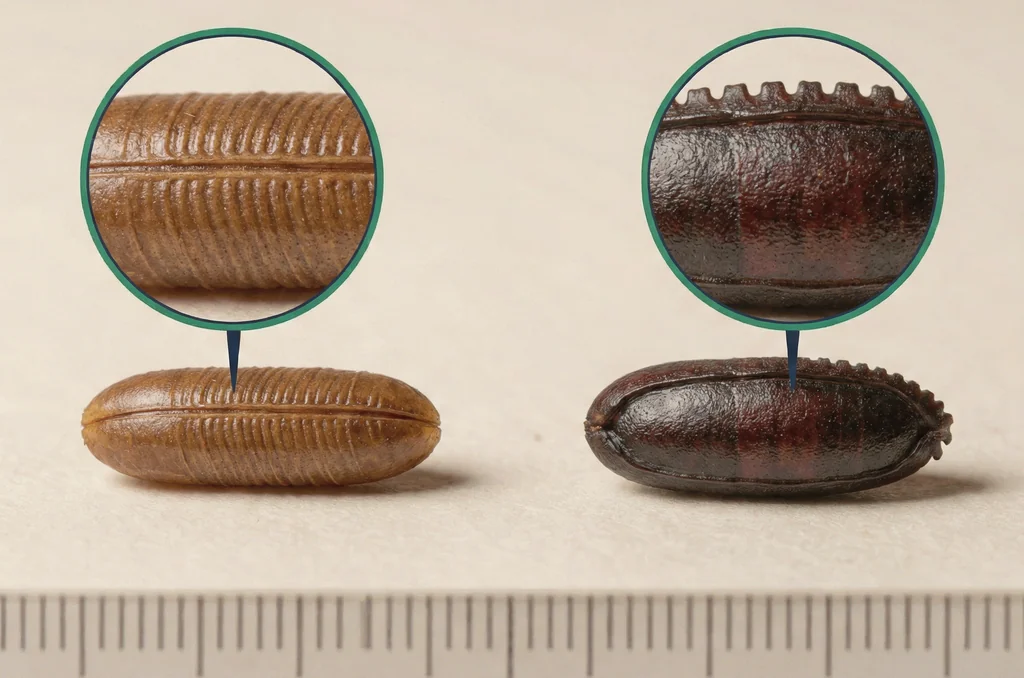
Start with its overall outline. An ootheca is a compact capsule, usually longer than it is wide. One long edge has a raised, ridged seam that can resemble a miniature zip.
Short grooves may also be visible across the surface. These can be difficult to distinguish in a blurred phone photograph, especially when dust covers the case.
Measure the length in millimetres rather than relying on a rice-grain comparison. Rice varies in size, and close-up photographs can make tiny objects look much larger. Keep that measurement with the photograph.
Rotate a loose sample inside its clear container to find the seam. Do not squeeze it to test its hardness.
Compare German and Oriental cockroach cases cautiously
German cockroach cases tend to be elongated and tan to brown. A female may carry a case projecting from the rear of her abdomen, so evidence may appear on a live insect rather than lying separately.
Oriental cockroach cases tend to look broader and fuller, with a darker brown or reddish-brown shell. Their bean-like outline can be easier to notice than fine surface detail.
These are starting points rather than a species diagnosis. Lighting, dirt and damage can change the apparent colour. Record the outline, measured length, seam and location together, and retain photographs of any nearby insects.
Check whether the seam has opened
The long seam can help you judge whether a case may have hatched. Examine it under a bright light without prising it apart.
A hatched case may have an opening along that edge, with the shell appearing empty or slightly spread. The opening can be narrow, so one side-on photograph may miss it.
A closed-looking case is harder to interpret. It could contain developing eggs, eggs that will not hatch, or material that is difficult to see through the shell. A closed shell does not prove that the eggs are alive.
Accidental damage also complicates identification. A hole through the side or a crushed end does not establish that young cockroaches emerged naturally.
Use cautious descriptions in your notes:
- Record an open seam and visible hollow interior as a possibly hatched case.
- Record an apparently intact shell as a closed case with unknown contents.
- Record crushed or incomplete remains as an uncertain fragment.
Keep suspected intact cases sealed. Waiting for one to hatch indoors is an unnecessary way to confirm identification.
Separate egg cases from other household debris
Several ordinary objects resemble an ootheca at first glance. Compare their structure before treating a brown speck as evidence of cockroaches.
Food seeds usually lack the raised opening seam of an egg case. Look for matching seeds in nearby packets or spilled ingredients, but avoid breaking the sample while its identity remains uncertain.
Other insect material needs a different inspection:
- Fly pupal cases can be brown and capsule-shaped, often with a barrel-like outline and rings around the body. If the object is near fermenting produce or a food bin, inspect nearby fruit fly breeding spots.
- Carpet beetle larval skins have hairs and recognisable body segments. Material found along carpet edges may warrant a separate check for carpet beetle infestation signs.
- Clothes moth cases and cocoons may contain silk and fibres from surrounding fabric. Finds among woollens deserve comparison with early clothes moth signs.
- Droppings are solid waste rather than protective capsules. Their shape varies, and a dark pellet without a clear seam remains uncertain evidence.
A shed cockroach skin is different again: it preserves recognisable insect anatomy, such as legs or antennae.
If the object remains ambiguous, retain it. Spraying an unidentified item will not resolve which pest, if any, is present.
Follow the evidence through the kitchen
An egg case becomes more informative when you find supporting evidence nearby. Begin where it was discovered, then inspect adjoining hiding places in a steady order.
Check sheltered spaces around food and water
Use a torch along cupboard joints, shelf supports, hinges and the underside of accessible worktop edges. Inspect beneath the sink, especially around pipe openings and the back corners of the cabinet.
Continue towards accessible spaces beside the fridge, dishwasher and cooker. Warmth, shelter, food residues and moisture can make these areas worth checking.
Look for:
- Further capsules or capsule fragments.
- Live cockroaches or small wingless young.
- Shed skins with recognisable legs.
- Concentrations of dark specks or smears.
Photograph each find before cleaning. Keep its location separate in your notes rather than collecting everything into one unlabelled sample.
Only move appliances when you can do so safely. Stop if access requires disconnecting a gas appliance, disturbing wiring or lifting equipment beyond your ability. A photograph of the inaccessible gap is enough for the inspection record.
Inspect packaging, pipe gaps and adjoining rooms
Check the folds and undersides of cardboard stored near the original find. Examine recently introduced items, including packaging and second-hand equipment, without assuming they caused the problem.
In bathrooms and utility spaces, inspect accessible pipe penetrations, cabinet backs and damp corners. In a period property, note gaps around old service routes and fitted cupboards.
An opening is a possible route or hiding place, not proof of entry. Photograph it and record whether evidence is present beside it.
A useful digital inspection checklist would let you select the room, attach a photograph and log the measurement, seam condition and date. Use that record to compare repeat checks, rather than as an automatic species diagnosis.
Use the next 48 hours to check for activity
One suspected casing calls for a proportionate response. Today, preserve the sample, inspect the immediate area and remove accessible food residues after recording the evidence.
Store food in closed containers, empty food waste and address visible water spills. Keep inspected surfaces clear enough to notice new material. Avoid moving potentially affected cardboard into another room.
If identification remains uncertain, suitable insect monitoring traps can help establish whether insects are active nearby. Position them according to their instructions, away from children and pets, and record each location. Keep access to the original hiding place available for inspection.
Check the same places tomorrow and again over the next 48 hours. Compare photographs and note new sightings.
That period is an observation window, not a deadline for declaring the property clear. Cockroaches and egg cases can remain concealed, and an empty trap does not rule them out.
If you find nothing else, keep the record and continue checking the original area. If you find another casing, live insects or fresh concentrations of debris, arrange identification promptly rather than repeatedly extending the same DIY search.
Match the response to the evidence
Removing a visible case deals with that object. It does not establish whether other cases or insects remain hidden, so the wider evidence should guide treatment.
Keep household measures focused
Cleaning, containing food and fixing accessible leaks are useful while identification is under way. Remove unnecessary cardboard once it has been checked, and avoid transferring clutter between rooms.
Do not spray cupboards, appliance gaps or food preparation areas simply because an object looks suspicious. Any insecticide must be suitable for the intended use and applied exactly as its label directs.
If treatment is already in place, ask before adding another product. Keep monitoring positions and treatment locations recorded so that later findings can be interpreted.
Where the only evidence is an uncertain fragment, seek identification before buying several treatments.
Escalate repeated finds and evidence in food premises
Live cockroaches, several suspected cases, small young or evidence in multiple rooms justify professional assessment. Inaccessible activity behind fitted equipment is another reason to stop dismantling the area yourself.
A technician can assess the specimen, likely species, extent of activity and suitable treatment. Depending on the findings, the plan may involve monitoring, targeted treatment and follow-up inspection.
If you are choosing a contractor, guidance on the BPCA pest control directory can help you check available options. Ask how identification, preparation and follow-up will be handled.
London readers comparing council and private charges should check what the quoted work includes. A price alone does not explain the inspection or revisit arrangements.
For a restaurant or other food business, report suspected evidence to the responsible manager immediately and isolate affected food or equipment from use pending assessment. In a rented flat or shared building, give the property manager photographs and exact locations so that adjoining areas can also be considered.
Questions about a casing found indoors
Small details about a suspected egg case can change what you do with it. Preserve uncertainty in the record rather than turning a possible identification into a confirmed infestation.
Can a case hatch after it has been found?
It may hatch if it contains viable eggs and conditions allow development. An ordinary photograph cannot reliably establish that.
Keep the sample in a secure container while it is being identified. Do not leave it loose on a windowsill or kitchen counter, and do not open it to look for movement.
Does one empty case mean there are cockroaches now?
An empty case is evidence of a previous egg case if identification is correct. It does not establish when it hatched or whether cockroaches remain active.
Look for supporting evidence in the same location. Record new insects, further cases and changes on monitoring traps separately from the original find.
Can you tell how old it is by its colour?
Colour alone is unreliable. Species, lighting, dirt and the condition of the shell can all affect its appearance.
A dusty case may have been undisturbed, but dust cannot provide a dependable laying or hatching date. Photograph the surface and seam without scraping them clean.
What if the photograph is too unclear to identify?
Take another image in bright, even light, with a ruler beside the object. Include an overhead view and a side view that shows the long edge.
If the camera cannot focus closely, step back slightly rather than using heavy digital zoom. Retain the original image files and the contained specimen, together with the room, precise location and date of discovery.