
The question of how many carpet beetles is an infestation has no fixed numerical answer. One adult beetle alone does not confirm a breeding population. Larvae, shed skins, fabric damage and repeated activity give you stronger evidence. UCIPM’s video Springtime Household Pests explains this distinction: a few adults may have wandered indoors, while developing larvae suggest a problem that needs attention. This companion guide applies that evidence to UK homes, with practical checks for carpets, wardrobes and stored textiles.
A windowsill beetle and a breeding population mean different things
Your first decision depends on the insect’s life stage and location. Counting everything together can make an isolated visitor seem more serious, or hide a small problem beneath an apparently low total.
UCIPM explains in its household pest presentation that a few beetles trapped at a windowsill may have entered from outside. The presentation identifies developing larvae, shed skins, damage and feeding pellets as evidence that warrants action.
One adult beside a window
Finding a single adult near a window gives you a starting point for inspection. It does not tell you where that beetle developed.
Remove or contain the insect, photograph it and check the nearby room. Look along carpet edges, beneath accessible furniture and around stored natural-fibre items. Record whether you find anything beyond the adult itself.
If that inspection reveals no larvae, skins or damage, monitoring is a reasonable next step. There is no basis for declaring a whole-house infestation from that sighting alone. Equally, avoid treating the low count as proof that every cupboard and carpet edge is clear.
Larvae beside a damaged textile
A live larva beside a wool item deserves closer attention, even if you have seen no adults. Look for further larvae, empty skins and signs of feeding around the same material.
Several adults on a bright windowsill and one larva in a damaged jumper provide different kinds of evidence. The second finding directs you towards a possible feeding source.
Treat the visible count as a record of what you found during that inspection. It cannot measure everything concealed beneath furniture or within stored belongings. Keep adults, larvae and shed skins in separate categories when recording sightings.
Read the evidence beside the insect
A suspected carpet beetle infestation becomes easier to assess when you examine the surrounding material. An insect, its location and nearby damage together tell you more than a photograph of the insect alone.
Hairy larvae and empty skins
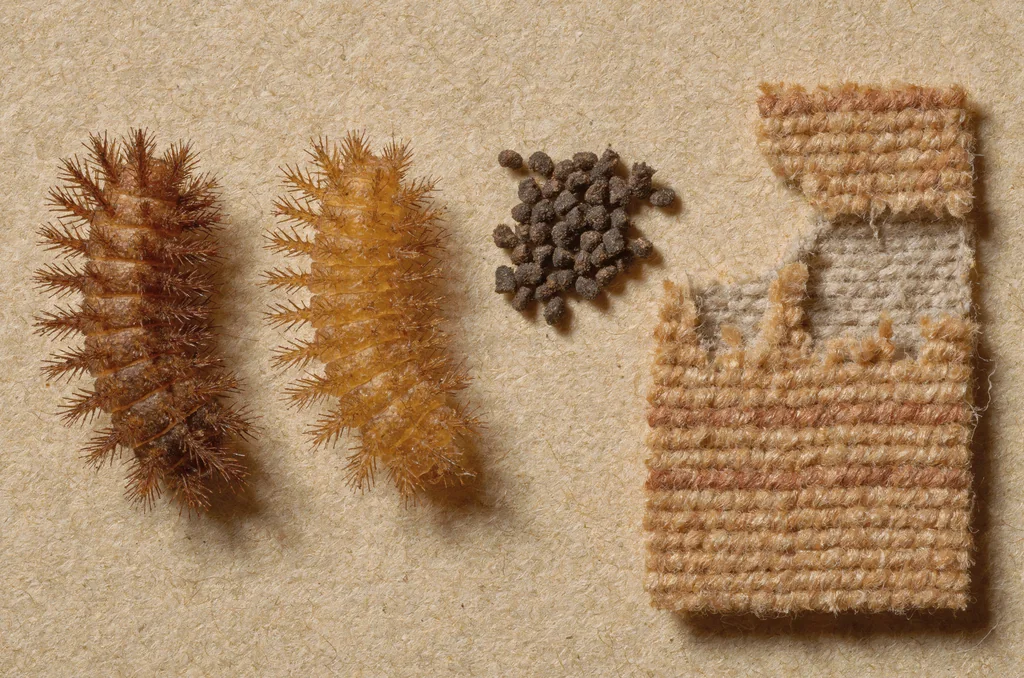
Carpet beetle larvae look different from the rounded adults. Their hairy appearance is a useful identification clue, although a small or blurred photograph may still leave uncertainty.
Inspect an apparent larva before assuming it is alive. An empty shed skin can retain an insect-like shape and may be mistaken for another individual. Photograph it where you found it, then note whether it moved or appeared hollow.
Shed skins show that larvae have developed in an area. They cannot, by themselves, tell you whether the activity is continuing today. Finding live larvae alongside them makes the evidence more relevant to your immediate decision.
Avoid crushing every specimen before identification. A clear photograph or carefully contained example can help distinguish an adult, a larva and an empty skin.
Fabric damage and feeding debris
UCIPM’s presentation connects larval activity with damage to feeding materials and small pellets of feeding waste. This debris is sometimes called frass.
Check any thinning patch or hole alongside the surrounding fabric. Look underneath the item, along folds and at the surface beneath it. Damage accompanied by larvae or skins deserves a focused inspection.
A hole alone is less specific. Wear, snagging and other textile pests can also leave damaged material. The guide to clothes moth warning signs provides a separate identification route when you have fabric damage but uncertain insect evidence.
Small particles can also be ordinary household debris. Do not identify an infestation from dust alone. Take a close photograph of the particles beside any insects or skins before cleaning the area.
Inspect the quiet edges of the room
An inspection should follow the evidence towards a possible source. Searching every visible surface without a plan can leave you counting adults while overlooking the material associated with larvae.
Follow a sighting back to textiles
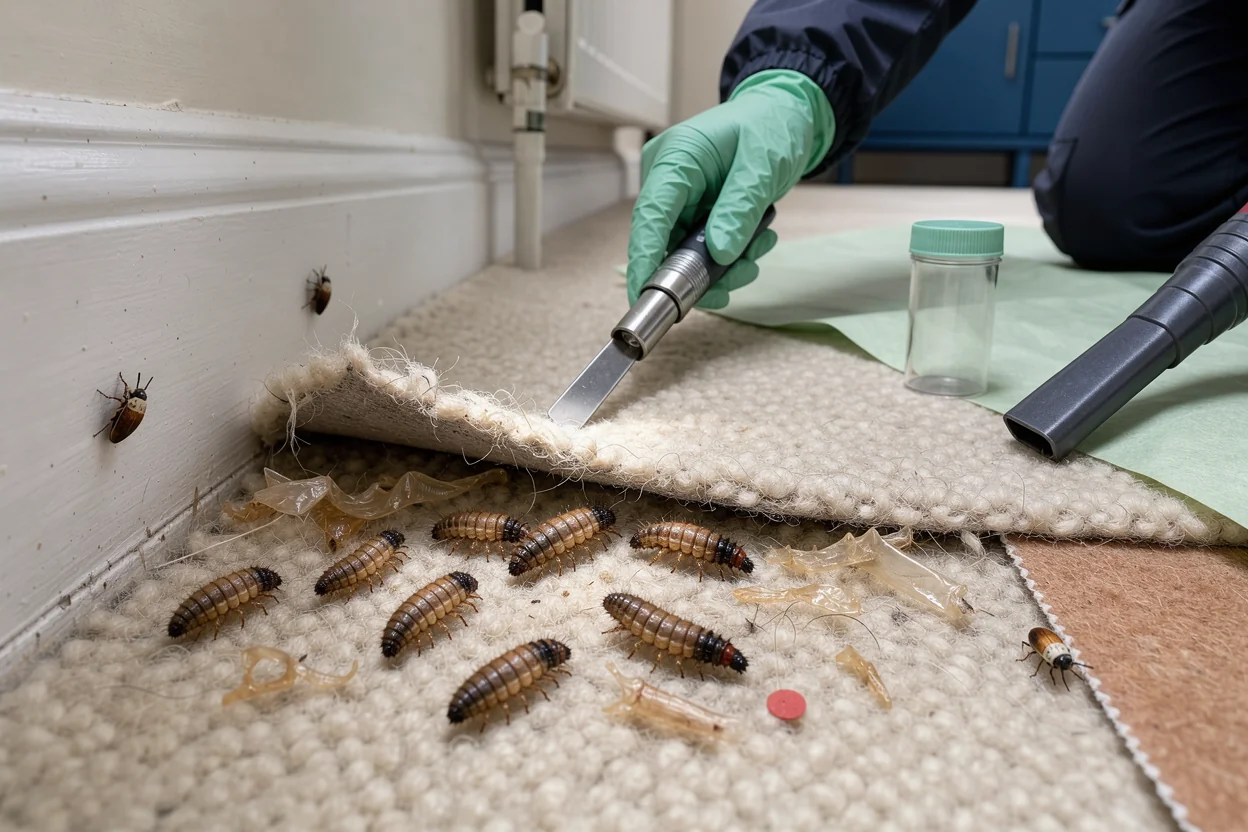
Start in the room where you found the insect. Use a torch to examine places you can reach safely, particularly where textiles sit undisturbed.
Useful checks include:
- Carpet edges beside skirting boards and beneath movable furniture.
- The underside and edges of wool rugs.
- Wardrobe floors beneath stored clothing.
- Folds and seams in blankets, cushions and other suspect textiles.
- Bags or boxes containing infrequently used fabric items.
For example, if you find a larva beside a bedroom rug, inspect that rug and its immediate surroundings before emptying every cupboard. Keep suspect items separate from clean belongings while you examine them.
In a London period flat, furniture may make some carpet edges difficult to reach. Record any inaccessible area rather than assuming it is clear. Move furniture only when you can do so safely.
Work from the sighting outwards. If you find more evidence at the edge of the search area, extend the inspection into the adjacent storage space or room.
Check stored materials when textiles reveal nothing
The supplied household inspection video from Bust-A-Bug Pest Management discusses beetles around natural-fibre furnishings, dry stored food, pet food and bird seed. This provides a reason to investigate beyond the carpet when the initial search finds no source.
Check relevant stored materials for insects and associated debris. Keep any suspect package contained while identification is uncertain, and avoid transferring its contents into another cupboard.
In a small business, record the precise storage area and item involved. A sighting near a stock cupboard calls for a different inspection from one beneath a reception rug.
You do not need to dismantle a building to begin. Photograph inaccessible gaps, fixed furniture or storage voids and explain their position if further inspection is needed.
Clean the affected area and record what returns
Cleaning has two purposes here: removing accessible insects and debris, and creating a clearer starting point for monitoring. It works best when you have already recorded where the evidence appeared.
Keep suspect belongings separate while cleaning
Photograph the affected area before disturbing it. Then vacuum accessible carpet edges, cracks and the space beneath furniture, following your vacuum’s instructions for emptying and maintenance.
Keep suspect textiles contained when moving them. Carrying an unchecked blanket through several rooms makes it harder to interpret later sightings.
Cleaning or laundering an affected item must suit its care label. Wool, delicate upholstery and valuable fabrics need an appropriate method. Avoid applying a heat treatment simply because an online guide recommends it for another material.
The companion guide to removing carpet beetle larvae covers the removal question in more detail. For this initial assessment, concentrate on identifying and cleaning the material associated with the finding.
An overseas treatment video cannot establish which chemical product or application suits a UK home. If you consider UK carpet beetle sprays, check that the current product label covers the intended pest, surface and location. Follow its precautions, including instructions concerning children, pets and treated areas.
Compare fresh findings with the cleaned baseline
Write down what you removed and from where. During later checks, separate new live insects from debris that may have been missed during cleaning.
A simple record can include:
- The date and room.
- Whether the finding was an adult, larva or empty skin.
- The nearby textile or stored material.
- Any associated damage.
- What was inspected or cleaned.
Use the same locations for repeat checks so the observations remain comparable. A clear photograph of a damaged patch can also help you judge whether it changes.
An interactive sighting checklist would be useful if it recorded these details and flagged larvae, repeated activity and damage for closer inspection. It should not calculate an infestation from a headcount alone.
When a small finding needs a wider inspection
Professional assessment becomes more useful when your evidence suggests a source you cannot locate or reach. The number of visible insects is only part of that decision.
Consider a wider inspection when larvae keep appearing after focused cleaning, several rooms contain evidence, or valuable textiles are being damaged. Difficulty identifying the insect is another reason to seek an assessment before choosing treatment.
An inspection for carpet beetles should establish what is present, where activity is concentrated and which materials need attention. Those findings determine whether cleaning, item treatment or another targeted measure is appropriate.
Prepare your observations beforehand. Explain which rooms were checked, whether the insects were adults or larvae, and what you cleaned. Mention any area that remained inaccessible.
For a rented flat, preserve photographs and a dated record when reporting the problem to the landlord or managing agent. Describe the evidence rather than estimating a hidden population.
You can also ask what any proposed treatment involves, which belongings need preparation and how follow-up activity will be assessed. If chemical treatment is suggested, request the product details and relevant household precautions before application.
Questions raised by one beetle, five beetles or ten
Small numbers create uncertainty because they can represent very different findings. These answers keep the decision tied to life stage, location and repeat activity.
Is one adult enough to confirm an infestation?
No. One adult alone does not establish that carpet beetles are breeding inside the property.
Remove or contain it, check the surrounding room and record any larvae, skins or fabric damage. If you find none, monitor the same areas. A later larval finding would change the assessment even if the adult count stayed at one.
What if I find five or ten larvae?
Several live larvae justify a focused search for the material associated with them. Five or ten is not a universal cutoff, and the visible number cannot tell you the full extent of hidden activity.
Record whether they came from one rug, one storage box or several rooms. Multiple affected areas make a wider inspection more useful. Do not wait for the count to rise before investigating damage or repeated larval sightings.
Do old shed skins mean the infestation is still active?
They show that larvae developed in or around that area, but their age may be unclear. Skins found behind furniture could have remained unnoticed.
Photograph and remove them during cleaning, then check for fresh findings. Live larvae, further skins or new damage provide stronger evidence of continuing activity than an undated collection of old skins.
Does a spring sighting change the decision?
The primary video discusses carpet beetles in a springtime context, but the season does not determine whether your home contains a breeding population.
Keep the same assessment in spring, autumn or winter: identify what you found, inspect nearby materials and record repeat activity. A beetle at a window still needs different interpretation from larvae beside damaged fabric.
Can a clean room still need inspection?
Yes. A tidy appearance does not show what is beneath furniture or inside stored textiles.
Inspect the location associated with the finding rather than judging the room by its visible surfaces. You can investigate calmly without treating the sighting as a statement about the cleanliness of the household.
Prepare evidence that a technician can use
The most useful detail to add to the video is a record of where your own evidence appeared. UCIPM explains which signs matter; your photographs and inspection notes connect those signs to a particular room and material.
Take one close photograph of the insect and one wider photograph showing its position. If there is damage, photograph the affected textile and its surroundings before moving or cleaning it.
Keep a specimen securely contained if you can collect it safely. Label the container with the date and location. Avoid combining insects from different rooms, because that removes information about their distribution.
Write a short description in plain language. For example: “Two live larvae beside the wardrobe, empty skins underneath a wool blanket, and no adults seen.” This is a hypothetical record, but its structure is useful: it separates life stages, identifies the material and states what was observed.
Include any uncertainty. “Possible shed skin” is more useful than confidently recording something you have not identified.
The missing practical detail is the location of any larval feeding source. Start by inspecting and documenting the material nearest the first larval finding, then extend the search wherever further evidence leads.