

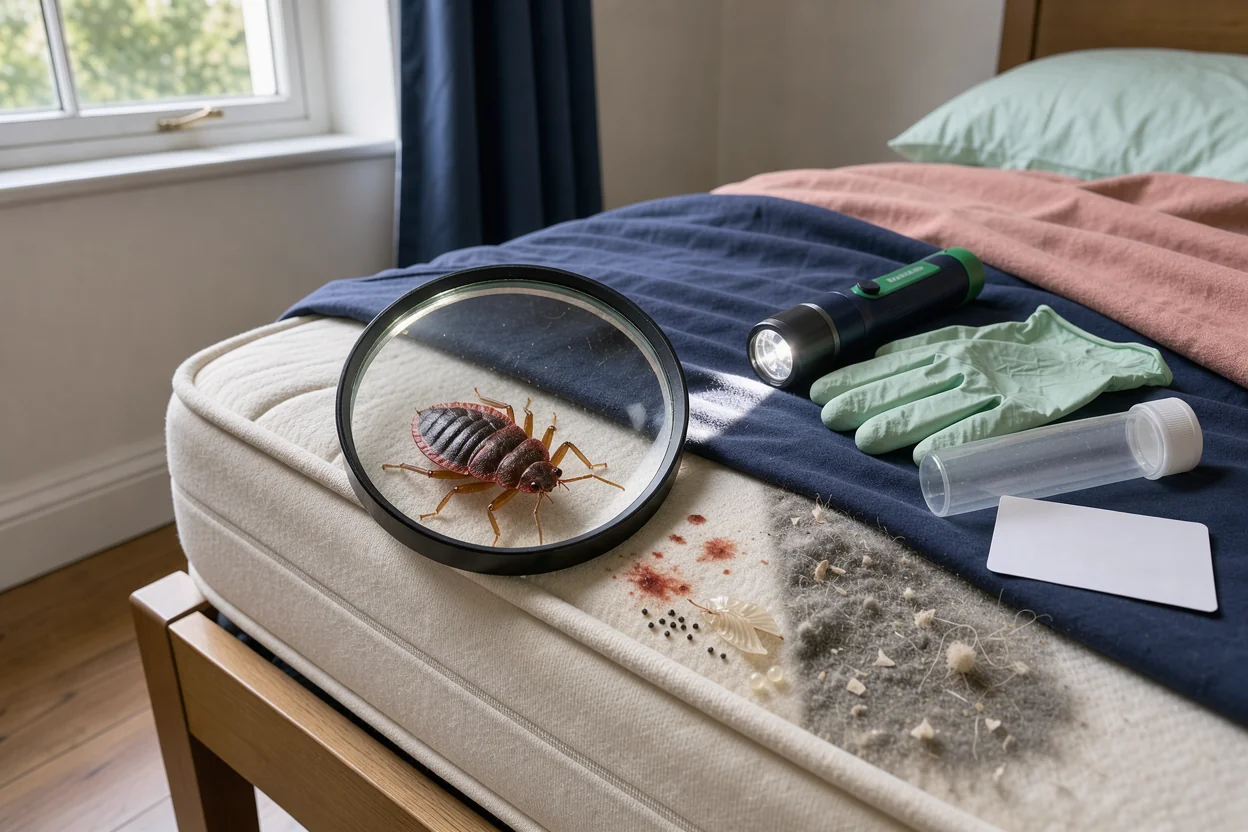
If you are wondering how to know if you have dust mites, start with one distinction: dust mites do not bite; bed bugs do. Dust mite exposure can trigger allergy symptoms in susceptible people, while bed bugs feed on blood and can leave visible evidence around sleeping areas. An itchy night alone cannot tell you which problem you have.
There is also a third possibility: your symptoms may have another cause, such as skin irritation or a different allergen. Both pests can also occur in the same home. Compare the type of reaction, the physical evidence and what an assessment can establish before choosing a treatment.
Bites and allergy symptoms point to different problems
The useful distinction between dust mites and bed bugs is how they affect people. Compare your symptoms with what you find in the room, and keep those two records separate.
Dust mites fit an allergy pattern
Dust mites are microscopic creatures associated with household dust and soft furnishings. Their presence does not automatically mean someone will develop symptoms.
For a person with dust mite allergy, exposure can contribute to sneezing, a blocked or runny nose, and itchy or watery eyes. Some people may also experience worsening eczema or asthma symptoms. These reactions involve allergens associated with mites, rather than bites.
Symptoms around bedding or during cleaning can make an indoor allergen worth considering. They cannot identify dust mites as the cause. Other allergens and irritation can produce overlapping symptoms.
An itchy patch of skin is particularly easy to misread. Calling it a dust mite bite gives it an explanation that the evidence does not support.
Bedroom-specific dust mite warning signs need the same caution: a pattern can guide further checks, but it cannot confirm an allergy. Record whether your nose, eyes, breathing or skin are affected.
Bed bugs fit a biting pattern
Bed bugs can cause itchy skin reactions after feeding. However, the appearance of a mark cannot reliably identify the insect responsible.
Clusters or lines of marks may raise suspicion, but they are not proof. Other bites and skin conditions can look similar. Reactions can also develop after a delay, so noticing a mark in the morning does not establish exactly when it happened.
People react differently. One person may have noticeable itching while someone sharing the bed has little or no visible reaction.
Sneezing alone provides weak evidence for bed bugs. Repeated skin reactions alongside identifiable insects, dark spotting or shed skins give a stronger reason to investigate them.
Keep photographs of skin changes for a healthcare professional if needed. Use photographs of insects and bedding evidence for pest identification.
What you can actually find around the bed
A bed inspection can uncover evidence of bed bugs. Dust mites are too small for reliable identification during an ordinary visual check.
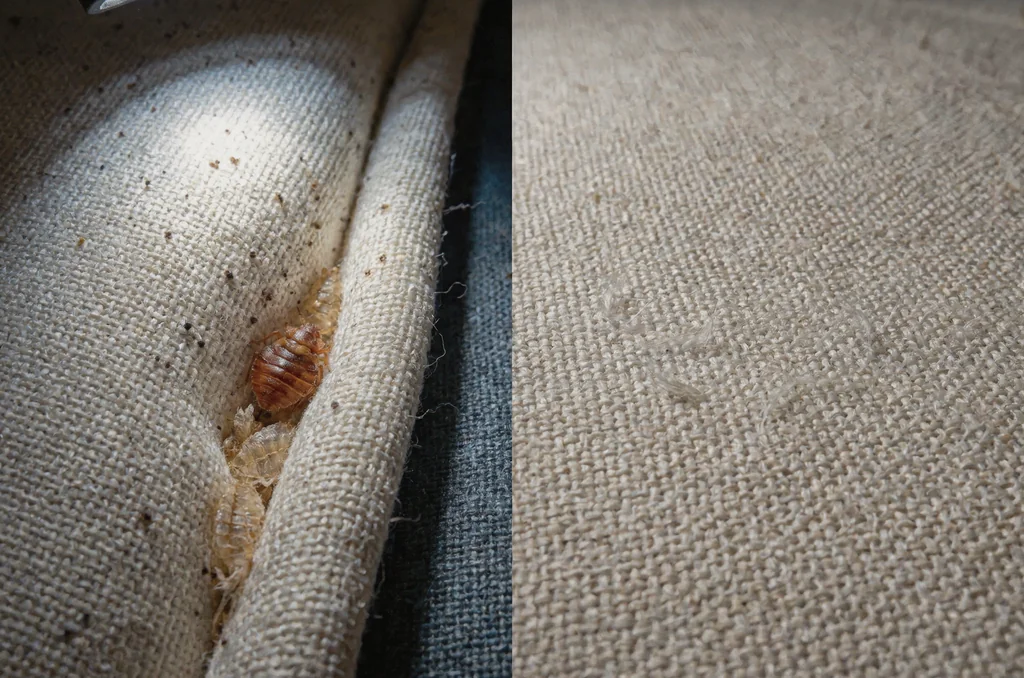
Bed bug evidence is concentrated in hiding places
Check places where fabric folds or materials meet. Mattress piping, bed-frame joints and the back of a headboard deserve closer attention than the middle of a clean sheet.
Possible evidence includes:
- Small, flattened, brownish insects in seams or crevices.
- Pale shed skins caught around mattress edges or furniture joints.
- Dark spotting concentrated near suspected hiding places.
- Blood marks on bedding alongside other evidence.
Each finding needs context. A blood mark could come from a scratched spot. Dark specks could be unrelated dirt, and a loose fragment may resemble a shed skin.
An identifiable insect is more useful than a stain alone. Photograph anything suspicious before cleaning it away. If you can safely collect a specimen, keep it in a closed container for identification.
Avoid crushing the only insect you find. An intact specimen gives an assessor more detail than a blurred photograph or smear.
A dusty mattress cannot confirm mites
Visible dust does not tell you how many mites are present, whether mite allergens are causing symptoms or whether bed bugs are absent.
A mattress can look clean while containing allergens. Equally, a dusty room does not establish that someone has dust mite allergy.
Specks that visibly crawl across a sheet should be identified rather than assumed to be dust mites. A crawling sensation on your skin is also unreliable evidence.
Keep the questions separate: what is present in the room, and what is causing the reaction? Cleaning may help manage dust, but the amount collected by a vacuum cannot answer either question.
Inspect the bed before choosing a treatment
When bed bugs remain a possibility, a careful inspection is more useful than immediately spraying the mattress. Preserve evidence and avoid moving belongings unnecessarily between rooms.
Follow the seams and joints
Use a torch and work through the sleeping area in a consistent order.
- Examine the bedding before removing it. Photograph suspicious marks and note where they appeared.
- Look along accessible mattress seams, piping and labels. Check corners and folds without tearing the fabric.
- Inspect accessible bed-frame joints and headboard edges. Avoid dismantling heavy furniture alone or disturbing electrical fittings.
- Look at nearby upholstered furniture, especially places where someone regularly rests or sleeps.
- Photograph and retain suspicious specimens, then record which areas you checked and what you found.
For a divan bed, accessible fabric edges and joints deserve attention. With a wooden frame, look closely where components meet. These checks target hiding places rather than the cleanliness of the room.
Keep potentially affected laundry contained when carrying it to the washing machine. Avoid shifting bedding, cushions or a mattress into another bedroom while identification is unresolved.
An empty inspection does not prove the room is clear. Record it as an inspection with no evidence found.
Record symptoms separately from room findings
Write down when symptoms occur and what was happening beforehand. Waking with a blocked nose, itching after changing sheets and finding an insect are different observations.
Include changes that might matter, such as a new laundry product, different bedding or symptoms elsewhere in the home. Recent travel may be relevant background, but it cannot confirm bed bugs.
Keep this record brief enough to maintain. Dates, affected rooms, photographs and the type of symptom are more useful than repeatedly guessing the cause.
An interactive bedroom checklist could store inspection dates, photographs and symptom timing in separate fields. It should allow an uncertain result and suggest which type of assessment may help.
What a test or inspection can establish
Allergy assessment and pest identification answer different questions. Understanding their limits helps you avoid paying for a test that cannot resolve your main concern.
Allergy tests concern your response
A GP can assess persistent symptoms and decide whether allergy testing or another investigation is appropriate.
Where testing is used, a positive result can indicate sensitisation to an allergen. A clinician needs to interpret that result alongside your symptoms and history. It does not measure the condition of your mattress or establish that every episode of itching has the same cause.
Photographs of skin marks alone cannot diagnose dust mite allergy. Improvement after cleaning also cannot confirm it, because cleaning changes several possible exposures at once.
If wheezing, disturbed sleep or persistent skin symptoms are part of the problem, discuss them with a healthcare professional. Seek urgent medical help for severe breathing difficulty.
Pest identification concerns what is in the room
A pest inspection looks for insects, hiding places and physical traces. Its value depends on what can be found and identified.
Microscopic examination may identify mites in a dust sample. Some household tests look for mite allergens instead of live mites. These results need different interpretations, and neither automatically explains a person's symptoms.
Before buying dust mite detection tools, check what the product detects, how sampling works and what a positive result means. A result from one sample should not become a claim about every room.
For suspected bed bugs, a clear specimen or recognisable physical evidence can help establish the pest's identity. If the finding remains uncertain, ask what further inspection or monitoring would be useful before agreeing to treatment.
Choose control measures that match the evidence
Dust mite management and bed bug treatment have different aims. Spending on the wrong approach can leave the original problem unresolved and create unnecessary disruption.
When dust mite allergy is the concern
The practical aim of dust mite control is to manage exposure within a wider plan for symptoms.
Start with manageable bedroom routines:
- Wash bedding regularly according to its care instructions and dry it thoroughly.
- Remove settled dust with methods that limit how much becomes airborne.
- Clean accessible surfaces and soft furnishings consistently.
- Address persistent damp and improve ventilation where practical.
- Discuss suitable bedding covers or other changes if allergy has been assessed.
Check fabric-care instructions before using heat or cleaning products. Delicate bedding and upholstered furniture may need different handling.
Avoid buying several expensive products at once while the cause remains unclear. You will spend more and have less idea which change helped.
Killing mites and removing allergens are also different tasks. A treatment claim about live mites does not establish that allergy-triggering material has been removed. Keep symptom assessment alongside cleaning, and review persistent problems with a clinician.
When bed bugs are identified
Confirmed bed bugs require attention to their hiding places across the affected area. Washing sheets alone cannot address insects elsewhere in the bed frame or nearby furniture.
Different bed bug treatment methods involve different preparation, disruption and follow-up. The suitable approach depends on the evidence and the property.
An assessment for professional bed bug treatment should explain what was identified, which areas need attention and how results will be checked. Ask what preparation is needed before moving or discarding belongings.
There is no responsible universal promise that one action will resolve every infestation immediately. Treatment and monitoring may involve more than one visit or stage.
Avoid repeated spray experiments while identification is uncertain. If any pesticide is used, follow its label exactly, including restrictions around bedding, children, pets and re-entry.
In a rented flat or shared building, document findings and inform the landlord or building manager promptly. Coordinated access may be needed to assess the affected area.
When neither explanation fits
Persistent irritation with no identified bed bugs and no established allergy needs a broader assessment.
Skin products, laundry products, other allergens and other biting pests may warrant consideration. Their relevance depends on the symptoms and physical findings.
A pest assessor can help identify an insect specimen. A healthcare professional can assess a rash or recurring respiratory symptoms. Neither assessment should be replaced by repeated purchases based on appearance alone.
If cleaning changes the symptoms, record what changed and when. Treat that as useful information for assessment rather than proof that one pest caused them.
Questions raised by an itchy night
Uncertainty about dust mites and bed bugs often persists after an initial check. These situations call for a specific action rather than another guess.
Can both be present in the same bed?
Yes. Finding bed bugs does not establish whether someone also has dust mite allergy, and identifying mite allergens does not exclude bed bugs.
Keep each finding attached to the question it answers. An insect specimen concerns pest identity; an allergy assessment concerns a person's response.
If both issues need attention, follow the pest-treatment preparation instructions and discuss ongoing symptoms with a healthcare professional. Keep records of both assessments so one problem does not obscure the other.
Does an unaffected partner rule out bed bugs?
No. People can react differently to bites, and some may have little visible reaction.
The same applies to allergens: one person's symptoms cannot establish what everyone in the household should experience.
An unaffected partner is useful background information, but it cannot replace an inspection. Check for physical evidence around the sleeping area and photograph suspicious findings. If only one person has persistent symptoms, include that detail when seeking medical advice.
Should I replace the mattress immediately?
Usually, identification should come first. A replacement mattress may be an expensive response to a problem that has not been established.
If bed bugs are present elsewhere around the bed, replacing the mattress leaves those hiding places unaddressed. Moving an affected mattress through the property also needs care.
For suspected dust mite allergy, replacement alone does not establish or manage the person's wider exposure.
Keep the mattress in place while you arrange appropriate assessment. If disposal becomes part of a treatment plan, follow the handling instructions provided.
What if I find no insects but symptoms continue?
An inspection with no findings leaves the cause uncertain. It does not prove dust mites are responsible or completely exclude bed bugs.
For recurring nose, eye, breathing or skin symptoms, seek medical advice and bring your symptom record. If new insects, shed skins or concentrated spotting appear, preserve that evidence for identification.
Avoid escalating from cleaning to repeated chemical treatment simply because symptoms persist. Keep dated photographs, note which areas were inspected and take the next piece of evidence to the appropriate assessor.