

Camden Town market opening times follow a simple daily pattern. The main trading areas generally open around 10am, most stalls pack up around 6pm, and food counters, bars and venues carry on into the evening. Hours shift with the season, the day of the week and the part of the market you mean, so check the market's own website before you travel.
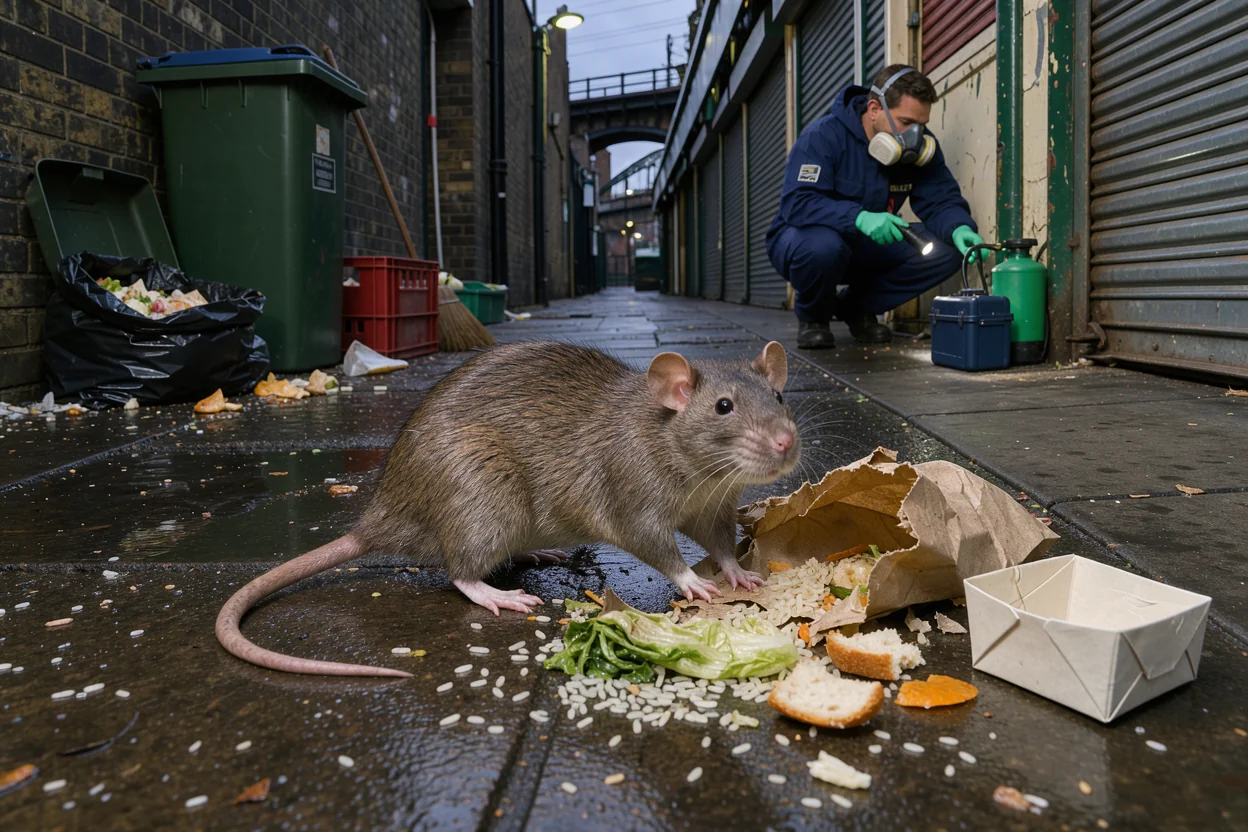
For anyone who lives, cooks or rents out property nearby, the better question is what happens once the shutters come down. A food market leaves a lot of waste in a small area, and rats and mice notice the moment the crowd leaves. This guide gives the hours first. Then it covers the biology of the after-dark shift, the canal and railway routes that carry rodents through Camden, and the checks that keep them out of your building.
What the trading day usually looks like in Camden
Camden is a cluster of trading areas rather than one market with a single gate. Around Camden Lock, the Stables and Buck Street, stalls, permanent shops, restaurants and venues each run their own routine, which is why no single set of hours fits everything.
The usual rhythm looks like this:
- Around 10am, stalls and most food counters open once the morning deliveries are done.
- Through the afternoon, and especially at weekends, the lanes and courtyards are at their busiest.
- Around 6pm, most stalls pack up, although some stay open later in summer or on busy days.
- From early evening, restaurants, bars and venues keep going, each clearing up at its own pace.
Bank holidays, winter weekdays and special events change all of this. This article does not carry a dated timetable, so treat these times as the normal rhythm and confirm the exact hours on the day you plan to go.
For pest purposes, the staggered finish matters more than any single time. Closing happens as a rolling wave from about six o'clock until late, and each step adds waste to the street.
What a busy food market leaves behind at closing time
Rodents cannot read opening times, but they follow what those hours produce. A market's closing routine puts food where rats and mice can reach it, at roughly the same time every night.
The waste comes in a few forms:
- Bagged rubbish stacked in alleys and at kerbs, waiting for a morning collection.
- Dropped chips, noodles and crusts trodden into the gaps between paving stones and cobbles.
- Grease, sugary drink dregs and food scraps in drains and at the bottom of bins.
- Cardboard takeaway packaging that still carries sauce and crumbs.
- Dry stock, such as flour, rice and bread, left in cardboard in back rooms.
Any one of these is small. On a busy Saturday they add up to a full evening meal, laid out along a route that never changes. Rats learn routines quickly, and bags that go out at closing and sit until morning give them a whole night of access.
Why rats and mice work the night shift
Brown rats and house mice are the two rodents that matter around a London food district, and they treat the same waste in different ways.
Rats follow edges and routines
Brown rats are mostly nocturnal and cautious. They avoid open ground and run along walls, kerbs and pipes, using the same path night after night. Over time those paths show up as greasy smears at the base of walls and as worn tracks in soil. A new object on a familiar route, such as a trap or a moved bin, can make rats wary for days. That wariness is a big reason DIY attempts stall.
Rats are also strong swimmers and diggers, so a canal bank or a gap beneath a building makes a workable home. They breed quickly. A female can have several litters a year, with half a dozen or more pups in each, so a small group with steady food can grow into a large one inside a year. A rat feeding behind a stall usually nests close by, in a burrow, a drain or a void under a structure.
Mice want a warm gap and small, frequent meals
House mice are curious rather than wary. They eat little and often, need almost no drinking water, and stay close to their nest. A mouse in a kitchen is therefore often a resident of that building, not a commuter from the market. It found a way in, and the market only made the neighbourhood richer in food.
A mouse can pass through a gap about as wide as a pencil. When nights cool in autumn, warm voids behind kitchens, boiler cupboards and shared walls become very attractive. Many households first notice mice at this time of year.
Canal banks, railway arches and the routes between them
Camden's geography gives rodents shelter and a way to travel between food sources. The Regent's Canal runs through the market area, and railway lines and brick arches sit close by.
Rodents tend to move along linear features: canal walls, towpath edges, railway embankments, service trenches and the drain network under the streets. Gaps in old brickwork, voids behind waterside walls and the scrub beside tracks all offer shelter with food only minutes away. Water matters too. Rats need to drink daily, and a canal gives them access without crossing open streets. Drains double as rodent roads, because pipe runs link kitchens, bins and basements.
None of this proves that any particular number of rats lives there. Nobody publishes a reliable rodent count for a single market, and this article does not invent one. It describes the conditions that rodent behaviour predicts: shelter, a water edge, a food source and quiet routes between them.
The last stretch of the route is the building stock. Period terraces around Camden Town often have shared party walls, cellars, old clay drains and pipes that enter through loosely filled holes. Any of these can act as a doorway. A cracked or unsealed drain run is a common way for rats to get in, and a drain survey can confirm it. The same checks apply to terraced homes in Kentish Town, which has a similar mix of rail corridors and busy food streets.
Signs it has reached a flat, café or rental
Evidence in a building builds in a rough order, and each sign tells you something about how long the animals have been there.
- Scratching or scampering in ceilings, wall voids and under floors is often the first sign, and it peaks late in the evening and in the small hours.
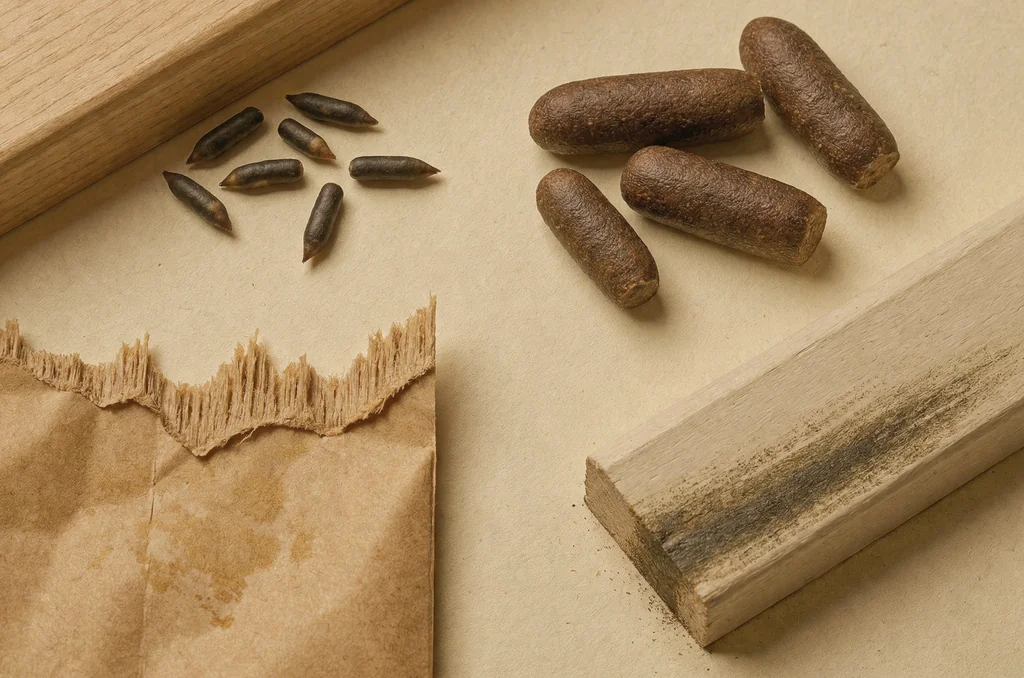
- Mouse droppings are dark and about the size of a grain of rice. Rat droppings are larger, roughly 1 to 2 cm long, and appear along runs and near food.
- Fresh droppings are dark and soft, while old ones turn grey and crumble when touched.
- Chewed packaging, nibbled soap and candles, and damaged pipe lagging or cable sheathing point to gnawing.
- Dark, greasy rub marks along skirting boards mark a route used repeatedly, and a stale, ammonia-like smell can build in closed spaces.
- Shredded paper, fabric or insulation tucked into a warm corner is a nest.
For a restaurant manager, a single dropping in a dry store is both a hygiene problem and an inspection problem. Food businesses are expected to keep pests under control under UK food hygiene law, and environmental health officers look for droppings, gnawing and gaps when they visit. This kitchen rat inspection case study shows how food waste draws rats to hospitality premises in Camden Town.
Landlords and letting agents should write down the date, take photos and note what each tenant reported. Disputes over who noticed what, and when, are far easier to settle with a record.
When to handle it yourself and when to call a technician
Mice caught early in a single room are the one case where DIY has a fair chance. Place several snap traps flat against the wall where you found droppings, with the trigger end toward the skirting, and check them daily. Once catches stop, seal the entry points with fine metal mesh and filler, because mice gnaw through foam and plastic. Keep traps and any bait inside covered stations that children and pets cannot open.
Rats are a different job. They are wary of new objects, and a burrow or drain entry is rarely visible to a householder. Over-the-counter rat bait also carries a poisoning risk for pets and for wildlife that eat poisoned animals, and UK rules limit which rodenticides non-professionals can use and where. Treat any rat sign inside a building, and any rodent sign in a food area, as a job for a professional.
Call sooner if you see any of these:
- Rodents active in daylight.
- Droppings in more than one room.
- Fresh signs a week after you started trapping.
- Noises in a shared wall or ceiling, which usually mean neighbours are affected too.
- Gnawed cables, which can create an electrical risk.
- Any evidence near food preparation or storage.
Specialist Camden Town rat control starts with finding where the animals live and how they get in, then treats the problem and proofs the building. Mouse control in Camden Town follows the same order on a smaller scale.
Ask any technician where bait will sit, whether the stations are locked and tamper-resistant, how dead rodents will be collected, and what the plan is for the entry points. A treatment with no proofing plan only buys time. If cost is the worry, this rodent control pricing guide sets out seven cost checks to run before you book.
Closing-time habits that cut off the food supply
Stallholders and neighbours control the one thing that decides whether rodents stay: how much food is within reach overnight.
For traders, kitchens and shopfronts:
- Put bags inside lidded bins instead of stacking them beside the bin.
- Sweep and wash the stall floor and the metre around it, because food in the joints is still food.
- Clear sink and floor drains of grease and debris before leaving.
- Store dry goods in lidded plastic or metal tubs, off the floor, instead of cardboard.
- Check door sweeps and seals. A mouse needs a gap about as wide as a pencil, and a rat needs around 2 cm.
A closing checklist is an easy tool to build. Bins sealed, floors swept, drains cleared, stock lidded, doors seated: it takes about ten minutes. Turn it into a short form that staff tick off and date, and it also gives an environmental health officer something concrete to read.
For homes and flats:
- Keep outdoor bin lids closed and do not leave takeaway leftovers in bags outside overnight.
- Check airbricks for broken mesh and replace any that are damaged.
- Pack small gaps around pipes with metal mesh and finish with filler. Rats can chew through foam and soft sealant, so metal comes first.
- Clear clutter from cellars and under-stair spaces, where rodents can hide undisturbed.
Pest control in Camden Town usually begins with the outside of a building: drains, bin areas, airbricks and pipe entries. Those are the places this section covers, so you can make a good first pass yourself.
Questions about Camden's market hours and its night visitors
Are all parts of Camden Market open at the same time?
No. Camden is made up of several trading areas, and individual stalls, restaurants and venues set their own hours. The usual pattern is a 10am start with most stalls closing about 6pm, but check the official site for the area you plan to visit.
When are rats most active near a market?
Mostly from dusk to dawn. The heaviest feeding tends to come in the quiet stretch after the last customers and staff have gone and the bins are out.
Does living near the market mean I will get mice?
No. Nearby food raises the odds, and a way inside decides whether it happens. A building with sealed pipe entries, intact airbricks and lidded bins is hard to enter, however busy the street outside.
Is a rat sighting at night a reason to avoid eating at the market?
A rat crossing a quiet street after dark says something about the wider area, not about any one stall. Food businesses must follow food hygiene law. If you see droppings or gnawed packaging inside a food area, tell the manager first and, if nothing changes, the council's environmental health team.
A seven-day check for properties near the market
Use this week to find out whether you have a problem and to close the easiest ways in.
- Day one. Walk the outside at dusk with a torch. Look for gaps around pipes, broken airbrick mesh, loose cellar doors and holes at the base of walls.
- Day two. Check the bin area. Fix lids, lift bags off the ground and clear spills and grease.
- Day three. Inspect cupboards under sinks, the gaps behind the cooker and fridge, and any loft or store room. Look for droppings, gnawing and nesting material.
- Day four. Move dry food into lidded tubs and photograph anything you find, with the date.
- Day five. Seal small gaps with metal mesh and filler. Leave larger holes, and anything near gas, electrics or drains, for a professional.
- Day six. Listen in the evening and again before dawn. Note the time and place of any scratching.
- Day seven. Review your notes. If you found nothing and heard nothing, keep the habits going.
If you have found fresh droppings, gnawing or a run by day seven, or the noises have carried on for three nights or more, stop repeating the DIY steps and book a technician. Rats in particular rarely clear without a proper survey of the drains and the outside of the building.