

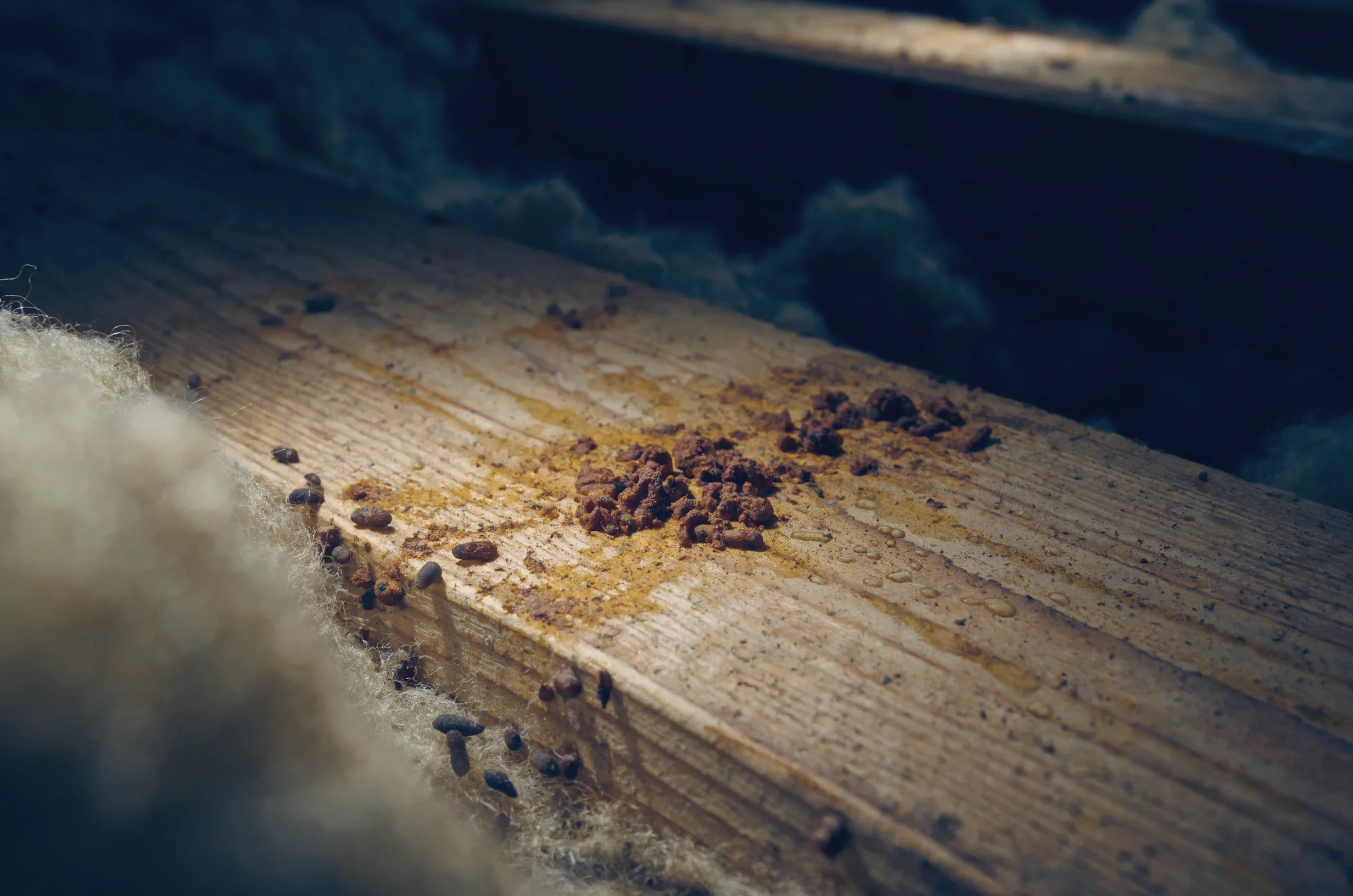
If you are wondering what does mouse urine smell like, the usual description is a sharp, ammonia-like odour with a musky, stale background. It may resemble an unclean pet cage or old urine trapped in a cupboard. Fresh, scattered droplets can be much less noticeable. For a homeowner or business manager, the useful question is whether that smell appears alongside droppings, gnawing or repeated movement. Odour alone cannot identify mice, count them or establish whether they are still present. Start with the location of the smell and the physical evidence around it.
Where mouse urine odour collects
Mouse urine is easier to notice where deposits accumulate and air moves slowly. A closed cupboard beneath a sink, the space behind kitchen units or a cluttered storage corner can hold an odour that seems faint elsewhere.
When you open a cupboard, trapped air may make the smell briefly seem stronger. That change tells you where odour has collected; it does not prove the cupboard contains a nest.
Check accessible areas around:
- Pipe openings beneath sinks and behind cupboards.
- Skirting edges beside food storage.
- Floor-level corners behind movable furniture.
- Stored cardboard, fabrics and other absorbent materials.
Keep your face away from suspected deposits. Use a torch to inspect surfaces instead of leaning in to smell them.
In an older flat, odour may also travel through gaps around pipes or between floorboards. The strongest-smelling room may therefore be some distance from the deposits. Reports of scratching noises in walls can help narrow the inspection area, although sounds also need separate identification.
Record the exact cupboard, wall or floor edge involved. “Under the kitchen sink beside the waste pipe” is more useful than “the kitchen smells”.
Why stale urine becomes sharper
The ammonia-like smell associated with old mouse urine develops through changes in the deposited urine. Two parts of the chemistry help explain why the sharp odour and the underlying scent do not behave identically.
Urea can become ammonia
Urine contains urea, a waste product from the body’s processing of protein. Urea itself has little smell. Bacteria with the appropriate enzymes can break it down and release ammonia.
That distinction matters when interpreting a faint patch or a strong-smelling cupboard. A fresh deposit does not necessarily have the harsh smell people expect. Older deposits, repeated wetting and local conditions can produce a different impression.
Temperature, moisture, ventilation and the surface all affect what reaches your nose. A warm cupboard with repeated contamination can smell quite different from a single dried mark on a well-ventilated floor.
There is no dependable household timetable that turns smell into an age estimate. Avoid assuming that a sharper odour means mice arrived recently or that a faint smell means the residue is harmless.
Urinary proteins help scent compounds persist
Mouse urine also contains major urinary proteins, usually shortened to MUPs. These proteins are part of the mouse’s scent communication system. Some bind scent compounds and slow their release after a mark has been deposited.
MUPs are not the chemical source of the ammonia smell. They help explain why a scent mark has more going on than simple evaporation.
For cleaning, the practical point is that a dry-looking surface can still carry residue. Air freshener changes the room’s smell without removing that material. Inspect the affected surface and any absorbent material beneath it.
How scent marking leaves a lasting trail
Mice deposit small amounts of urine as part of scent communication. Repeated marking can leave many scattered deposits along an area they use, without producing an obvious puddle.
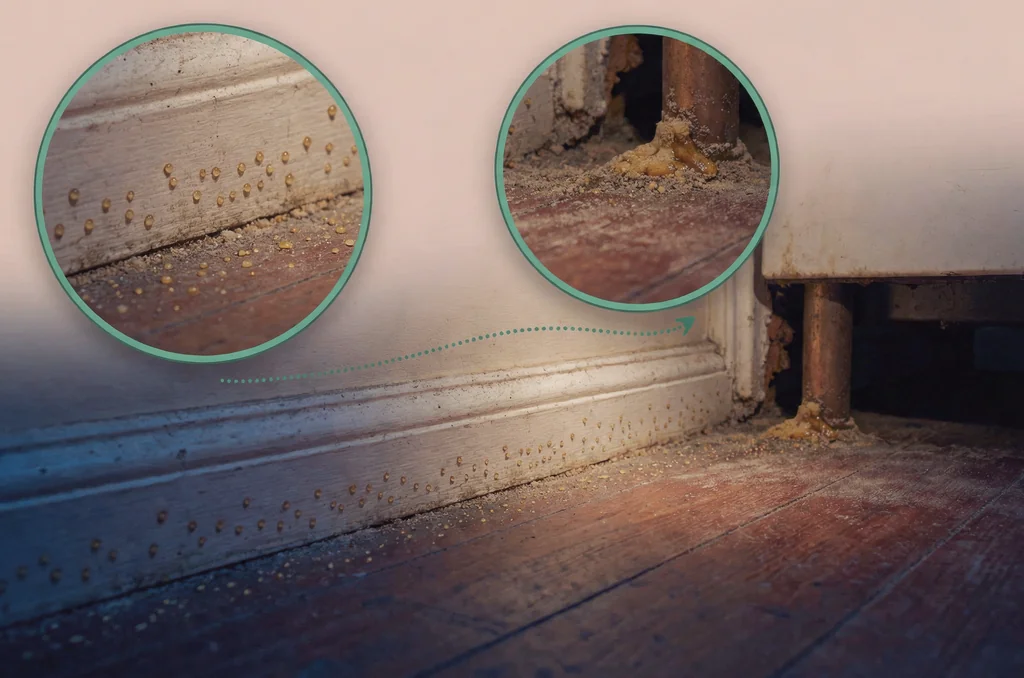
Food, shelter and access influence where those deposits collect. Behind a cooker, around a pipe opening or beside stored food, the same route may receive repeated marks. Removing one visible patch can leave other deposits nearby.
Some heavily used spots develop raised accumulations sometimes called urine pillars. These contain repeated deposits mixed with material such as dust and grease. They are different from the small, separate pellets usually recognised as droppings.
You do not need to find a pillar to suspect mice. Scattered contamination is less conspicuous, and many household inspections will reveal other evidence first. Do not touch or scrape a raised deposit to identify it.
Scent marking also explains why removing food alone may leave a persistent smell. The existing residue remains, while any continuing mouse activity can add fresh marks.
A thorough response therefore has separate jobs: establish whether mice are active, address their access and shelter, and remove contamination. Cleaning the visible floor cannot resolve deposits inside a cupboard base or beneath damaged flooring. Mark inaccessible areas for assessment instead of dismantling fittings to follow the smell.
Evidence that separates mice from other smells
A suspected urine smell becomes more informative when several signs occur in the same place. Look for a pattern along an accessible edge or opening.
Check the route around the odour
Small dark droppings, gnawed packaging, damaged food containers and disturbed nesting material can support a suspicion of mice. A single unidentified mark provides much less certainty.
Photograph signs before cleaning, with enough surrounding detail to show their location. Keep children and pets away from the area. Avoid handling droppings to judge their texture or freshness.
Access points deserve attention too. Look around service pipes, cupboard backs and external wall openings. Where the smell is near a ground-floor outside wall, evidence of mice entering through air bricks may help explain the route. Keep ventilation openings clear while arranging suitable proofing.
In shared buildings, note whether the affected wall adjoins another flat, a communal riser or a service cupboard. A recurring problem may need inspection beyond the room where the smell first appeared.
Allow for other sources of odour
Several household problems can resemble part of a mouse-related smell:
- Cat urine can produce a strong ammonia-like odour, especially where it has soaked into porous material.
- Damp materials and mould can create a musty smell around cupboards, walls and stored belongings.
- Drain faults can produce unpleasant odours near sinks and pipework, sometimes with a sulphurous character.
- A dead animal can produce a heavy decay smell that needs investigation separately from urine deposits.
Rat and mouse odours also overlap. Smell cannot reliably distinguish the species.
If the odour follows plumbing use or appears beside a leak, investigate that pattern as well. Keep photographs and location notes together so that a pest inspection or plumbing assessment starts with specific evidence.
Removing urine residue without spreading dust
Suspected mouse contamination needs careful cleaning, particularly where dry deposits could become airborne. The method should suit both the surface and the extent of the contamination.
Start with accessible, washable surfaces
Keep people and pets away while you assess a small affected area. Ventilate where practical and wear suitable gloves.
Do not dry-sweep or vacuum suspected droppings, nesting material or urine-contaminated dust. Those actions can spread particles into the air.
For a small area on a washable surface, use a suitable disinfectant according to its label. Follow its directions for application, contact time and surface compatibility before wiping up the material. Bag contaminated disposable cleaning materials securely, then wash your hands after removing gloves.
Never mix cleaning products. In particular, bleach and ammonia-based cleaners can release dangerous gases when combined. Use one suitable product according to its instructions.
Food-contact surfaces need any rinsing or further cleaning specified on the product label. Discard food that has been directly contaminated or whose packaging has been gnawed.
Absorbent materials may need a different response
Urine can soak into cardboard, carpet underlay, unfinished wood and other porous materials. Wiping the visible surface may leave contaminated material beneath it.
Avoid soaking flooring or cupboard panels in an attempt to reach the source. Extra moisture can damage the material and create another property problem.
An odour-removal product may reduce a smell without disinfecting the surface. Check what the label actually claims, including whether the product is suitable for the material concerned.
Extensive deposits, contaminated insulation, nests and inaccessible voids need an assessment before cleaning begins. Do not remove electrical covers, disturb wiring or pull apart fitted units to reach suspected contamination. Photograph the accessible evidence and identify the area that cannot be safely reached.
What a lingering smell means after treatment
A smell that remains after mouse activity has been addressed can come from old contamination. It can also reflect deposits that were missed or new activity. The odour alone cannot separate those possibilities.
Porous materials are one reason for persistence. Another is incomplete access: the cupboard floor may be clean while residue remains beneath its base. In a shared property, activity elsewhere may also affect the same service route.
A mouse control assessment should connect the evidence, likely access points and follow-up checks. Ask which areas were inspected, which were inaccessible and how continuing activity will be assessed.
When comparing rodent treatment costs, check whether the scope includes follow-up visits, proofing and contamination work. Establish who is responsible for each task.
For landlords and managing agents, a dated record helps distinguish an unresolved route from an old cleaning issue. Include the location, photographs, work completed and any new evidence.
Fresh droppings or renewed gnawing after documented cleaning deserve prompt investigation. A remaining smell needs its source checked without assuming the treatment has failed.
Questions about a suspected mouse smell
Some uncertainties remain even after a careful visual check. These limits help prevent a smell from becoming a misleading diagnosis.
Can one mouse make a noticeable smell?
A noticeable odour does not establish how many mice are present. Repeated deposits in a confined area can matter more to what you smell than the size of the room.
An absence of odour does not rule out activity either. Base the inspection on physical signs and their location.
Does ultraviolet light confirm mouse urine?
An ultraviolet torch may reveal fluorescent patches, but other household residues can fluoresce too. It cannot confirm that a mark is mouse urine or establish when it was deposited.
Treat fluorescence as an inspection clue. Do not use it alone to decide which materials need removal or whether mice remain active.
Can there be a urine smell without visible droppings?
Yes. Deposits may be hidden behind fittings, beneath floors or inside stored materials. The smell may also have another cause.
Inspect accessible edges first. Where the odour repeatedly returns from an inaccessible void, arrange an assessment rather than making holes to investigate.
Will opening windows remove the problem?
Ventilation may reduce the odour you notice while leaving the deposited material in place. A smell that returns after windows close needs the same inspection as one that stays constant.
Record where it returns and whether any new physical evidence appears.
Check for fresh activity over the next seven days
The next week should produce a clearer record of mouse activity and any unresolved contamination. Do not use this period to delay action where food preparation areas or extensive deposits are affected.
On the first day, photograph accessible signs and record their locations. Isolate contaminated food or belongings, arrange appropriate cleaning and note any areas that cannot be reached safely.
During the following days, inspect the same accessible locations without disturbing dusty voids. Look for deposits or damage that appeared after the documented cleaning. Keep food in secure containers and clear accessible crumbs and spills.
An interactive room checklist can help organise this: record each location, attach a dated photograph and mark when it was cleaned. Add new signs as separate entries so old evidence does not get counted again.
By the end of the week, review the records with whoever is responsible for the property. Fresh droppings, repeated gnawing or continued sightings need further investigation even if the smell has faded. Persistent odour without fresh signs needs the remaining deposits and alternative sources assessed.
For a restaurant or other food business, isolate affected food and surfaces immediately and arrange prompt professional assessment. In rented or shared accommodation, report the evidence and exact location to the landlord or managing agent in writing.