

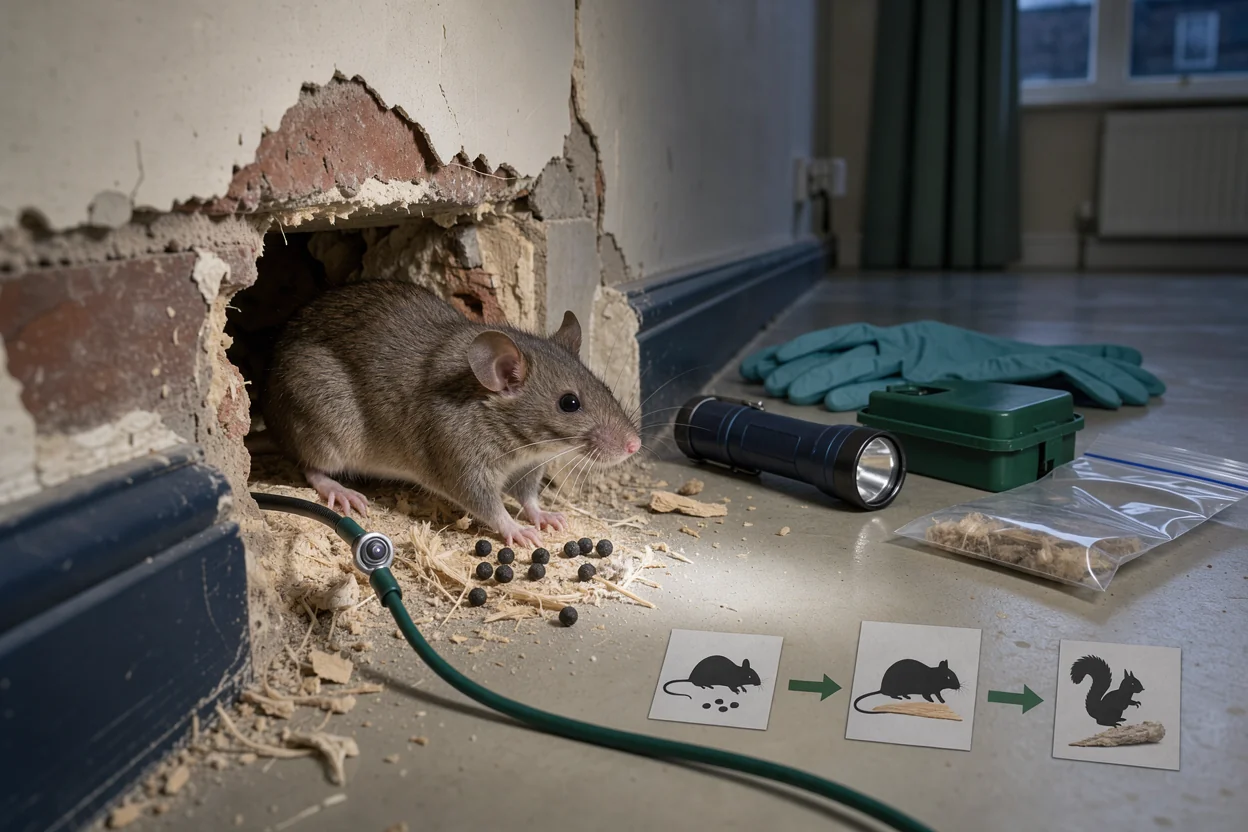
A scratching noise in cavity wall at night can come from mice or rats moving, climbing or gnawing inside a concealed space. Squirrels, birds and sounds from pipes or loose building materials are other possibilities, so noise alone cannot identify the cause.
Start by noting when the sound happens, where it seems loudest and whether there are visible signs nearby. Leave the wall intact while you investigate. A recording and a few photographs can help a technician assess the problem without unnecessary damage.
Does the scratching sound like mice, rats or squirrels?
Light scurrying can suggest mice, heavier movement can suggest rats, and daytime activity near the roof can suggest squirrels, but these are clues rather than a diagnosis.
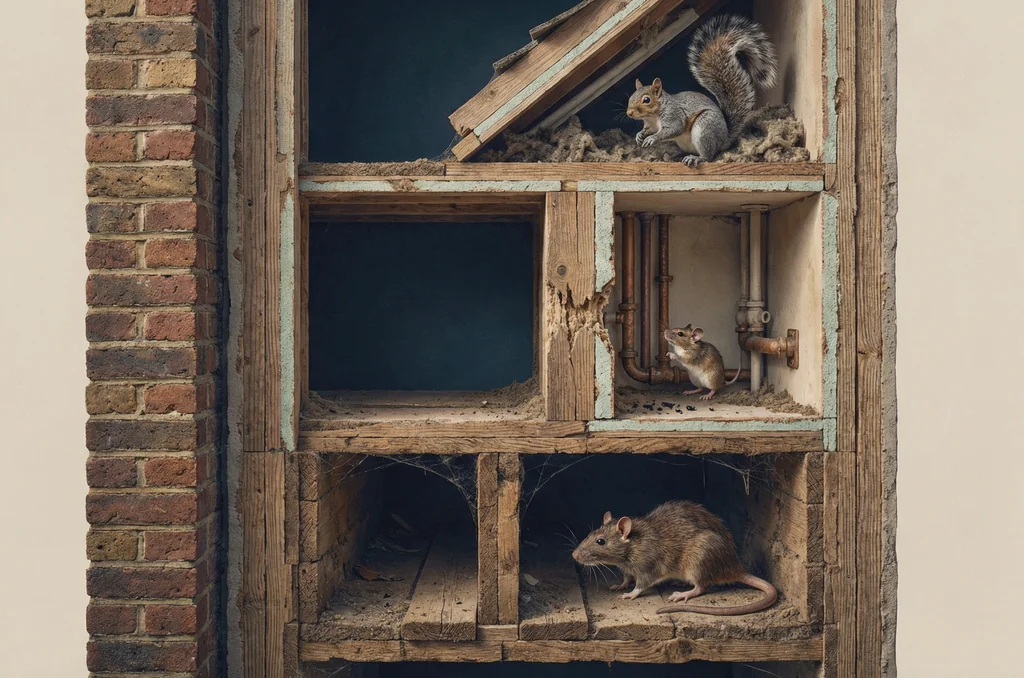
Walls and floors carry sound. A small animal close to plasterboard can seem surprisingly loud, while a larger animal farther away may sound faint. Use timing, location and physical evidence together.
Could it be mice?
Mice can make quick scratching, rustling and intermittent gnawing sounds. Activity may seem to travel between a kitchen wall, pipe boxing and the space beneath a floor.
Look for supporting evidence in accessible places: droppings inside cupboards, damaged food packets or gnawed edges around openings. A single noise without other signs leaves the cause uncertain.
An assessment for mouse control should consider both the occupied spaces and the route into them. Photograph any evidence before moving nearby belongings.
Could it be rats?
Rats can produce scratching, gnawing and more substantial scuffling sounds. However, loudness cannot reliably separate rats from mice through a wall.
Evidence around ground-floor service openings, accessible floor edges or external defects may help guide an inspection. A technician may need to investigate connected spaces beyond the room where you hear activity.
Avoid estimating the number of rats from overlapping sounds. One animal moving through a connected void can be heard in several places.
Could it be squirrels?
Squirrels are generally active during daylight, so movement around dawn or during the day deserves attention. Scrambling near an upstairs ceiling or the eaves makes roof-level inspection relevant.
Repeated activity deep into the night is less typical of squirrels, though timing alone cannot rule them out. If you see one entering the roof, squirrel control requires a plan suited to that animal and the building. Leave the suspected opening undisturbed pending assessment.
Could pipes or the building itself make a scratching noise?
Yes, pipe movement, heating cycles and loose building materials can produce sounds that resemble scratching.
A useful distinction is whether the noise repeatedly follows a building event. Does it begin when the heating starts? Does it stop after hot water has run? Does it happen only during windy weather?
Pipes can tick, scrape or knock as their temperature changes. A loose external fitting may rattle against masonry. These patterns can sound irregular from inside a quiet bedroom.
Try recording the sound alongside the heating schedule and weather conditions. Compare several episodes before drawing a conclusion. A noise that coincides with heating is a reason to investigate the pipework, although it does not rule out a separate pest problem.
Also check what kind of wall you are hearing. A true cavity wall has a gap between its inner and outer masonry layers. The sound may instead come from a stud partition, chimney area, floor void or boxed-in pipe.
If no pest evidence appears and the noise closely follows plumbing or heating use, arrange an appropriate building inspection. Tell the contractor exactly which event seems to trigger it.
Why is the noise louder at night or in one particular room?
Night-time quiet can make concealed movement easier to hear, while connected building spaces can make its location misleading.
Mice and rats can be active after dark, so repeated overnight movement deserves investigation. Yet hearing something only at bedtime does not prove it happens only then. Daytime traffic, conversation and appliances may mask the same sound.
Record whether activity happens after sunset, in the middle of the night or near dawn. Those distinctions are more useful than describing everything as “night-time scratching”.
The loudest point may be where sound travels most easily into the room. Pipe boxing, a thin partition or an opening around a service can make activity elsewhere seem close.
In a terrace or converted flat, listen from another accessible room and note whether neighbours hear the same pattern. Shared building spaces may need coordinated inspection.
Avoid banging on the wall to locate an animal. A brief silence afterwards does not confirm what caused the sound or whether anything has left. Mark the suspected area on a simple room sketch and record the time instead.
Can rodents chew through plasterboard and enter the room?
Rodents can damage plasterboard and other vulnerable materials, particularly around an existing edge or opening, but scratching does not mean they are about to break through.
Check accessible areas around pipe penetrations, cupboard backs and damaged skirting. Fresh debris or an opening that appears to be enlarging deserves attention. Keep photographs so changes can be compared without repeatedly disturbing the area.
An intact painted surface tells you little about what is behind it. Equally, an old chipped edge is not proof of current activity.
Concealed gnawing also raises the question of damage to nearby services. You cannot assess wiring through the sound of chewing, and opening the wall yourself may expose cables or pipework.
Keep children and pets away from damaged areas. Do not put fingers, wire or tools into a suspected opening.
If you notice heat, sparks, a burning smell or other electrical warning signs, stop the pest investigation and seek urgent help. Smoke or fire requires leaving the property and contacting the emergency services.
What can I check safely tonight without opening the wall?
You can record the sound, inspect accessible surfaces and secure food while leaving wall coverings and service panels undisturbed.
There is no need to create an inspection hole to make the first observations useful. Work only where you can stand safely and see clearly.
What should I record?
Keep a short log with details that someone else can follow:
- Note the room, wall and approximate height of the sound.
- Record when it starts, how long it lasts and whether it moves.
- Describe scratching, gnawing, tapping, fluttering or running separately.
- Note whether heating, water use or windy weather coincides with it.
- Save a short audio recording from the same position when activity recurs.
An interactive wall-noise checklist could turn these entries into an inspection summary. Its useful output would be a record of evidence and unanswered questions, rather than a definite species identification.
Where should I look?
Use a torch to inspect accessible cupboard floors, skirting edges and visible pipe openings. Photograph droppings, gnaw marks or disturbed material without touching them.
Avoid pulling out heavy appliances, entering an unboarded loft or removing electrical covers. Stop if access requires dismantling the building.
Put open food into suitable containers, clear crumbs and secure waste. These steps can reduce accessible food while the cause is investigated.
If you find an animal, give it space. Keep pets away and report the location to the person arranging the inspection.
Should I block the hole, set traps or put bait into the cavity?
Leave suspected active openings alone until the animal and its route have been assessed, and do not push loose bait or traps into an inaccessible cavity.
Sealing an occupied route can leave an animal trapped or redirect its movement elsewhere. It may also hide evidence that would help explain how it entered.
Vents and air bricks need particular care because they have a building function. If you suspect mice entering through air bricks, check for damage from a safe position. Any proofing should retain the required airflow.
A trap needs an appropriate position, protection from children and pets, and regular checking. A device pushed behind a wall may become impossible to inspect or retrieve.
Bait also needs a species-specific assessment and safe placement. Avoid treating an unidentified sound with a chemical product. An animal dying in an inaccessible space can create a further problem.
If you have already placed a product, keep its packaging and record exactly where it went. Tell the technician before further treatment begins, and keep children and pets away from the placement area.
When does scratching in a wall need urgent attention?
Scratching needs prompt assessment when it comes with fresh damage, activity in occupied rooms or evidence near food; electrical or fire warning signs require urgent help.
Noise alone does not establish the severity of an infestation. The surrounding evidence should guide the response.
Arrange a prompt pest inspection if gnaw marks are increasing, animals are entering living areas or fresh signs keep appearing in cupboards. Repeated overnight activity also warrants investigation, even when no animal is visible.
Where food is prepared for customers, keep affected food and surfaces out of use until the contamination risk has been assessed. Follow the premises’ food-safety procedures and inform the responsible manager.
If an animal appears trapped or distressed, avoid cutting towards the sound or attempting to grab it. The wall may contain services, and the animal may move beyond the point you have identified.
Bats or an occupied bird nest near the suspected opening need specialist wildlife advice before work proceeds.
For suspected rats, an assessment for rat control should include the possible access route. Report fresh damage and the rooms affected when arranging the visit.
How can a technician inspect and treat a pest inside a wall?
A technician can combine your sound record with physical evidence and accessible building checks to decide where investigation and treatment should begin.
A useful visit should address several questions: what evidence supports the species identification, which spaces appear connected, and how might the animal be entering?
The inspection may include cupboard voids, service penetrations, accessible loft areas and external defects. Further building or drainage investigation may be appropriate if the evidence points that way. A scratching sound alone does not establish a drain fault.
Ask for the working explanation and any remaining uncertainty. If there is no confirmed pest evidence, the inspection findings should make that clear.
Treatment depends on the animal, access and risks within the property. It may involve monitoring, suitably protected traps or another controlled approach. The plan should explain how placements will be checked and how inaccessible areas will be handled.
Opening a wall may sometimes be necessary, but it should have a clear purpose and account for hidden services. Ask who would carry out that work and who would repair the opening.
Before the visit ends, establish what evidence to watch for and when the findings will be reviewed. Keep the inspection report with your recordings and photographs.
Will the scratching stop by itself, and how can I prevent it returning?
The sound may stop temporarily, but silence alone cannot confirm that an animal has left or that its entry route is closed.
Activity can shift to another part of the building. A quieter night may also reflect a change in your routine or background noise.
Compare the sound record with visible evidence. Continued fresh damage or repeated sightings matter even if the bedroom wall becomes quiet. Ask what monitoring period and findings will support ending treatment.
Longer-term prevention depends on the route identified. Repairs may involve damaged vents, gaps around services, roof defects or another building fault. Proofing materials and installation should suit the surface and preserve ventilation.
Keep food and pet food in secure containers, manage waste and maintain access to inspection points. Clutter pressed against a service opening can make new signs harder to spot.
In a converted property, repairs inside one flat may leave a route elsewhere in the building unresolved. Share relevant findings with the managing agent or other responsible person.
Retain photographs of completed repairs and check those locations again if the sound returns.
What should tenants, landlords and homeowners ask before booking an inspection?
Ask who will inspect the concealed spaces, what the price includes and who will coordinate any repairs or access to shared areas.
Tenants should report the noise to the landlord or managing agent with dates, room locations and photographs. Describe what you have observed without presenting an unconfirmed species as fact.
Responsibility for treatment and repairs depends on the circumstances and applicable arrangements. Ask for a clear response about who will organise the inspection, provide access and deal with any building defect.
For a homeowner arranging work directly, compare the scope as well as the quoted amount. A headline price may leave questions about follow-up visits, monitoring, proofing and repairs.
Use guidance on rodent control prices to prepare questions, then request a written quote for the actual property. Ask whether further investigation would cost extra and whether approval would be sought before it begins.
Provide details about children, pets, food preparation and access restrictions so the plan suits the household.
If the only evidence is a noise, start with identification and inspection. Fresh pest signs call for a treatment assessment; smoke, sparks or a burning smell require urgent help before any further investigation.