

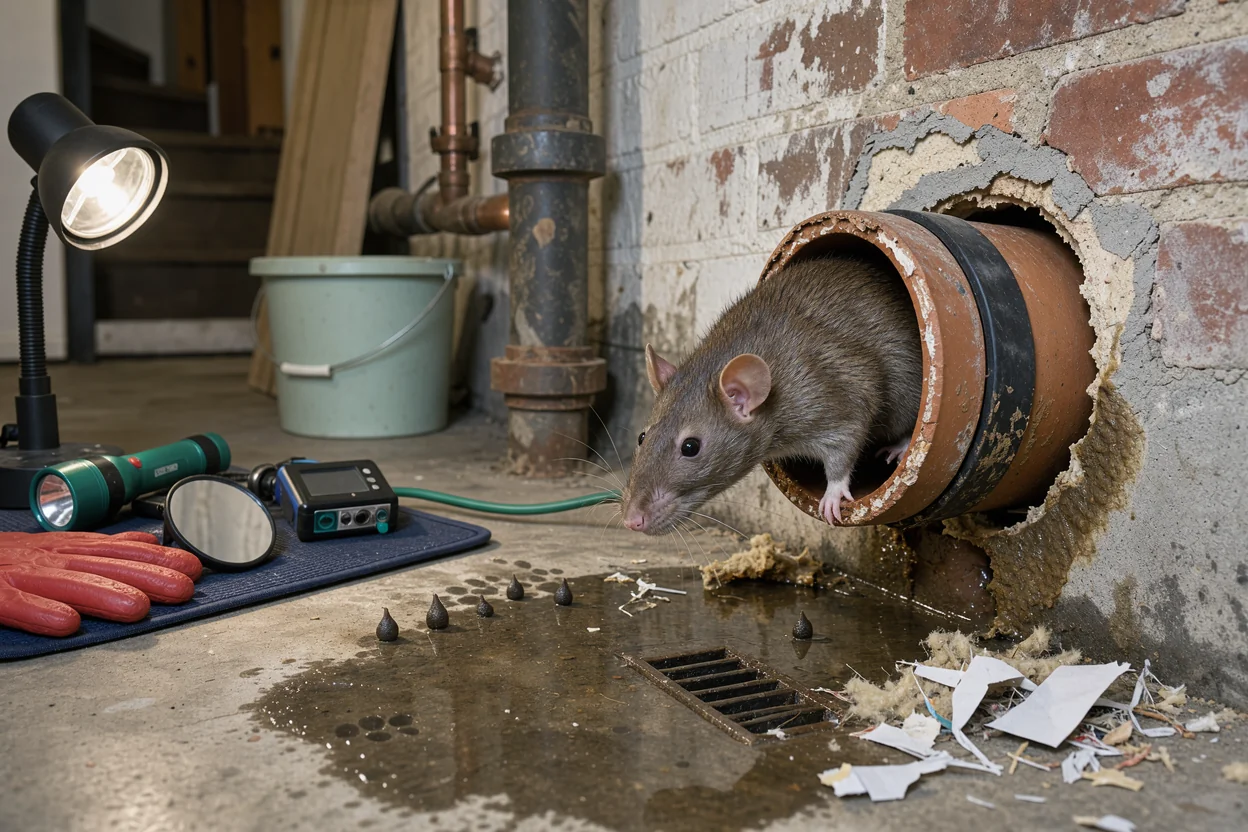
The strongest signs of rats in sewer pipes are physical evidence linked to a drain opening: gnawed waste connectors, rat activity beside damaged pipework, or an inspection that connects a drainage defect to the building. Scratching, smells and gurgling alone cannot establish that route. For a homeowner or property manager, the useful question is whether rats can leave the drainage system and reach a floor void, wall cavity or room. Start by recording accessible evidence, then investigate the suspected connection before choosing repairs.
Which clues actually point towards a drain?
Evidence around a waste pipe can narrow an investigation, but finding rats near plumbing does not prove they arrived through it. Look for a connection between the animal, the damaged fitting and an accessible route.
Gnawed connectors and openings around pipework
A damaged toilet connector or exposed waste fitting deserves attention, particularly when there are tooth-like grooves, loose fragments or droppings nearby. Photograph the whole fitting and the damaged area without disturbing it.
Appearance alone may not establish the cause. Plastic can split, seals can fail, and previous installation work can leave rough edges. An inspector needs to distinguish gnawing from deterioration and assess whether the opening connects to drainage, a surrounding void, or both.
The gap around a pipe also matters. A sound pipe may pass through an unsealed floor opening that rats use after entering elsewhere. Record damage to the fitting separately from gaps around it.
Droppings, marks and repeated movement
Droppings behind a toilet, beneath kitchen units or beside a soil pipe establish a place to investigate. Dark marks along edges may help identify a repeated route, although dirt and moisture can resemble them.
Neither clue identifies the starting point. Rats entering through an external gap could travel towards plumbing because it passes through accessible voids.
Keep a dated photographic record rather than handling droppings to judge their age. Note whether further evidence appears after the area has been professionally assessed and cleaned.
Disturbed soil near a drain run
A hole beside an inspection chamber or sinking ground above buried pipework needs investigation. Possible explanations include a burrow, leaking drainage, washed-out soil or unrelated ground movement.
A hole becomes more informative when its position matches a drainage defect and activity inside the property. Treat unexplained sinkage as a property defect requiring assessment. Avoid probing it or excavating around a suspected pipe.
How a drain fault becomes a route into the house
Rats associated with sewers need an opening that connects the drainage system to somewhere they can travel. Their presence underground and their access to a building are separate findings.
Broken joints and redundant branches
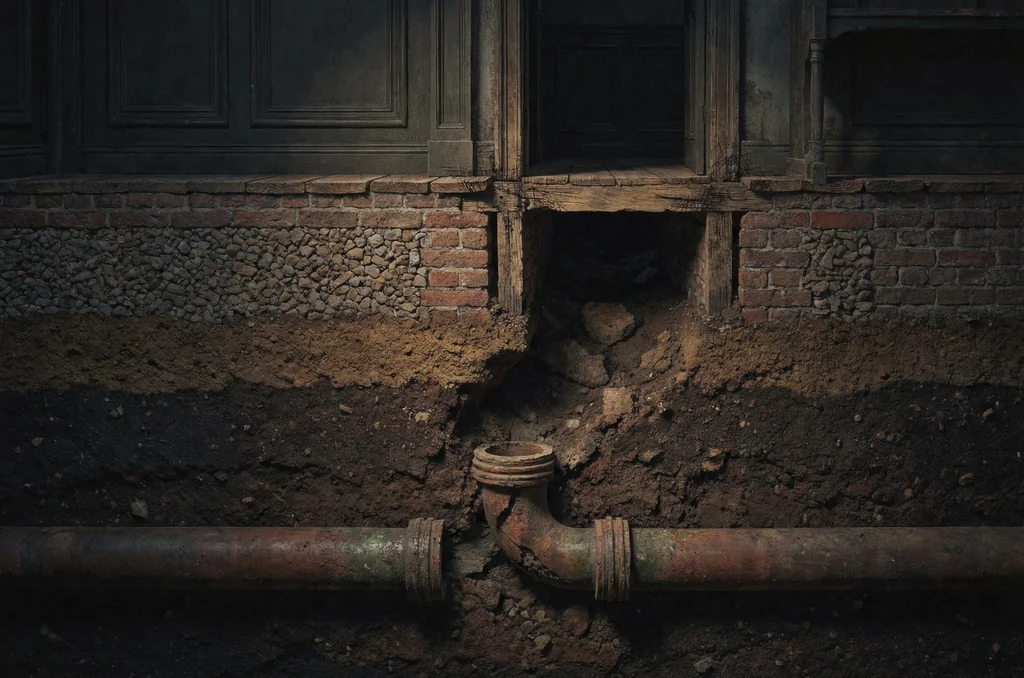
A displaced joint, damaged pipe or poorly sealed connection may open into the surrounding ground. From there, an accessible gap beneath a building can provide a route towards the interior.
An unused branch deserves particular attention. A former toilet or kitchen connection may remain attached to the drainage system after the room changes use. If its end is inadequately sealed beneath a floor, the branch can connect an underground drain with a concealed space.
That possibility is especially relevant after alterations. Give the inspector any available plans or photographs showing removed bathrooms, relocated kitchens or extensions.
From the floor void into walls and rooms
A drainage opening does not need to emerge directly into an occupied room. The route may continue through a suspended-floor void, a service duct or gaps around pipes.
For example, an inadequately sealed former waste connection beneath a kitchen could open into the floor void. A separate gap around current plumbing could then allow access behind cabinets. Both openings need assessment.
This explains why sealing the visible hole beside a cupboard may leave the original drainage defect unresolved. Inspection should trace the route between spaces.
Other entry routes still need checking
A rat beside a soil pipe might have entered through a garden-facing wall or a damaged external opening. Inspectors should also consider doors, service penetrations and ventilation openings, including possible air brick entry routes.
Ask for the evidence supporting a drainage explanation and which alternative routes were checked. A repair recommendation should identify the actual opening being addressed.
Why smells and disturbed water can mislead
Smells and changing water levels can indicate drainage trouble, but they do not identify rats. These symptoms belong in the inspection record without becoming a diagnosis.
A water trap is the bend in a waste fitting that holds water between the room and the drainage system. If that water seal is lost, odours may enter the room. The cause still needs investigation.
Likewise, gurgling, slow discharge or changes in toilet-bowl water can reflect a drainage or ventilation problem. A plumber or drainage contractor should assess them on their own merits.
Scratching is also difficult to locate accurately. Sound can travel through pipes, boxed-in services and building materials. A noise that seems to come from beneath the bath could originate in an adjoining void.
Record when each symptom occurs. Note whether the noise follows flushing, whether a smell appears after a fixture has stood unused, and whether visible rodent evidence accompanies it.
A sewage smell together with droppings warrants investigation of both drainage condition and animal activity. Each finding needs its own explanation. Report leakage or backing-up wastewater promptly rather than waiting for further signs of rats.
Checking the property without opening the drainage system
A household check can document accessible evidence while leaving concealed pipework and chambers for a suitable contractor.
Begin in rooms where activity has occurred. Use a torch from a safe position to look around visible waste fittings, pipe penetrations and the edges of accessible cupboards. Avoid reaching behind appliances or removing fixed panels.
Useful details to record include:
- The room and exact position of each sighting, dropping or damaged fitting.
- Whether evidence is beside a pipe, beneath a unit or against an external wall.
- The time noises occur and whether plumbing is being used.
- Recent drainage work, blockages or changes to bathroom and kitchen layouts.
- Visible leaks, loose connectors or gaps around service pipes.
Keep children and pets away from suspect contamination and damaged fittings. Do not enter inspection chambers, reach into drains or lift heavy covers.
For businesses, evidence near food storage or preparation areas needs prompt attention. Guidance on kitchen rat inspections can help explain why the investigation should include concealed spaces around equipment and services.
If you rent or manage the property, send the photographs and location notes to the person arranging repairs. Include evidence from adjoining rooms where access is available.
What a useful drain investigation should establish
A drain investigation should connect a specific defect to a plausible rodent route. A recording of damaged pipework is useful, but the report also needs to explain where that defect sits.
The scope of the camera survey
A CCTV drain survey uses a camera to inspect accessible internal pipe surfaces. It can help identify damaged joints, open connections and other defects within the sections examined.
The limitations matter. A camera cannot explain every space outside a pipe, and an inaccessible branch may remain unexamined. Deposits or standing water may also restrict the view.
Ask which sections were surveyed, which were inaccessible and whether the suspected route was visible. Keep the footage with a plan or location description so another contractor can find the same defect.
When choosing a pest controller, establish whether drainage investigation is included or requires a separate drainage specialist. Those are different parts of the job.
A report that supports a repair decision
The written findings should distinguish confirmed observations from possible explanations. Look for:
- A clear location for each defect.
- An explanation of any connection to the building.
- Photographs or footage supporting that explanation.
- A proposed repair and any further investigation needed.
- A way to check the completed work.
A crack may require repair without being the rodent entry point. Equally, an open redundant connection may matter even when the drain still carries wastewater.
When comparing rodent control costs, check whether the quotation separates inspection, indoor control, drainage repairs and follow-up visits. Ask who will coordinate findings between contractors.
Repairing the route while managing rats indoors
A drainage-related infestation requires attention to rats already inside and the opening that allowed access. The sequence should reflect the evidence and the building layout.
Match the repair to the defect
A damaged connector, displaced underground joint and abandoned branch need different repairs. Filling a visible gap at floor level may leave defective drainage beneath it.
Foam or a surface patch should not be treated as evidence that a drainage fault has been repaired. The contractor needs to specify suitable materials and confirm that the work preserves the drain’s function.
A rat barrier or valve may be considered for a suitable installation. Its position, compatibility and maintenance requirements need assessment. Ask what route the device would block and whether the identified defects still require repair.
Coordinate proofing and indoor control
A rat control plan should explain how indoor activity will be managed alongside structural work. Simply sealing every suspected opening can leave uncertainty about animals within concealed spaces.
Avoid pouring chemicals into drains to drive rats out. Treatment decisions should account for children, pets, food areas and access for later inspection.
If drainage is shared, findings may need coordination across neighbouring premises or managed areas. A repair inside one property cannot establish the condition of every connected section.
After the work, request photographs or footage of the repaired location where practical. Agree how further activity will be assessed and who should receive new evidence. Retain the repair record alongside the original survey.
Questions about toilet sightings and repeat activity
Questions about sewer rats often arise when a sighting happens in a bathroom or activity returns after treatment. The location is useful evidence, but it still needs interpretation.
Does a bathroom sighting prove the rat came through the toilet?
No. A rat on the bathroom floor may have arrived through a gap around plumbing or from an adjoining void. A rat observed inside the pan is a different finding. Keep people and pets away and report exactly where it was seen.
Can a drain work normally and still have an entry defect?
Yes. Wastewater passing through a pipe does not establish that every joint and branch is sealed. Report rodent evidence even if flushing and drainage appear normal. Ask whether the investigation covered unused connections as well as the main run.
Does one clear camera survey rule out the drains?
No. Its value depends on the sections examined and the visibility achieved. Request the survey scope before accepting a blanket finding that the drains are clear.
Why might rats return after treatment?
An unresolved opening, another entry route or activity in connected premises may need investigation. New evidence should be compared with the original locations and repair record. Record whether the returning signs follow the same route.
What to record over the next seven days
The next week should produce a clearer evidence record and a defined investigation or repair plan. It should not become a reason to postpone an active problem.
A rat in an occupied room, damaged food packaging, sewage leakage or suspected damage to wiring needs prompt attention. Keep the affected area away from children and pets while assessment is arranged.
During the first day, photograph accessible signs and note their positions. Record recent plumbing work and any known redundant fixtures. Notify the landlord or managing agent where they arrange building repairs.
Over the following days, add the time and location of new activity. Keep separate notes for rodent evidence and plumbing symptoms so the inspector can compare them without assuming one caused the other.
An interactive checklist that pins sightings and photographs to a floor plan would make this record easier to share. A simple dated document can hold the same information.
By the end of the week, establish what has been inspected, what remains uncertain and who is responsible for the next action. If repairs have taken place, retain their locations and completion photographs. Add fresh evidence to that record and send it to the person coordinating the investigation.