

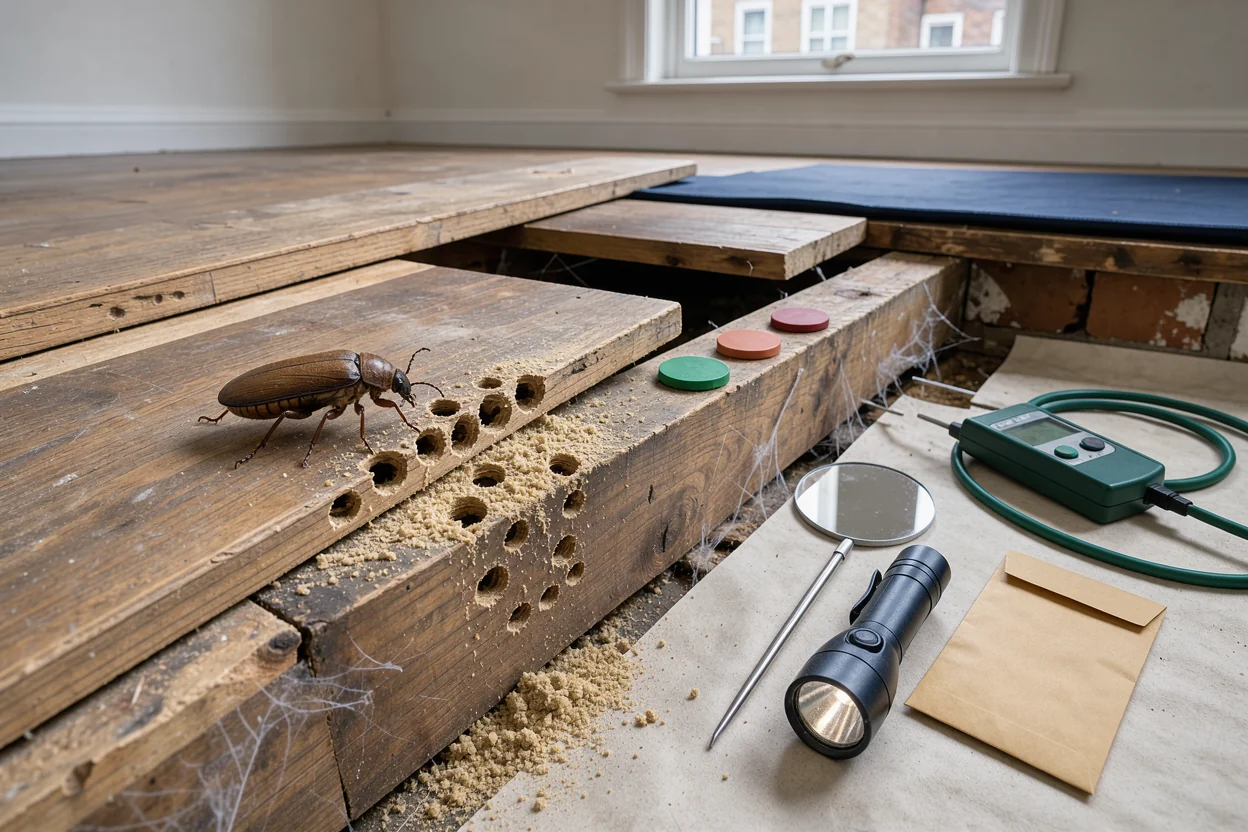
The cheapest timber inspection can leave a buyer paying for a second visit if the suspect joists remain unseen. A search for woodworm survey cost buying a house can bring together prices for very different services. The useful comparison starts with what each inspection will establish.
Use £200–£500 as a provisional planning allowance for an independent specialist inspection and written report. Replace that allowance with a property-specific quote before booking. Confirm whether VAT, access arrangements and any return visit sit within the stated fee.
The five factors below follow the evidence a buyer can check, starting with the concern already recorded in the house survey. Their order reflects their usefulness when assessing a quote; the largest charge will depend on the property.
1. The inspection scope your house survey leaves open
Your existing house survey should help define the specialist inspection you buy. This comes first because an unclear brief makes every later price comparison less useful.
A general survey can leave a specific timber question
If a RICS home survey recommends further timber investigation, send the relevant pages and photographs when requesting quotes. Include the location of the concern: roof timbers, ground-floor boards, stairs or another area.
Ask what the original survey established and what remains uncertain. A reference to holes in accessible timber leaves different questions from a report describing damaged joists beneath a suspended floor.
The specialist’s brief should address the unresolved concern. That might mean assessing evidence of activity, examining the extent of damage or explaining whether another professional needs to assess timber strength.
Ask the inspector to identify the suspected timber-boring wood pests and explain the evidence behind that identification. A general treatment recommendation gives you little basis for comparing the condition of different parts of the house.
Opening-up needs an agreed purpose
A visual inspection and an investigation involving lifted boards are different scopes of work. Ask which approach the quoted price covers.
Any proposed probing, sampling or opening-up should have a clear purpose. Which uncertainty will it resolve? Who must authorise it? Who will carry out the work and make good afterwards?
For example, a hypothetical inspection might establish the condition of exposed roof timbers while leaving covered ground-floor joists unresolved. The report should distinguish those findings.
Avoid paying for a vaguely described “full survey” without a list of included areas and methods.
Choose the quote that answers the concern in your house survey. Have the inspection scope confirmed in writing before accepting the fee.
2. Access to floor joists, roof timbers and concealed areas
Access affects how much useful evidence an inspector can gather during the booked visit. It ranks second because the most detailed brief still depends on reaching the relevant timber.
Ask what will be reachable on the day
Tell the inspector whether the property is occupied, furnished or undergoing renovation. Mention fitted flooring, stored loft contents and any known restrictions around the areas of concern.
Request a clear account of the access required. Does somebody need to clear a loft hatch? Is there an existing opening beneath the floor? Will the inspector examine only exposed surfaces?
Ask the seller or agent to confirm arrangements before the appointment. An assumption that somebody will move furniture or lift a board can leave the inspection incomplete.
Period properties deserve particular care when agreeing access. Where original boards or decorative finishes cover suspect timber, ask how the investigation can proceed with the owner’s permission and appropriate protection.
The quote should identify any areas likely to remain inaccessible.
Separate inspection from access work
Lifting flooring, moving heavy contents and reinstating finishes may require work outside the inspector’s appointment. Ask who organises each task and whether its cost appears in the quote.
Keep permission separate from practical access. An owner’s agreement to a survey does not tell you which alterations they have authorised.
Request the return-visit terms too. If the inspector cannot reach the joists until another contractor opens the floor, establish what happens to the original fee.
A hypothetical comparison shows the problem: one quote includes a visit after agreed opening-up, while another covers a single visit to accessible areas. Those prices buy different amounts of evidence.
An access limitation should remain visible in the final report, especially where it affects the timber that prompted the investigation.
Confirm access to the suspect area before booking. If access remains uncertain, ask for the inspection limits and possible additional charges in writing.
3. The extent of suspected activity and timber damage
The amount and distribution of suspect timber help determine the investigation required. Rank this third because you can only judge the apparent extent against the areas actually inspected.
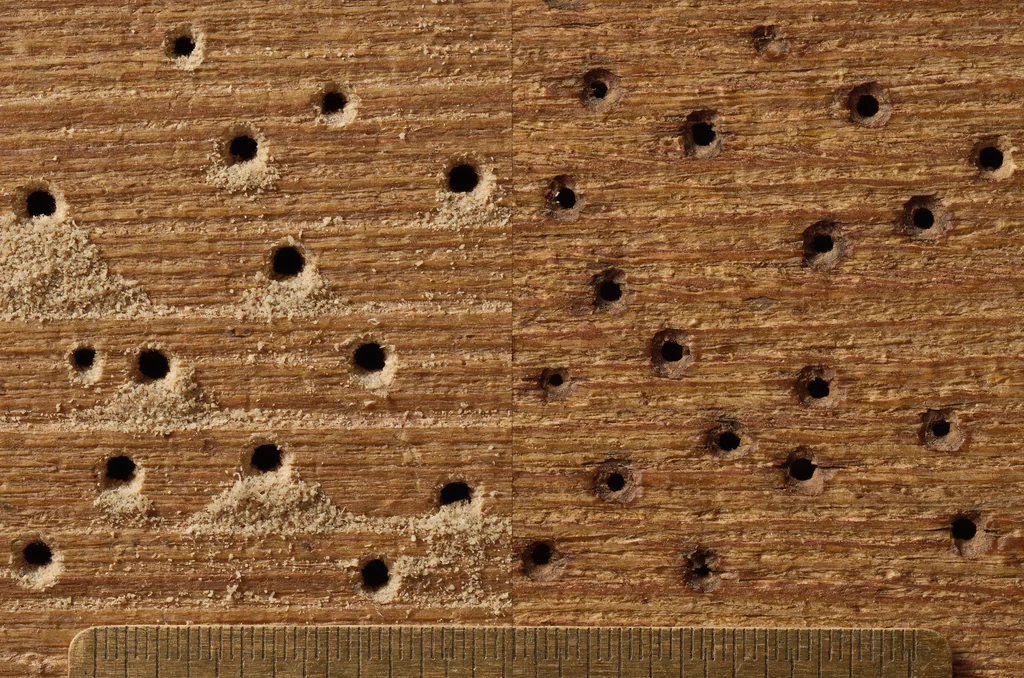
Localised holes and several affected areas raise different questions
Describe where the signs have been reported. A patch of holes in one exposed board presents a different inspection brief from concerns involving floors, stairs and roof timbers.
Ask the surveyor to record each inspected location separately. Photographs should be tied to recognisable rooms or structural elements so you can understand where further work is proposed.
Keep three questions distinct:
- What evidence supports current insect activity?
- What damage can the inspector establish?
- What uncertainty remains about concealed timber or structural condition?
These questions can lead to different recommendations. Ask the report to explain each recommendation against the evidence recorded at the property.
A broad instruction to treat every accessible timber needs a stated reason, particularly where the original concern was confined to one area.
Old holes need interpretation
Old holes alone do not establish that an infestation remains active. Ask what evidence supports the inspector’s assessment and how confident that assessment is.
Dust deserves interpretation too. If it is presented as evidence of activity, ask whether disturbed debris could explain it and what other observations support the finding.
Where dampness or decay is suspected, request an explanation of how those concerns affect the proposed investigation. Ask whether moisture checks are included and what any readings can establish.
Keep woodworm inspection and treatment as separate entries in your budget. Treatment, timber repairs, access work and any structural assessment each need their own scope.
If the report raises concerns about load-bearing timber, ask who should assess its condition and what further access they need. A treatment proposal alone leaves that question unresolved.
Pay for a report that distinguishes observed evidence, suspected problems and inaccessible areas. Challenge recommendations that cannot be traced to a recorded finding.
4. The surveyor's independence and the report you receive
The person assessing the timber and the document they produce both affect what you receive for the fee. This factor ranks fourth because a report becomes useful when its scope matches the property concern.
Establish who is giving the advice
Ask who will attend, who will write the report and what relevant timber inspection experience they have.
Check how the inspection is funded. Is it a paid assessment, a visit connected with a treatment quotation or a fee that may be credited against later work? Obtain the terms.
A business that carries out treatment can explain its findings and recommendations. An independent assessment can also have limits. Judge the proposed service through its scope, the inspector’s competence and the clarity of the evidence.
A guide to checking pest control credentials can help you organise those checks. Ask separately about competence to assess damaged structural timber and any work requiring another professional.
Do not assume that a general description such as “qualified surveyor” answers every question about the proposed inspection.
Specify the written report before paying
Confirm that a written report is included and ask when you will receive it. Request a sample format if you need to understand the level of detail.
For a purchase decision, ask for the report to record:
- The areas inspected and any access restrictions.
- The signs observed, supported by identifiable photographs.
- The reasoning behind the assessment of activity.
- Recommended investigations, treatment or repairs, with their scope.
- Any questions that require another professional’s opinion.
Check who commissions the report and who may rely on it. If your lender has requested specialist information, ask the lender about its requirements before choosing the inspector.
A brief treatment estimate may leave questions about inspection limits, evidence and reliance unanswered. Resolve those gaps before comparing its price with a detailed assessment.
Choose a report you can use for the specific purchase enquiry, and confirm the intended recipients before the appointment.
5. Location, timing and charges beyond the visit
The booking terms determine how the quoted inspection fee becomes the amount you actually pay. This ranks fifth because these details are easiest to compare once scope, access and reporting are clear.
Compare complete quotes for the same work
Give each provider the same property information and the same pages from the house survey. Otherwise, differences in price may reflect different assumptions.
Ask whether the total includes VAT where applicable, travel, parking, the written report and any agreed follow-up questions. Check how additional work would be authorised.
Location belongs in the enquiry because travel and parking arrangements can affect the appointment. Obtain a property-specific total instead of assuming that every provider uses the same local charges.
Separate the inspection fee from proposed treatment costs. If a survey charge is refundable or credited against treatment, ask when that applies and whether conditions attach.
A useful interactive quote checklist could record each fee and flag missing entries for VAT, opening-up, reinstatement and return visits before displaying a comparable total.
Match the appointment to your purchase timetable
Tell the inspector when the report is needed. An early appointment has limited value if the written findings arrive after your decision deadline.
Ask whether urgent attendance or faster reporting changes the fee. Confirm both dates in the booking terms.
Access can also affect timing. Coordinate any authorised opening-up with the inspection so the surveyor can examine the relevant area during the agreed visit.
Ask about cancellation and rearrangement terms, particularly if access depends on the seller, managing agent or another contractor.
Where a second inspection might be necessary, request the charging basis before the first appointment. Leave room in your timetable to resolve findings that need further investigation.
Compare the total for the agreed work and delivery date. Accept additional charges only after their purpose, scope and price have been explained.
What buyers should settle before commissioning a timber survey
A survey quote is ready to assess once the payer, report purpose and unresolved property questions are clear. These points deserve attention before you commit to the appointment.
Does the buyer or seller pay for the survey?
Agree this directly rather than assuming either party will cover the invoice. If you commission the inspection for your own purchase decision, plan to fund it unless another arrangement is confirmed.
A seller may agree to commission a report, contribute to the cost or discuss the findings during negotiations. Establish the arrangement before booking.
Who pays and who can rely on the report are separate questions. Confirm both with the inspector and raise any purchase implications with your conveyancer.
Is a free woodworm inspection enough?
Assess what it includes. Ask whether you receive a written condition assessment, a treatment quotation or both.
Check the inspected areas, access limits, evidence recorded and any obligation attached to the visit. If a lender requested the investigation, confirm what it requires before relying on the resulting document.
A free appointment may answer the immediate question. Where the required inspection or reporting scope is missing, obtain a quote that includes it.
Should the seller arrange treatment before the purchase progresses?
First establish what the investigation recommends and why. Treatment should follow an assessment of the evidence and the affected areas.
Ask how any proposed treatment relates to access, moisture concerns, timber repairs and unresolved structural questions. Request separate descriptions of those tasks.
If work is agreed, keep the scope, completion documents and any guarantee terms with the property paperwork. Ask your conveyancer how the arrangement fits the transaction timetable before work is authorised.
Can old woodworm holes settle the buying decision?
They cannot answer all the relevant questions. The condition of the timber, evidence of activity and limits of inspection still need assessment.
Ask the report to explain what is established and what remains uncertain. Where further investigation is recommended, request its purpose and likely effect on the purchase timetable.
Act today on the inspection scope: send the existing survey’s precise timber concern and request a matching written brief. Keep old holes in perspective, and ask what evidence supports current activity before accepting a treatment proposal.