
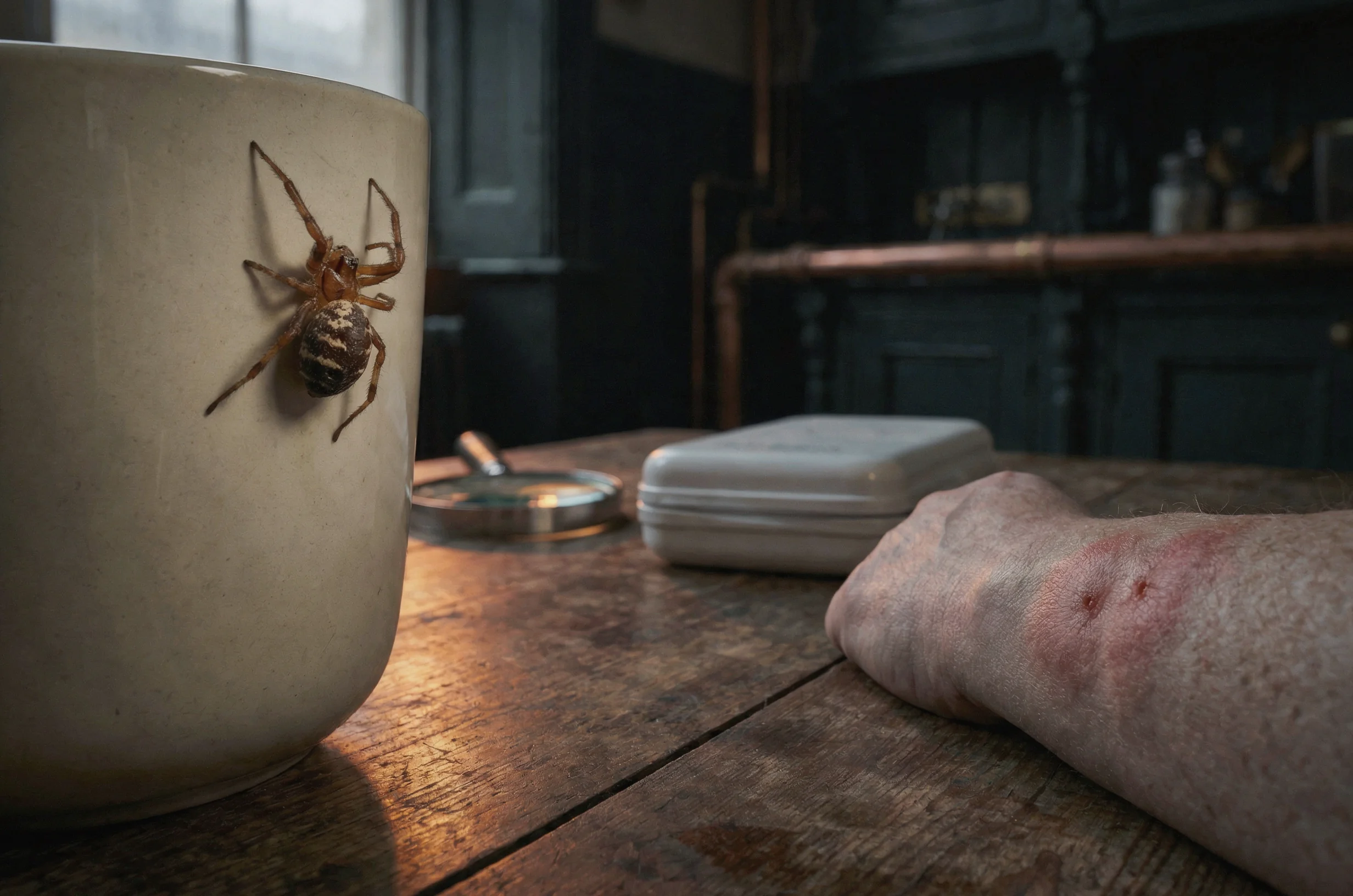
False widow spider bite symptoms UK residents may notice include local pain, redness and swelling, which can resemble a wasp sting. That comparison gives you a familiar starting point, but it cannot identify what caused a mark. There is a third possibility: an unexplained patch of irritated skin may come from another insect or a skin condition.
The useful comparison is how the pain starts, where swelling develops and whether you feel unwell beyond the affected area. Neither the size of a bump nor the pain alone can confirm a false widow bite.
Call 999 immediately for breathing difficulty, sudden tongue or throat swelling, collapse, or severe dizziness after a suspected bite or sting. These symptoms take priority over identifying the animal.
How false widow bites and wasp stings feel
A false widow bite and a wasp sting can both produce a painful local reaction. The overlap explains why descriptions such as “sharp pain followed by swelling” cannot reliably distinguish them.
Pain at the moment of contact
A wasp sting commonly causes an immediate sharp or burning sensation. You may see the wasp, feel it against your skin or notice it caught in clothing. That direct observation provides much stronger evidence than the mark afterwards.
A false widow bite can also cause sharp or burning pain. Contact may happen when a spider becomes trapped against the skin, such as inside clothing or beneath something being handled.
Finding a spider elsewhere in the room provides weaker evidence. A spider on a window frame and a sore patch on your arm might be unrelated.
Pain intensity varies between people and incidents. Describing a suspected bite as feeling like a wasp sting is a personal comparison, rather than a reliable measure of venom strength.
Tenderness, itching and swelling afterwards
Both incidents can leave a tender, swollen area. Itching may become more noticeable as the initial pain eases, and scratching can make the skin more irritated.
A wasp sting can produce swelling extending beyond the immediate sting site. A suspected spider bite may also cause swelling around the affected area. Spread alone does not establish the cause or distinguish inflammation from infection.
Consider the whole picture: whether swelling is increasing, whether pain is worsening and whether new symptoms have appeared elsewhere.
Redness can be harder to see on brown or black skin. Compare the area with nearby skin and look for swelling, warmth, tenderness or a change in texture. Describe those changes when seeking medical advice.
What a skin mark can actually tell you
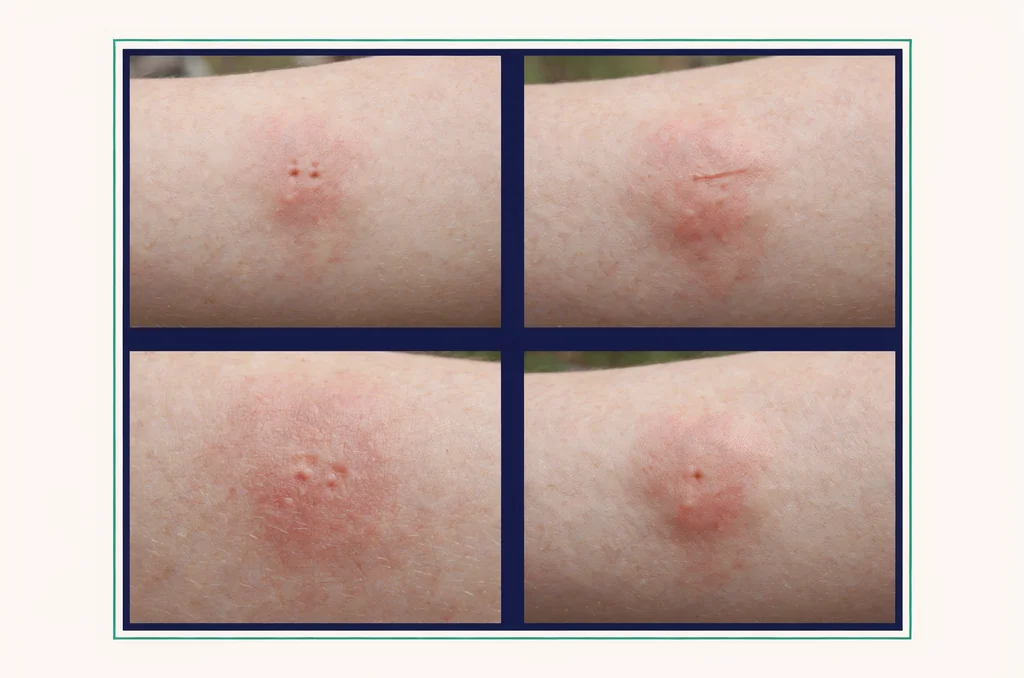
The appearance of a suspected false widow bite overlaps with many other skin reactions. A photograph can document a change, but it cannot reliably identify the animal responsible.
Puncture marks are unreliable evidence
Two nearby dots are often treated as proof of a spider bite. They are not a dependable identification test. Tiny marks may be difficult to distinguish from scratches, pores or damage caused by scratching.
Equally, failing to see puncture marks does not settle the question. Avoid squeezing, scraping or repeatedly pressing the skin to search for them.
A small central mark can appear within different bite or sting reactions. The surrounding swelling is your body’s response, rather than a recognisable signature left by one species.
The incident matters more than a matching photograph
Useful details include what you were doing when the pain began, whether anything touched your skin and whether you actually saw a bite or sting.
For example, sudden pain while moving stored fabric suggests a different contact situation from a sting beside an outdoor drink. Neither scenario proves the cause, but both help explain what happened.
If you photographed a nearby spider safely, a guide to common UK house spiders may help narrow its identity. Identification of the spider still cannot prove that it caused an unexplained skin lesion.
Avoid matching your skin to dramatic online photographs. Blistering, an open wound or darkening skin deserves medical assessment rather than a species diagnosis based on appearance.
How long pain and swelling may last
A wasp sting provides a rough comparison for local discomfort, but it does not set a recovery deadline for a suspected false widow bite.
With a mild reaction, the initial pain may ease before tenderness, itching and swelling disappear. Local symptoms can persist over the following days. Individual reactions vary, so a fixed promise that either incident will resolve within a particular number of hours would be misleading.
The direction of change is more useful than the clock. Notice whether the area is becoming less painful, whether swelling is settling and whether normal movement is getting easier.
Some swelling can develop after the initial incident. That does not automatically mean infection. Increasing heat, worsening pain, discharge or feeling unwell changes the assessment and warrants medical advice.
Take an initial photograph if practical, then another when there is a meaningful change. Similar lighting and distance make the comparison more useful. Repeatedly touching the area to check it can add irritation.
A simple digital symptom checklist could keep dated photographs, pain changes, swelling and any whole-body symptoms together for a clinician. It should record observations rather than diagnose the cause.
Seek advice if symptoms worsen or fail to improve. Do not wait for a presumed recovery deadline when the affected area is deteriorating.
Caring for a mild bite or sting
Initial care for a mild suspected false widow bite is similar to care for a mild wasp sting. This applies when symptoms remain local and there are no signs of a serious allergic reaction.
Clean and cool the affected area
Wash the skin gently with soap and water. Use a cool compress, or a cold pack wrapped in a cloth, to ease discomfort. Keep ice away from direct contact with the skin.
If practical, raise the affected limb. Remove rings or other tight items near swelling before they become difficult to take off.
Avoid scratching, squeezing or cutting the area. These actions can damage the skin and make subsequent changes harder to assess.
Household remedies such as vinegar or bicarbonate of soda are unnecessary. Do not apply pest-control products, disinfectant concentrates or other chemicals to a bite.
Choose symptom relief with suitable advice
A pharmacist can advise on suitable pain relief and treatments for itching. Explain the person’s age, existing conditions, allergies and any medicines they already take.
Follow the medicine’s instructions and age restrictions. Pregnancy, breastfeeding and treatment for a child may affect which products are suitable.
An antihistamine may help itching in some cases, but it does not treat a severe allergic reaction. Breathing difficulty or throat swelling requires emergency help.
If a wasp has stung you, move calmly away from the area before treating the skin. Avoid returning to investigate a possible nest while insects remain active around it.
For either incident, worsening symptoms outweigh uncertainty about the species. Get medical advice when the reaction changes rather than continuing to try different home treatments.
When a bite or sting needs urgent medical help
The urgency of a suspected false widow bite or wasp sting depends on the symptoms. A familiar insect can still cause a serious reaction, and an unidentified bite still deserves appropriate care.
Call 999 for signs of a severe allergic reaction
Emergency symptoms include sudden swelling of the mouth, tongue or throat, difficulty breathing, wheezing, trouble swallowing, collapse or severe dizziness.
A widespread reaction accompanied by breathing problems or faintness needs immediate attention. Do not wait to see whether the local swelling becomes larger.
If the person has a prescribed adrenaline auto-injector and a suspected severe allergic reaction, use it as directed and call 999. Tell the call handler that anaphylaxis is suspected.
Do not delay treatment to catch a spider, photograph a wasp or find the original bite mark. Stay with the person and follow the emergency call handler’s instructions.
Get urgent advice for worsening local symptoms
Contact an urgent GP service or NHS 111 in England, Scotland or Wales if pain or swelling is worsening, symptoms are not improving, or you feel generally unwell.
Other reasons for prompt advice include:
- Increasing warmth, spreading redness, pus or discharge.
- Fever, swollen glands or worsening pain.
- A bite or sting near the eye, or inside the mouth or throat.
- Several stings, or a history of a serious reaction.
- Significant swelling that interferes with normal movement.
Seek advice promptly if a baby or young child has been affected, or if an existing health condition makes the reaction harder to assess.
Describe the symptoms and their progression clearly. Say whether the bite or sting was witnessed, suspected or entirely unexplained. Medical staff can assess the reaction without a confirmed species identification.
Checking the property without another bite or sting
After a suspected false widow bite or wasp sting, a careful property check can identify an avoidable contact risk. Deal with the person’s symptoms first, then inspect only where it is safe.
Around window frames, storage and clothing
For a possible spider encounter, note the exact location and activity. Was the person reaching behind furniture, handling a stored item or putting on clothing?
Inspect accessible areas visually before placing your hands into gaps. Wear gloves when handling stored materials and avoid reaching blindly beneath outdoor furniture or into clutter.
An isolated spider sighting does not establish an infestation. Repeated sightings or webs in regularly disturbed places provide a clearer reason to investigate the surroundings.
Practical spider control for homeowners should begin with identification and reducing unwanted contact. Keep clothing off the floor, clear accessible clutter and check stored items before use.
There is no need to handle a spider to document it. Take a photograph from a safe distance if identification would be useful.
Around eaves, sheds and outdoor eating areas
For a wasp incident, watch from a distance for repeated insect movement towards one opening. A single wasp near food is different evidence from a steady stream entering a roof gap.
Keep children and pets away from the area. Avoid blocking a suspected nest entrance, striking the structure or spraying blindly into a cavity.
Guidance on wasp nest removal can help explain the limits of DIY work. Nest access, height and nearby occupants affect the risk of disturbing it.
In a rented home or shared building, record the location and inform the responsible property manager. Keep inspection activity away from anyone recovering from a bite or sting.
Questions about suspected false widow bites
Uncertainty is common when nobody saw the incident. These distinctions help keep the skin reaction and the property evidence in proportion.
Is a false widow bite always worse than a wasp sting?
No. Both can cause local pain and swelling, and the severity varies. A description such as “wasp-like pain” cannot predict how an individual reaction will develop.
Judge the need for care by worsening symptoms, the affected location and whether the person feels unwell. Seek emergency help for breathing difficulty, throat swelling or collapse after either incident.
Can you confirm a false widow bite from a photograph?
A skin photograph alone cannot reliably confirm it. Different bites, stings and skin conditions can look similar.
A clear spider photograph may help identify the animal, while dated skin photographs can show progression. Keep those two pieces of evidence separate when describing the incident to a clinician.
Does a swollen bite need antibiotics?
Swelling alone does not establish a bacterial infection. Inflammation can follow a bite or sting without an infection being present.
A clinician can assess worsening pain, heat, discharge, fever and other symptoms before deciding whether treatment is needed. Do not use leftover antibiotics or another person’s prescription.
What if nobody saw a spider or wasp?
Describe the problem as an unexplained skin reaction rather than a confirmed spider bite. Record when it appeared, how it has changed and any symptoms elsewhere in the body.
If new marks keep appearing, investigate the surroundings without assuming that one spider is responsible. Several possible causes may need consideration. Arrange medical advice for persistent or worsening skin changes, even when the property inspection reveals no obvious pest.