
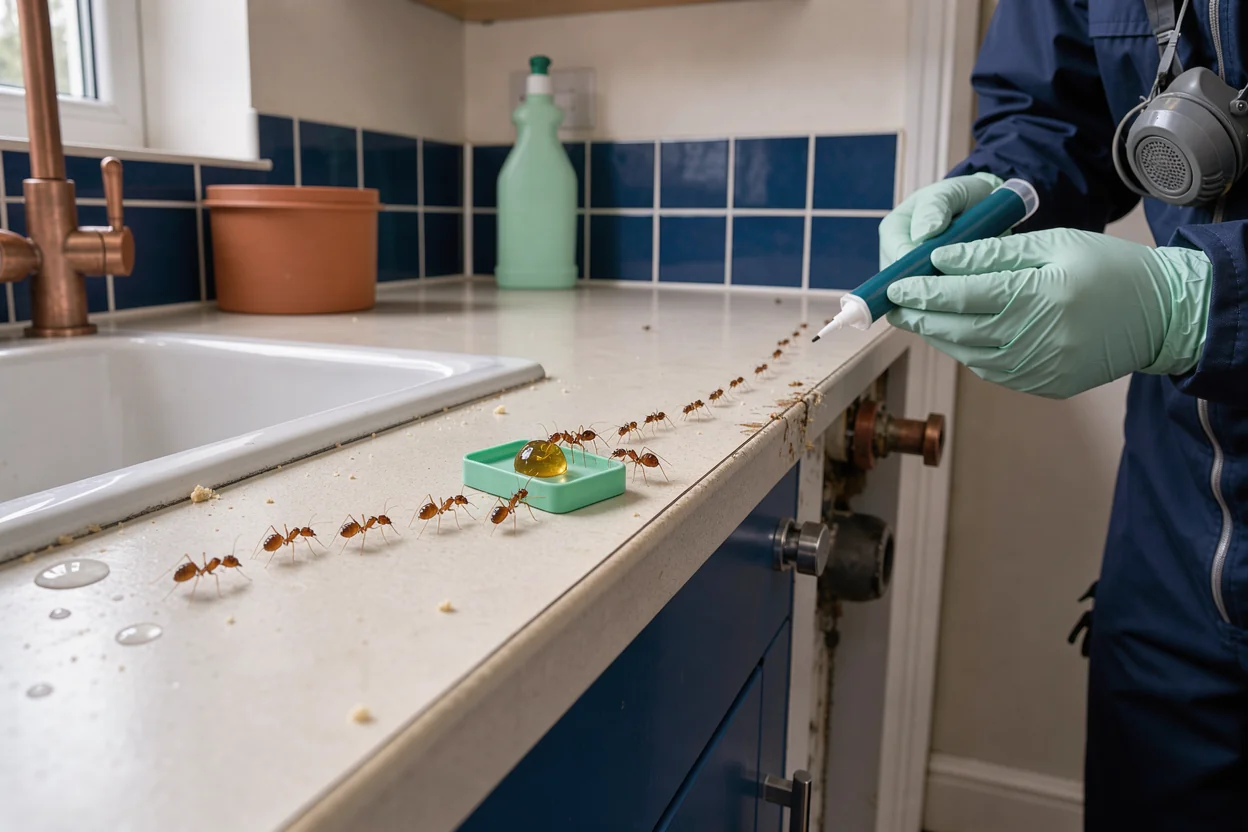
Killing the ants on your kitchen worktop can make a pharaoh ant infestation harder to control. If you are searching “pharaoh ants in flats how to treat”, start by putting the spray down. Unsuitable insecticide sprays can disturb colonies and encourage budding, where queens and workers establish separate nests.
The five steps below follow the order in which useful evidence becomes available: identify the ants, establish where they are appearing, reduce competing food, organise baiting, then monitor the result. Residents can start the observation and housekeeping work immediately. Confirmed pharaoh ants in a block need coordinated assessment because the routes connecting flats may extend beyond anyone’s kitchen.
1. Confirm the ants before treating the trail
Suspected pharaoh ants deserve identification before anyone chooses a treatment. This step comes first because a product chosen for another ant species may be unsuitable.
Photograph the ants and their surroundings
Look for very small ants with pale yellow to light brown bodies and a darker rear section. Warm indoor areas, kitchen cupboards and pipe routes are useful inspection locations. These clues support suspicion; they do not confirm the species.
Take a clear close-up photograph and a wider image showing the trail’s location. Include a ruler nearby if practical, without blocking the ants. Note whether they are travelling towards food, disappearing beneath a cupboard or following a pipe.
If photographs are unclear, ask the technician how to collect a specimen. Keep any collected insects contained rather than carrying loose material through communal areas.
The evidence needed at this stage is modest: a usable image or specimen, a location and a description of the route. You do not need to find a nest behind the wall.
Pause products that could disrupt the colony
Avoid household ant sprays, powders and room foggers while identification is pending. Do not pour boiling water, bleach or homemade pesticide mixtures into gaps.
If someone has already applied a product, record its name, the application date and the surfaces treated. Keep the packaging or photograph the label. Previous treatment can affect where a technician inspects and places bait.
Continue normal food hygiene. Photograph activity before cleaning a food surface, then clean it as needed. Once baiting begins, follow the technician’s instructions about cleaning near treatment points.
Pulling apart fitted cupboards to pursue a trail creates disruption without proving where the colony lives. Leave concealed spaces intact unless an inspection requires access.
The first useful result is confirmed identification and a record of previous products. Until then, keep observing and leave further insecticide applications paused.
2. Establish whether neighbouring flats share the problem
Pharaoh ant treatment in a flat needs information about connected homes and services. Raise the issue with the landlord, managing agent or residents’ management company while identification is underway.
Report locations rather than assumptions
Send photographs with a short written account of where and when ants appeared. Include the flat number, affected rooms and any pipe penetrations beside the trail.
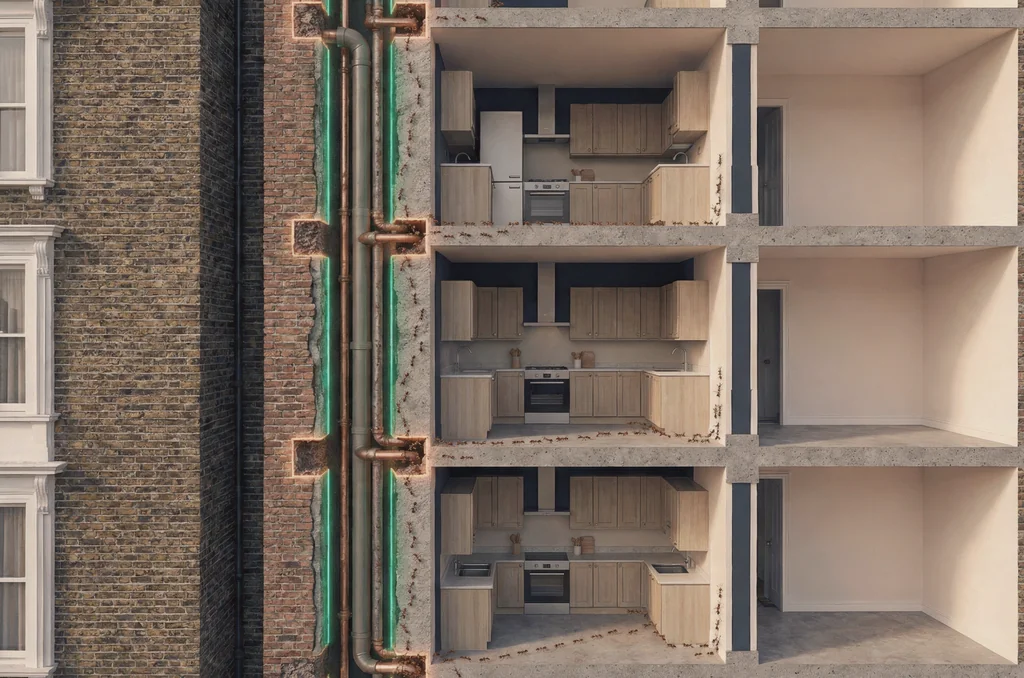
Ask whoever manages the building to check for similar reports in neighbouring flats, including those above and below. Shared plumbing routes, service ducts and communal areas may also need inspection. A technician should decide the inspection scope from the building layout and reported activity.
For example, ants beside a kitchen pipe in two vertically aligned flats justify investigating that connection. They do not prove that every flat contains a nest.
Avoid describing the problem as another resident’s fault. Ant sightings alone cannot establish where an infestation started. A neutral reporting process makes it easier to gather useful information and arrange access.
Agree access and treatment scope early
The scope of professional ant control should address identification, inspection, bait placement and follow-up assessment. Ask how inaccessible flats or locked service areas will be handled.
When comparing council and private costs, check what each quote includes. A visit covering one kitchen differs from a coordinated programme across connected premises.
The BPCA directory guide can help with checking directory listings. Ask prospective contractors specifically about their approach to pharaoh ants in occupied blocks.
Agree who will coordinate appointments, receive reports and communicate instructions to residents. Clarify payment arrangements before booking; responsibility can depend on the circumstances and property agreements.
One resident spraying while another maintains bait points can disrupt the plan. Circulate the treatment instructions through the building manager, with a clear contact for reporting fresh sightings.
3. Remove competing food without disturbing treatment points
Food storage and moisture control support pharaoh ant treatment by reducing alternative resources. Housekeeping belongs before bait placement, with cleaning routines adjusted once treatment starts.
Make the kitchen easier to inspect
Put opened food into containers that close securely. Wipe sticky cupboard shelves, clear crumbs beneath accessible appliances and remove food residue from recycling.
Pay attention to places a quick worktop wipe misses:
- The underside of a honey jar or syrup bottle.
- Crumbs around a toaster and cupboard hinges.
- Food residue beneath a bin liner.
- Pet food left beside a warm appliance.
Feed pets as usual, then clear leftover food when appropriate. Keep necessary drinking water available. Ask the technician how to position treatment safely around feeding areas.
Discard food that ants have entered. Clean affected food-contact surfaces before preparing meals, while keeping cleaning products away from designated bait points.
If a cupboard contains active trails, record their route before emptying it. Avoid transferring its contents straight into another flat or a communal store. Inspect packaging and keep items contained during any necessary move.
Report leaks and leave service spaces intact
Check accessible areas beneath sinks and around appliance connections for drips. Report leaks, persistent condensation or damp cupboards to the person responsible for repairs.
Do not open electrical fittings or reach into service risers to follow ants. Arrange inspection by someone authorised to access those spaces.
A gap around a pipe may be a travel route rather than the nest entrance. Filling every visible opening immediately can hide useful evidence and interfere with the planned inspection.
Ask the technician which gaps should remain accessible during treatment and when repairs should follow. Fire-stopping and other work around shared services need appropriate handling.
A tidy flat can still be affected through the building. Concentrate on accessible food, moisture and inspection access; there is no need to strip the home or discard sound furniture.
4. Place suitable bait beside confirmed feeding routes
Baiting aims to reach the colony through feeding workers. Placement should follow identification and inspection, with product choice and application based on the label and the treatment plan.
Map active routes before placing anything
Show the technician where ants have appeared recently, including quieter routes behind accessible cupboard edges and around pipe penetrations. An old sighting alone may not identify a useful bait position today.
A simple room sketch can mark active trails, food storage, children’s play areas and pet access. This helps the technician choose positions that ants can reach and residents can leave undisturbed.
Useful inspection locations may include the accessible edges of kitchen units, bathroom plumbing enclosures and service entry points. These are places to assess, not instructions to apply pesticide inside every gap.
Keep bait away from food-contact surfaces and anywhere it could contaminate food, utensils or stored supplies. Never put a product into an electrical fitting or inaccessible void without the appropriate instructions and competence.
Follow the product label and the technician’s directions. Products marked for professional use should be handled by trained operators.
Protect bait from cleaners and competing treatments
Ask which points must remain undisturbed and how to clean around them. Keep sprays, fragranced cleaners and other pesticides away from those locations unless the technician directs otherwise.
Do not increase the quantity because progress seems slow. The amount, spacing and replacement schedule depend on the product and conditions. Homemade mixtures make those factors harder to control.
Children and pets must not be able to touch or consume bait. A position hidden from adult view may still be accessible to a crawling child or curious animal. Tell the technician about those risks before placement.
Ants feeding at a bait point can be consistent with the intended process. Avoid wiping them away simply because the gathering looks busy.
If ants pass the bait without feeding, report that observation. If a point is damaged, removed or covered by cleaning residue, report that too. Leave changes to the person managing the programme.
5. Judge progress through repeat observations
Pharaoh ant control needs evidence from repeated checks. A quiet kitchen on one evening cannot establish that connected flats and concealed nesting areas are clear.
Keep observations consistent
Check the same accessible locations at a broadly similar time, following the agreed monitoring schedule. Record what you see without moving bait or opening concealed spaces.
A useful record includes the date, room, precise location and whether activity is absent, occasional or busy. Note changes such as a repaired leak, moved appliance or newly accessible cupboard.
Keep feeding activity at bait separate from ants travelling elsewhere. Those observations mean different things and help the technician assess the programme.
A simple digital checklist could record each flat, sighting location, bait-point condition and follow-up visit, with unresolved access requests flagged for the managing agent.
Avoid interpreting every sighting in isolation. Share the record at follow-up visits so the technician can compare activity across the inspected area.
Reassess new routes and incomplete access
Report ants appearing in a new room, another flat or a communal area. Include photographs and locations rather than adding a fresh treatment yourself.
New activity does not automatically prove that budding has occurred. Previously unnoticed routes, incomplete inspection or changes within the building also need consideration.
If activity persists, ask whether ants are feeding, whether treatment points remain usable and whether relevant neighbouring spaces have been inspected. These questions produce more useful decisions than repeatedly adding products.
Do not accept a fixed completion date based solely on the first application. Ask what monitoring evidence will support closing the programme and how returning sightings should be handled.
Proofing should follow the agreed inspection and treatment sequence. Keep a record of repaired gaps, leaks and service penetrations so later sightings can be assessed against those changes.
Retain the treatment report and sighting log after activity stops. If ants return, provide the exact location and date rather than restarting an old product.
What flat residents need to know during baiting
Practical decisions about children, access and returning ants should follow the actual treatment plan. These are the questions worth settling with the technician before anyone changes it.
Can I treat only my own flat?
An inspection may begin with your flat, but confirmed activity needs consideration of connected spaces. The appropriate extent depends on the evidence and building layout.
Ask how neighbouring reports will be gathered and what happens if access is refused. Treatment within one home cannot establish whether uninspected areas remain affected.
Must children, pets or residents leave during treatment?
That depends on the product, application method and label instructions. Ask about access restrictions before the appointment and explain who lives in the flat.
Do not assume that a small amount of gel is automatically safe to touch. Keep products inaccessible and follow any instructions about cleaning, ventilation or returning to treated areas.
Should I seal the gaps where ants appear?
Record the route first and agree the repair timing with the technician. Sealing an active opening may conceal evidence needed for inspection or monitoring.
Keep bait points accessible for servicing. Work around shared services, electrical fittings or fire-stopping should be arranged through the appropriate property contact.
Does a busy bait point mean treatment has failed?
Ants collecting at bait may be feeding as intended. That sight alone cannot establish success or failure; the technician needs feeding observations and activity records from other locations.
Leave the point undisturbed and report what you see. Ants ignoring bait, damaged placements or new trails elsewhere also deserve a clear record.
Act on Step 1 today: pause further sprays and arrange identification. The sight people often overreact to is ants gathering at an agreed bait point; photograph the activity and follow the treatment instructions.