

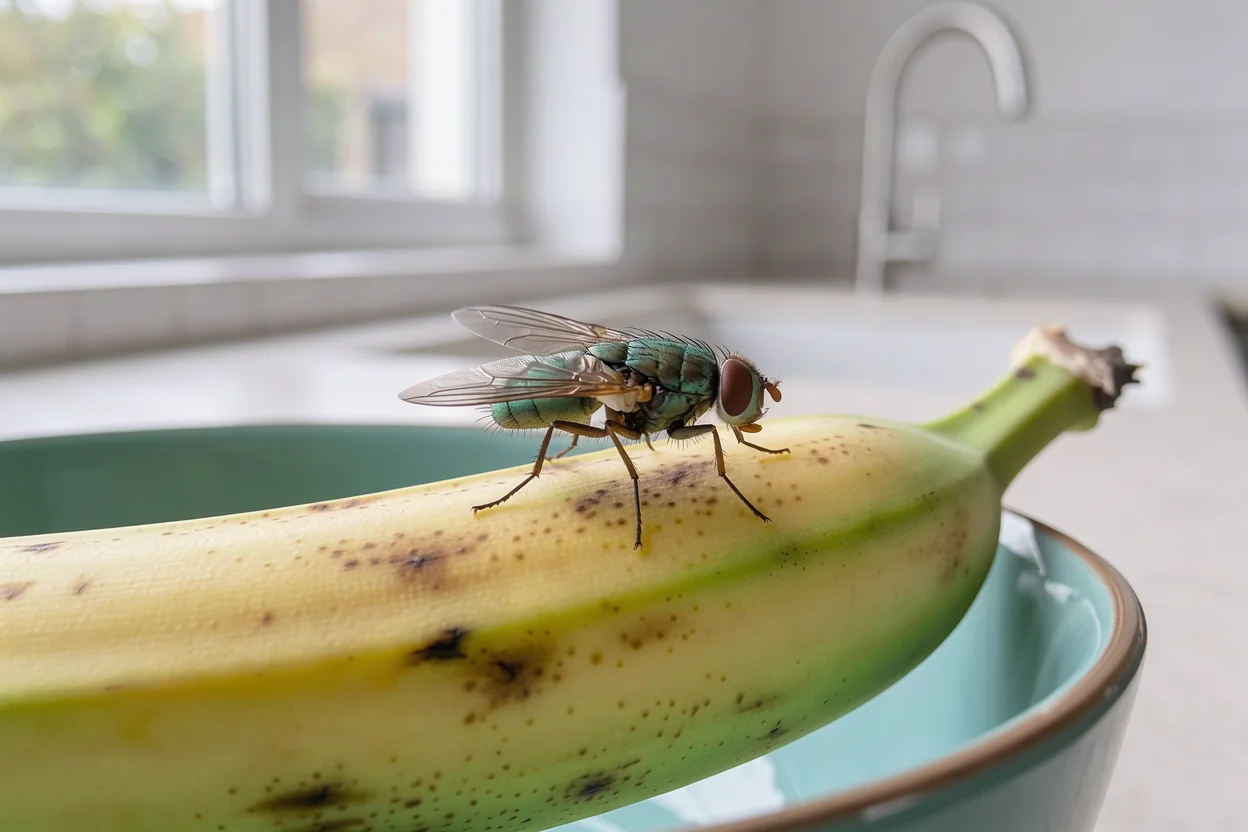
Do fruit flies lay eggs? Yes, and far more of them than most people expect. A single female lays roughly 400 eggs over her short life, often 50 to 70 a day, placing them on or just beneath the surface of anything moist and fermenting. At normal kitchen warmth the eggs can hatch within 24 hours, and the whole cycle from egg to flying adult takes as little as 8 to 10 days. That speed is why a few flies on Monday becomes a cloud by the weekend.
The good news: fruit flies only breed where fermenting organic matter stays damp. Remove the breeding sites and the population collapses, usually within a fortnight, without any spray at all. This checklist walks you through the seven kitchen spots where eggs are most often laid, what a positive finding looks like, and what to do about each one. You need about 30 to 45 minutes, a torch, a bottle brush, bicarbonate of soda, white vinegar, washing-up liquid and a few clean cloths. Work through it in order, because the spots are ranked roughly by how often they turn out to be the source.
Why eggs matter more than the flies you can see
Every adult fruit fly hovering over your fruit bowl came from an egg laid somewhere nearby. Swatting or trapping adults slows the problem but never ends it, because the females still alive in the kitchen will lay another batch of eggs today. A female deposits her eggs directly on fermenting or overripe material, and the larvae that hatch burrow straight into their food source, so you rarely see either stage without looking closely. The Cornell fruit fly guidance makes the same point: lasting control comes from finding and removing the breeding medium, not from chasing the adults.
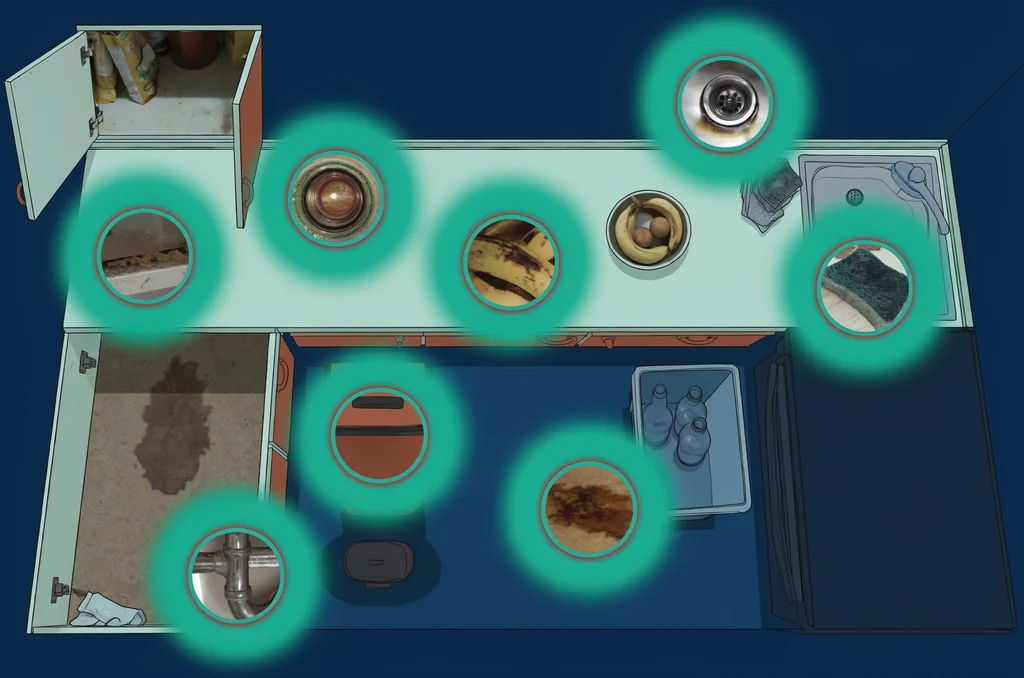
Eggs are tiny, about half a millimetre long, and pearly white. You will not spot them on a banana skin with the naked eye at arm's length, but you can spot the conditions they need: softness, moisture and the faint sweet-sour smell of fermentation. That is what the checks below are built around. A kitchen is "clear" when every one of the seven spots is dry, clean and free of anything fermenting for at least two full weeks.
1. The fruit bowl itself
Start here because it is the most obvious source and the easiest to fix. Pick up every piece of fruit and turn it over. You are looking for soft spots, splits, brown patches, weeping juice at the stem end, and any fruit that yields under gentle thumb pressure. Bananas with fully brown skin, tomatoes starting to wrinkle, and stone fruit with bruises are all prime egg-laying surfaces.
A positive finding means acting immediately, not "later today". Bag and bin the affected fruit straight into an outdoor or sealed bin, then wash every remaining piece under the tap and dry it. Washing matters because eggs can already be sitting on skins of fruit that looks fine — eggs are sometimes laid before produce even reaches the shelf. After that, either refrigerate what you can or store fruit under a fine mesh cover. Fruit flies cannot lay eggs on fruit they cannot reach, and cold slows any development already underway.
One habit change prevents most repeats here: buy less fruit at once during late summer and early autumn, which is when UK fruit fly activity peaks between August and October, and eat the ripest pieces first.
2. The plughole and the first stretch of drain
Drains are the second most common breeding site and the one people check last. Fruit flies are drawn to the biofilm that lines the inside of a plughole and trap: a slick of grease, food particles and moisture that ferments slowly and stays damp around the clock. If your flies seem to appear near the sink, or you see them resting on the wall above it in the morning, the drain is the likely source.
A quick test: place a strip of clear sticky tape over the plughole overnight, sticky side down, with a small gap for air. If flies are stuck to it by morning, the drain is active. For a deeper check, unscrew the plughole cover and run a bottle brush around the visible pipe wall. Black or grey slime on the brush confirms the biofilm is there.
Treatment is mechanical first, chemical never. Scrub the pipe walls with the bottle brush as far down as you can reach, then flush with very hot water mixed with washing-up liquid. A follow-up of bicarbonate of soda followed by white vinegar, left to fizz for ten minutes and then flushed, helps strip remaining film. Repeat the scrub twice a week for two weeks. Boiling water alone rarely works because it flows over the film without removing it. If the flies persist after a fortnight of scrubbing, the breeding may be deeper in the pipework or in a faulty trap, which is when a drain fly treatment inspection is worth booking — and worth checking you are not actually dealing with drain flies, which breed in the same film and are easy to confuse with fruit flies. The differences are covered in our guide to fungus gnats vs drain flies.
3. Bin rims, lids and the floor under the bin
The bin itself is rarely the problem; the gap between bin and liner, the underside of the lid, and the floor beneath it usually are. Juice from bin bags leaks, dribbles down the outside of the liner, and pools in the base of the bin where it sits warm and undisturbed for weeks. That residue ferments, and fruit flies only need a film of it to lay eggs.
Lift the bin, look underneath, and pull the liner out fully to check the base and rim. A positive finding is any sticky patch, dark staining, sour smell, or small pale larvae (maggots about 2 to 4 mm long) in the residue. Wash the whole bin inside and out with hot soapy water, dry it completely, and mop the floor area it stands on. Dryness is the point: a clean but wet bin is still attractive.
Then tighten the routine. Double-bag anything wet, rinse food packaging before binning it, and never let a kitchen bin go longer than two or three days in warm weather even if it is not full. If your flat shares a communal bin store, the source may be outside your kitchen entirely, which changes the fix — keep reading to the escalation section.
4. The recycling box and empty bottles
Recycling is the egg-laying spot almost nobody checks, and in a warm kitchen it can outrank the fruit bowl. Wine bottles, beer cans, juice cartons and squash bottles all carry a few millilitres of sugary liquid at the bottom. Left unrinsed for a week, that residue ferments into exactly what a female fruit fly is looking for, and the narrow bottle neck gives the larvae a sheltered, humid nursery.
The check is simple: pick up the recycling container and smell it. A sweet, cidery or vinegary odour means something inside is fermenting. Empty everything, rinse each bottle and can under the tap before it goes back, and wash the box itself with hot soapy water. Let it dry before refilling.
If rinsing everything feels like a chore, prioritise anything that held alcohol, fruit juice or fizzy drinks — those are the high-sugar residues that ferment fastest. Tins that held tomatoes or beans in juice come next. Dry recycling such as paper and clean card carries no risk and can be left alone. Households that keep the recycling box under the sink should also check the cupboard floor beneath it for drips.
5. Dishcloths, sponges, mops and the sink caddy
A damp cloth or sponge that is never fully dried holds food particles in its fibres and sits at a permanently moist, warm state — a small but perfectly functional breeding site. Mop heads stored wet in a bucket are worse, especially if the bucket holds a centimetre of stale water. University extension guidance on fruit flies in the home lists wet mops and cleaning rags alongside drains and overripe produce as standard indoor breeding sources.
The test here is again your nose. A sour or musty smell from a cloth, sponge or mop head means microbial fermentation is underway, which is precisely the signal fruit flies follow. Positive findings are easy to fix: run cloths and sponges through a hot wash or replace them, rinse and wring the mop thoroughly after every use, and store it head-up so it can dry. Empty any container that holds standing water, including the drip tray under a draining board and the cup that holds your washing-up brush.
This check takes five minutes and the "clear" state is simple: nothing in the cleaning kit stays wet for more than a few hours.
6. Forgotten produce in cupboards and under appliances
Every pest technician has a story about the onion that rolled behind the fridge. Potatoes, onions, garlic and squash are often stored in dark cupboards or racks, and a single forgotten potato liquefying at the back of a shelf can support several generations of fruit flies without ever being seen. The same goes for fruit that has rolled under the fridge, freezer or cooker, where warmth from the motor speeds fermentation.
Pull out the vegetable rack and empty it completely, checking for softness, dark weeping patches and a sweet smell. Then get down with the torch and look under the fridge, freezer and cooker, and along the gap between units and the wall. Any sticky patch on the floor down there needs wiping with hot soapy water, not just a sweep.
A positive find here usually explains a mystery: the household that cleaned the fruit bowl, scrubbed the drain and still had flies. Store potatoes and onions in a breathable bag or basket where you can see all of them at a glance, and put a monthly date in your phone to do the torch check under appliances. Ten minutes, once a month, removes the most persistent hidden source on this list.
7. The slow-drip spots: under the sink and behind the taps
The last spot is structural rather than behavioural. A slow leak from a trap under the sink, a weeping tap connector, or a cracked washing-up bowl drips onto cupboard boards or the floor and keeps a patch of wood or lino permanently damp. Add a few food crumbs or a splash of squash and you have a long-term fermenting site that no amount of fruit-bowl discipline will fix.
Open the cupboard under the sink and run a dry hand along the base and the back wall. Swelling, dark staining, a musty smell or visible dampness means a leak needs attention. Check around the base of the taps and the seal where the sink meets the worktop too. In older London properties, particularly conversions with ageing plumbing, this check finds the answer surprisingly often.
Fix the leak or get a plumber in, then clean and thoroughly dry the affected area. If the timber is swollen or rotten, it may need replacing, because damp wood keeps wicking moisture back to the surface. Until the source of the moisture is gone, flies will keep finding it.
Reading your results: monitor, DIY, or call it in
Once you have run all seven checks, your findings fall into three groups, and each points to a different next step:
- One or two positive spots, now cleaned and dried. Set a simple vinegar trap (a small bowl of cider vinegar with a drop of washing-up liquid) on the worktop and watch it for ten to fourteen days. Declining catches mean the breeding site is gone. Fresh adults keep emerging for up to two weeks from eggs already laid, so do not judge results before day fourteen.
- Nothing found, but flies continue. The source is likely outside your kitchen: a communal bin store, a neighbour's flat in a conversion, a shared drainage run, or a commercial premises below or beside you. Log when and where you see flies for a week; that pattern helps a technician trace the source quickly.
- Repeat positives in the drain or under-sink area. Recurring biofilm or a leaking trap points to a plumbing or drainage issue rather than a housekeeping one. That is the point where professional fly control earns its cost, because the fix involves the pipework, not the worktop. If you run a café, bar or restaurant, do not wait for the two-week mark: breeding sites in commercial kitchens multiply faster than a domestic routine can suppress, and a targeted fruit fly control service will map every breeding point in one visit.
One tool idea if you want to stay on top of this long term: a simple recurring 20-minute "kitchen fly audit" checklist on your phone, cycling through the seven spots above once a month from May to October. It is cheaper than any trap and catches problems at the egg stage rather than the swarm stage.
Your fruit fly egg questions answered
Do fruit flies lay eggs on fruit you bring home from the shop? They can. Eggs are sometimes laid on or near the skin of ripening produce during storage and transport, before you buy it. Rinsing fruit when you get it home and refrigerating what you can removes that risk almost entirely.
Can fruit flies lay eggs in my sink drain? Yes. The fermenting biofilm inside plugholes and traps is one of the most common indoor breeding sites, which is why the drain check sits at number two on this list. Scrubbing the pipe walls, not just pouring water down, is what removes it.
How long does it take for fruit fly eggs to hatch? At around 25°C, eggs hatch within about 24 hours and adults can emerge 8 to 10 days later. In a cooler kitchen the cycle stretches towards three weeks, which is why refrigeration works as a control measure.
Will throwing away the fruit bowl get rid of them? Only if the fruit bowl was the breeding site. If eggs are also in the drain, the bin residue or a damp mop, removing the fruit just shifts where the next generation comes from. Run all seven checks before assuming you have found the source.
Do fruit flies lay eggs in houseplant soil? That is usually fungus gnats, not fruit flies. If the small flies you see gather around plants rather than the fruit bowl or sink, you are probably dealing with a different insect and a different fix.
How do I know when the infestation is actually over? When a fresh vinegar trap catches nothing for fourteen consecutive days and every spot on this checklist has stayed clean and dry, the breeding cycle is broken. Anything sooner than that can be the last eggs working their way through.
If you have run the checklist twice, kept everything dry for a fortnight, and the flies keep coming back, the breeding site is somewhere you cannot reach — inside pipework, a void, or a neighbouring premises. That is the moment to hand it to a technician rather than buy a third trap.