

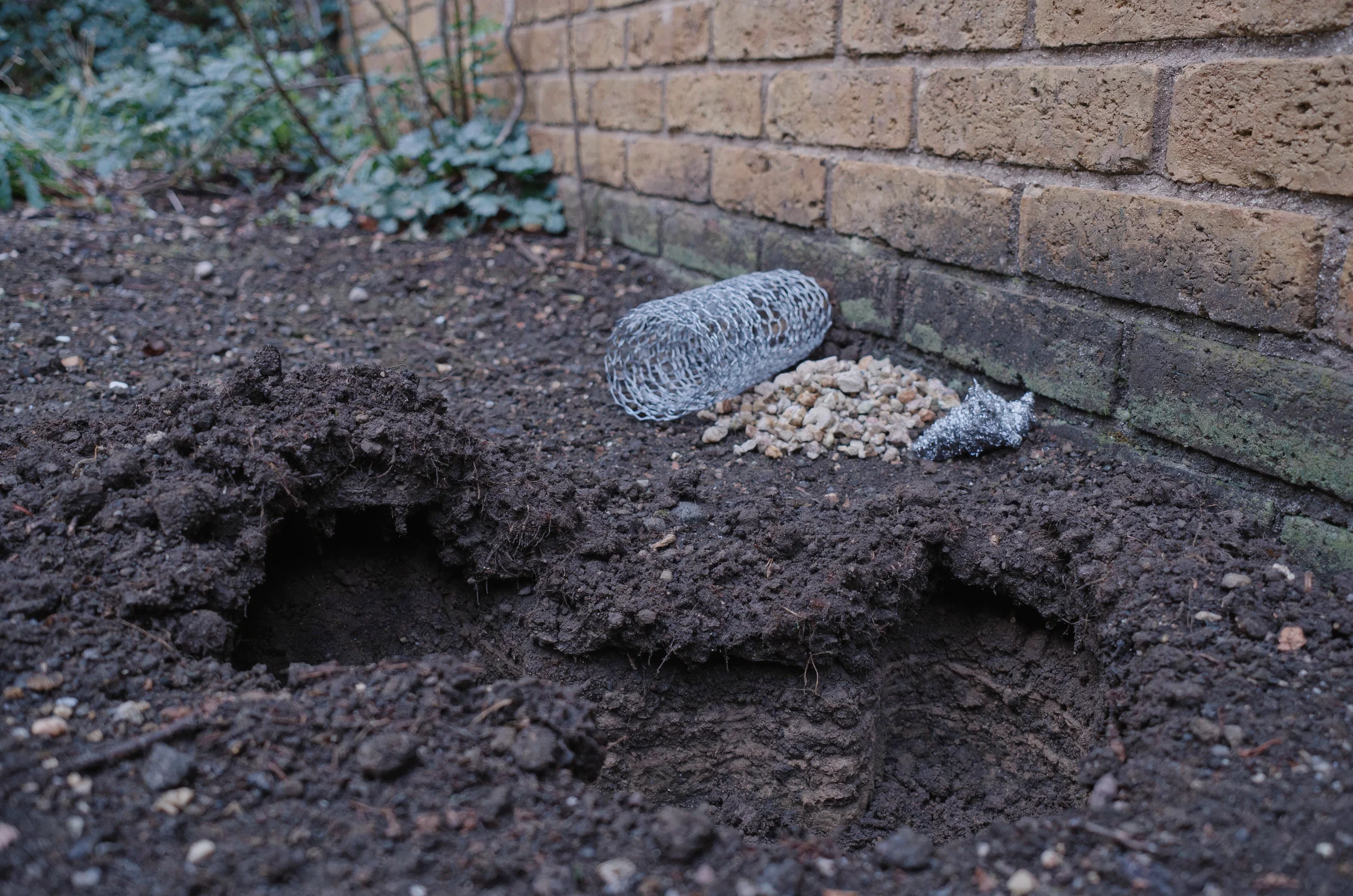
Finding rat holes in garden next to house walls raises two immediate questions: what should fill them, and could the animals already have access indoors? The right repair depends on whether you have an inactive burrow in soil, a gap beneath a structure, or damaged masonry. Establish what made the hole and whether it remains occupied before closing it.
Compacted soil suits the restoration of an inactive garden burrow. Coarse gravel may have a supporting role in backfill. Fixed metal mesh suits certain openings beneath structures, while concrete or mortar belongs in appropriate hard-surface repairs. These options earn their place because they perform different physical jobs. The selection criteria are fit, durability, installation effort and the ability to inspect afterwards.
Loose rubble, expanding foam and improvised chemical treatments are excluded from this roundup. Choose the repair only after checking the hole, nearby building openings and any signs of continuing activity.
Check the burrow before choosing a filler
A hole beside a house does not identify the animal responsible or establish that it reaches the foundations. Filling it immediately removes evidence you may need.
Record the opening without disturbing it
Photograph the hole and its surroundings from a safe position. Include a familiar object nearby for scale, without placing your hand inside.
Record anything else visible:
- Freshly displaced soil or recently disturbed edges.
- A worn route between the hole, cover and a possible food source.
- Droppings, gnawing or a direct rat sighting.
- Nearby gaps around pipes, air bricks, paving or shed bases.
Treat these as clues to assess together. An open hole alone cannot confirm a rat infestation.
Keep children and pets away while the cause is assessed. Avoid probing the tunnel, reaching inside or digging against the wall to follow it.
Establish whether filling can proceed
Where rats are confirmed, coordinate backfilling with the control plan. A quiet evening does not establish that a burrow is unused. Ask the technician how inactivity will be assessed and when repairs should begin.
A recurring opening beside a drain also deserves investigation. The guide to rat access through drains explains the connection to consider, although the hole’s position alone does not prove a drain defect.
Stop if you find a substantial void, loose paving or damaged masonry. Those conditions need assessment before material is added.
Match the material to the opening
Choose a filling material by the surface you need to restore and the opening you need to close. A planting bed and a broken wall joint require different repairs.
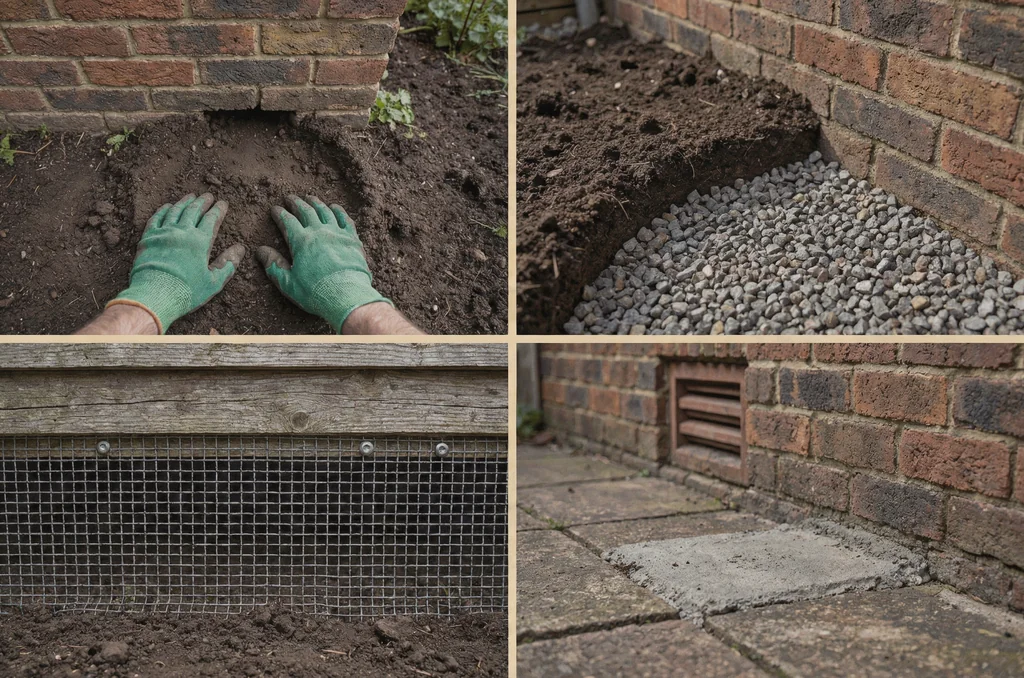
| Option | Suitable job | Installation effort | Durability depends on |
|---|---|---|---|
| Compacted soil | Restoring a confirmed inactive burrow in a planting bed | Straightforward for a shallow, accessible repair | Firm placement, settlement checks and resolved rat activity |
| Coarse gravel | Supporting backfill where aggregate suits the repair | Moderate; surrounding soil and drainage need consideration | Correct placement and a suitable surface finish |
| Fixed metal mesh | Closing an assessed gap beneath or around a structure | Careful cutting, fixing and edge treatment | Sound fixings, suitable mesh and complete coverage |
| Concrete or mortar | Repairing appropriate paving, slabs or masonry defects | More demanding; substrate and material compatibility matter | A sound base and a repair suited to the existing structure |
None of these materials establishes that rats have gone. Treat renewed digging or a nearby replacement hole as a reason to reassess the cause.
Compacted soil for restoring an inactive garden bed
Compacted soil is the practical choice when an inactive burrow has left a shallow opening in an ordinary planting bed. It restores a surface you can plant, maintain and inspect.
Its place in this roundup comes from that straightforward job. Soil can be worked into an accessible depression and firmed as it is placed. The finished surface also makes later settlement or disturbance easier to notice than a hole hidden beneath mulch.
For a small repair cleared for backfilling, use clean, suitable soil. Add it in shallow layers and firm each layer before adding more. Finish level with the surrounding bed rather than building a mound against the house.
Avoid forcing material into an unknown tunnel. If fill keeps disappearing, the void may extend beyond the visible entrance. Stop and have its extent assessed.
Soil has a clear limit: it provides no fixed exclusion barrier. A restored bed can still be disturbed, and unresolved rat activity requires further attention.
Choose this option for garden restoration after the burrow is confirmed inactive. Keep the repaired patch visible initially, and photograph it before replacing any light surface covering.
Coarse gravel for a supporting backfill layer
Coarse gravel is worth considering when an assessed repair needs aggregate beneath its finished surface. Its role is supporting backfill, with the surrounding ground determining whether it belongs there.
The attraction is understandable. Stone feels more substantial than loose compost or topsoil. However, that difference does not establish that a gravel-filled entrance will prevent renewed burrowing.
Where aggregate forms part of an agreed repair, check how the area will be used afterwards. A planting bed needs a suitable growing surface. A path needs a stable finish. Gravel scattered across the entrance does not complete either job.
Drainage also needs thought, especially beside a wall. Adding stone does not establish where water will go. Avoid creating a new surface arrangement that directs water towards the building or conceals an existing drainage problem.
Do not use miscellaneous broken glass, sharp scrap or unidentified demolition waste as substitutes. They create hazards for later gardening and maintenance.
Choose gravel when it has a defined place within the backfill specification. For a simple shallow hole in a planting bed, suitable compacted soil may be the more useful repair. Keep any aggregate below the intended finished surface.
Metal mesh for gaps that need a fixed barrier
Metal mesh belongs on the shortlist when inspection identifies an opening that needs a secured physical barrier. Examples include an assessed gap beneath a shed edge or an opening around part of a structure.
The reason to consider mesh is its ability to span a gap and attach to sound surrounding material. Installation determines whether that advantage is realised.
Select an exterior product intended for rodent exclusion. Confirm its aperture, wire strength and fixing requirements with the supplier or installer. A product described simply as garden mesh may have a different purpose.
Cut and secure it so the edges cannot be pulled away or leave an accessible gap. Protect exposed sharp edges. A loose roll pushed into an opening leaves its position and coverage uncertain.
Building ventilation requires separate care. Air bricks need airflow, and any protective cover must suit that function. The guide to rodent-proofing air bricks covers this distinction.
Mesh installation beside foundations can require excavation or specialist fixing. Do not improvise buried barriers against an older wall without understanding the structure and services.
Choose mesh for a defined exclusion opening with suitable fixing points. Have the installer show you how its edges and fixings can be checked afterwards.
Concrete and mortar for damaged hard surfaces
Concrete and mortar suit appropriate hard-surface defects after the cause and extent of the opening have been established. They require more care than replacing soil in a bed.
Concrete for an assessed slab or paving repair
A concrete repair may suit a damaged non-structural surface where the base and surrounding construction support it. The material earns consideration because it can restore that hard surface.
Pouring concrete into the visible mouth of a garden burrow leaves the condition beneath it uncertain. It can also conceal a void that needed investigation.
Before work begins, establish whether the repair involves only the surface or extends beneath paving, a slab or the building edge. Use a repair method suited to the existing construction.
If paving rocks, sinks or reveals an unexplained cavity, stop using the affected area until it has been assessed.
Mortar for suitable masonry defects
Mortar may be appropriate for a defective masonry joint or a gap around an assessed penetration. Existing brickwork determines the repair material, particularly in an older property.
Ask a competent repairer to check compatibility rather than selecting a mix solely because it appears harder. Keep ventilation openings and drainage routes clear.
Avoid raising the finished ground level against the wall to bury the problem. The repair must account for the building’s damp protection and drainage arrangements.
Choose masonry repair where a confirmed building defect needs closing. Obtain separate advice if the opening involves foundations, damaged brickwork or signs of movement.
Keep the repaired patch visible and remove nearby food
A filled garden hole needs follow-up inspection, especially beside the house. A tidy finish alone cannot establish that the underlying problem has ended.
Keep a dated photograph of the completed repair. During follow-up checks, look for fresh displacement, sinking fill, loose mesh edges or another opening nearby. Compare the same patch from the same position.
Avoid covering the area immediately with dense planting, stored materials or a deep mulch layer. Leave enough access to inspect the junction between the bed and the building.
Review nearby food and shelter at the same time:
- Clear spilled bird food and reconsider feeding arrangements while activity is assessed.
- Keep food waste in sound, closed containers.
- Remove accessible pet food after feeding.
- Check compost arrangements for exposed food scraps.
- Reduce unnecessary clutter beside the affected wall.
In a shared garden, agree who records sightings and who manages bins. A repair log is less useful when each resident holds a separate account.
A simple interactive inspection checklist could store a photograph, hole location, repair date and any later disturbance. That would help a homeowner or managing agent compare observations consistently.
Wear suitable gloves for garden repairs and wash your hands afterwards. Seek specific cleaning advice if the area contains droppings or other suspected contamination.
Repeated holes can mean the repair needs a wider scope
A hole that reappears after filling needs renewed assessment. Adding another layer of material may leave the reason for recurrence unresolved.
Record whether the original entrance reopened or a separate opening appeared beside it. Note any nearby drain, service penetration, shed base or boundary feature. Share that record with whoever assesses the property.
Indoor signs change the scope of the job. New droppings, gnawing or scratching in cavity walls justify checking possible building access alongside the garden.
For a rented home or shared boundary, notify the landlord or managing agent with photographs. Establish who can authorise inspection and repairs before work crosses property boundaries.
When comparing quotations, ask what each includes: investigation, control visits, drain assessment, proofing, backfilling and follow-up. The rodent control cost checks provide prompts for that discussion; confirm current prices directly.
Ask for a written repair scope that identifies the opening, material, installation method and follow-up arrangements.
Questions about filling burrows beside house walls
The remaining decisions concern timing, treatment shortcuts and which repair fits your garden. Resolve uncertainty about occupancy before choosing a permanent closure.
Can I fill a hole as soon as I find it?
Wait until the animal and activity have been assessed. Photographing the opening preserves useful evidence without disturbing it.
If the hole is confirmed as an inactive rat burrow, agree the backfilling method. Where occupancy remains uncertain, let a competent pest technician determine the sequence of control, monitoring and repair.
Will expanding foam close a garden rat hole?
Expanding foam has no useful role as backfill for an open garden burrow. It also leaves uncertainty about the tunnel and surrounding ground.
For a building penetration, select a repair system suited to that opening and the surrounding material. Do not assume that a general gap-filling product provides rodent exclusion.
Should I pour bleach or water down the tunnel first?
Avoid pouring bleach, boiling water or other improvised liquids into an unknown burrow. You cannot establish where they will travel or what occupies the space.
Keep control measures within an assessed plan. If a pesticide is proposed, establish who will apply it, how it will be used and what precautions apply to children, pets and wildlife.
Which option should I choose for my garden?
For a confirmed inactive opening in a planting bed, choose suitable soil placed and firmed in layers. Use aggregate only where the repair requires it.
For an assessed gap beneath a structure, consider securely fixed exclusion mesh. For damaged paving or masonry, arrange a repair compatible with the existing construction.
The most overlooked alternative is leaving the opening undisturbed briefly while its cause is assessed. That is the sensible choice when activity, drainage or the extent of a void remains uncertain. Keep the area protected and record changes until the repair plan is agreed.