
Clothes moth call-outs across London have climbed steadily through 2026, and pest industry reporting this summer points to the same pattern: warmer homes, wetter winters, and a return of wool and cashmere to British wardrobes are feeding a pest that most homeowners never see until the damage is done. If you are asking where do clothes moths come from, the honest answer has two parts. They rarely fly in through an open window. In most cases, they arrive quietly on second-hand clothing, used rugs, upholstered furniture, or belongings moved from another property, already carrying eggs or larvae too small to spot. Once inside a warm, undisturbed wardrobe, they settle in and breed.
This piece separates what is confirmed from what is still analysis, then works through the entry routes London properties actually present, why larvae rather than adult moths cause the damage, and what households can do this week.
Confirmed: moth numbers are up, and the rise is long-running
The trend is not new, and it is not anecdotal. English Heritage's Operation Clothes Moth citizen science project, which handed pheromone traps to households across 42 English counties, confirmed that clothes moth numbers in historic properties and homes are on the increase, with warmer southern counties recording higher average catches. Heritage monitoring bodies have since logged some of the highest moth levels since records began.
UK pest intelligence reporting in May 2026 attributes the rise to three compounding factors: warmer average temperatures extending the active season, increased use of natural-fibre textiles, and the decline of naphthalene mothballs as a routine domestic preventive after biocide reclassification. Industry commentary published in July 2026 adds a building-design angle: modern homes are warm year-round, well sealed, generously carpeted, and full of quiet voids, which is close to ideal moth habitat.
What is confirmed:
- Clothes moth and carpet moth numbers have climbed steadily for over a decade in the UK.
- Warmer southern England, including London, records higher trap counts than cooler regions.
- The two species responsible for most textile damage are the common clothes moth (Tineola bisselliella) and the case-bearing carpet moth.
What remains analysis rather than settled fact: exactly how much of the 2026 increase in call-outs reflects more moths versus more reporting, and how much comes from revived interest in wool and cashmere restocking the larvae's food supply. Both explanations are plausible and both appear in current trade commentary.
How moths actually get into a property
The single most common introduction route is an infested item crossing the threshold. Moth specialists writing about London properties list the usual suspects: second-hand clothing, used rugs and carpets, upholstered furniture, stored textiles, and belongings moved from another property. Any of these can carry eggs or young larvae, which are tiny, pale, and easy to miss in a fold of fabric.
Flight is a secondary route, but it matters in dense urban housing. Adult common clothes moths are weak, reluctant fliers that prefer dark corners to open air, yet they will move short distances between connected spaces. In London's terraces and conversions, that creates specific pathways:
- Gaps around chimney breasts and shared flues. Victorian and Edwardian terraces often have disused fireplaces, shared chimney stacks, and voids behind boarded-up hearths. Moths can drift between adjoining properties through these cavities, and the voids themselves make undisturbed breeding sites.
- Lofts and eaves cupboards. Shared roof spaces in converted houses let activity spread between flats. A neglected suitcase of woollens in a common loft can seed the flat below.
- Under-floor voids and skirting gaps. Period floorboards with gaps along skirting edges give larvae access to the dark, still space beneath, where shed hair and fibres accumulate.
- Building works. Refurbishment that opens up wall cavities, or furniture moved in from storage during a renovation, can introduce or redistribute an infestation.
One point technicians stress: the exact original source is rarely provable. Activity can usually be narrowed to a room, wardrobe, rug, or carpet edge, but not always to the single jumper or sofa that brought the problem in. Chasing the one guilty item matters less than finding every place larvae are currently feeding.
For readers in older West London terraces specifically, the combination of wool carpets, original floorboards, and shared chimney stacks is exactly what makes Kensington moth control call-outs so repeatable: the architecture itself provides the harbourage.
Why central heating changed the rules
This is the piece of the story most homeowners miss. The clothes moth almost certainly evolved in Africa and reached Europe through trade in animal-derived materials, then thrived in heated interiors. In an unheated building, cold winters used to slow or pause moth development for months, keeping populations in check. Modern central heating removed that brake.
With stable warmth year-round, clothes moths breed continuously, producing multiple generations per year instead of one. Add a warming climate and generation times shorten further, meaning more feeding larvae per calendar year and more damage per wardrobe. Wetter winters matter too, though indirectly: damp conditions raise indoor humidity, and slightly humid natural fibres are easier for larvae to digest than bone-dry ones, which is why moth activity often concentrates in rooms with condensation problems or poor ventilation.
The practical consequence for a London flat kept at 20 degrees through winter is simple. There is no "moth season" indoors anymore. The old advice to check wardrobes in spring and autumn assumed breeding paused in the cold months. In a heated home it does not, which is why infestations discovered in January are just as established as ones found in June.
The larvae do the damage, not the moths you see
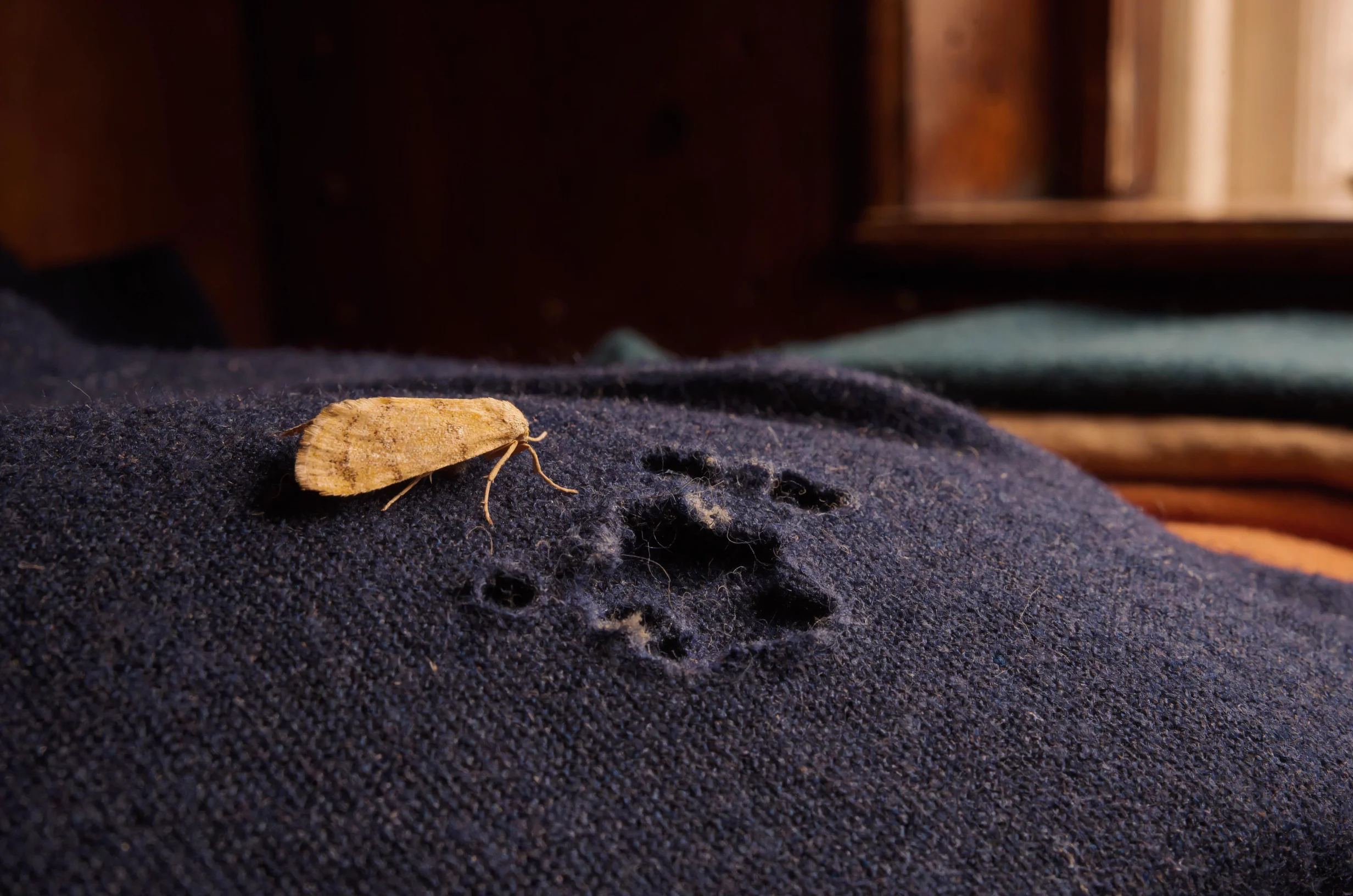
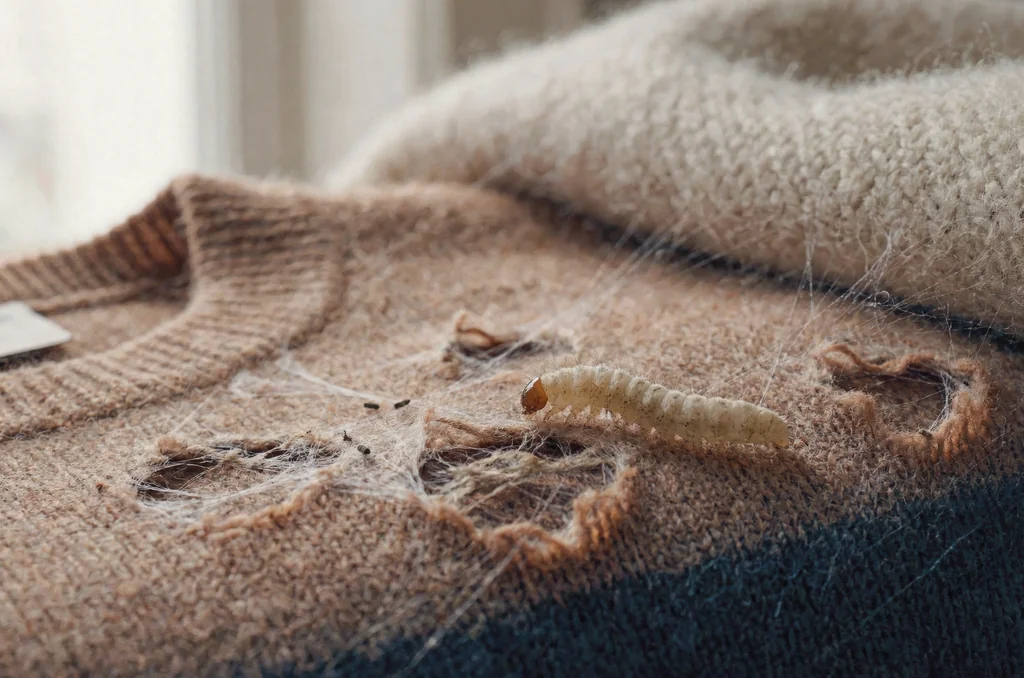
If you spot a small buff-coloured moth resting on a wardrobe wall, that moth has already done its reproductive work. Adult clothes moths do not eat at all; they live only to mate and lay eggs. The damage comes from the larvae, cream-coloured caterpillars that feed on keratin, the structural protein found in animal fibres.
That feeding preference defines the target list:
- Wool, cashmere, silk, and mohair clothing, especially items soiled with sweat or food traces
- Wool-rich carpets and rugs, particularly at edges, under furniture, and behind curtains
- Feather-filled cushions, down jackets, and traditional upholstery with horsehair or wool stuffing
- Stored textiles: blankets in ottomans, suits in garment bags, knitwear boxed in the loft
- Taxidermy, felt, and even the wool felt inside pianos
Larvae cannot digest synthetic fibres at all. This is why the decades of polyester dominance suppressed moth problems, and why the recent revival of natural fibres as markers of quality and sustainability has restocked their food supply. A wardrobe of acrylic jumpers is moth-proof; a wardrobe with two cashmere sweaters and a silk blouse is not.
The feeding pattern is also a diagnostic clue. Larvae graze in dark, undisturbed zones: under beds, beneath sofas, behind wardrobes, along skirting boards, and inside folded garments. Holes in a jumper worn weekly are unusual; holes in the same style of jumper stored for eight months are classic. The early clothes moth signs worth checking for include irregular holes, silken webbing or tubes on fabric, gritty droppings the colour of the textile, and shed larval skins in drawer corners.
Why period London properties are disproportionately affected
London's housing stock stacks the odds in the moth's favour, and the trend reporting this year keeps returning to building fabric as the deciding factor. Trade analysis published in July 2026 makes the case directly: the difference between a building that suffers recurring infestations and one that never does often comes down to decisions made in the specification, fit-out, and handover.
Period properties combine several risk factors at once:
- Original materials. Wool carpets, felt underlay, horsehair plaster, and traditional upholstery provide larval food throughout the structure, not just in wardrobes.
- Undisturbed voids. Chimney breasts, boxed-in pipework, under-stair cupboards, and eaves storage create dark, warm, rarely cleaned zones where populations build unnoticed for years.
- Ageing seals. Shrunken floorboards, gaps around architraves, and cracked lath-and-plaster give moths and larvae free movement between rooms and, in terraces and conversions, between dwellings.
- Soft furnishing density. Heavy curtains, layered rugs, and upholstered furniture multiply the available feeding sites per room.
Converted flats face an extra complication: responsibility is shared but the pest is not. An infestation breeding in a common loft or a neighbour's unused box room will keep re-seeding a treated flat. In Islington's Victorian conversions, for example, technicians handling Islington moth control work regularly find activity concentrated in communal roof voids rather than in the flat where the tenant first noticed holes.
Hampstead's larger period houses show the same pattern at a different scale: deep wardrobes, spare rooms closed up for months, and attics full of stored textiles. Anyone managing that kind of property should treat undisturbed storage as the primary surveillance zone, which is the same starting point used in Hampstead moth control inspections.
What to do in your home this week
Confirmed facts out of the way, here is the practical reader implication. None of this requires chemicals, and all of it works whether or not you currently have an infestation.
- Quarantine incoming second-hand textiles. Bag charity-shop knitwear, vintage clothing, and used rugs on arrival. Wash at the highest temperature the care label allows, or freeze sealed items for 72 hours. Both kill eggs and larvae.
- Disturb the dark zones. Vacuum along skirting boards, under beds and sofas, behind wardrobes, and inside empty drawers. Larvae depend on stillness; regular disturbance breaks the breeding cycle. Empty the vacuum immediately afterwards.
- Audit stored textiles. Take everything out of loft boxes, ottomans, and garment bags. Shake items outdoors, check for webbing and holes, and repack only clean, dry textiles in sealed containers. Dirty or worn natural fibres are far more attractive to egg-laying females.
- Reduce humidity where you can. Ventilate wardrobes occasionally, avoid packing clothes tightly, and deal with condensation on windows and external walls.
- Monitor, don't guess. Pheromone traps cost a few pounds and tell you whether adult males are active. They will not clear an infestation, but they confirm whether one exists and roughly where.
If traps keep catching moths after a thorough clean-out, or damage keeps appearing in carpets and upholstery rather than just stored clothing, the population is established in the building fabric and DIY rarely reaches it. At that point a professional clothes moth treatment that targets voids, carpet edges, and harbourage zones is the realistic route, particularly in period properties where the breeding sites are structural.
One tool idea worth building into your routine: a simple wardrobe-risk checklist. Score each storage area for darkness, disturbance frequency, natural-fibre content, and humidity, and check the highest-scoring areas monthly. It takes five minutes and catches problems at the egg stage rather than the hole stage.
Questions readers ask about clothes moth origins
Do clothes moths come in through open windows? Occasionally, but it is not the main route. Adult common clothes moths are weak fliers that avoid light and open air. Far more infestations begin with an infested item: second-hand clothing, a used rug, upholstered furniture, or boxes moved from another property.
Can moths spread from a neighbour's flat or the house next door? Yes, particularly in terraces and conversions. Shared chimney stacks, common loft spaces, and gaps around pipework let moths move between dwellings. If you clear your flat but activity keeps returning, the source may be a shared void or an adjoining property.
Why did I get moths when my home is clean? Cleanliness matters less than textile content and disturbance. Moth larvae eat keratin in natural fibres, not dirt, though sweat and food residues on fabric make it more attractive. A spotless home full of wool, cashmere, and undisturbed storage is better moth habitat than a scruffy home full of synthetics.
Do mothballs still work? Traditional naphthalene mothballs have largely disappeared from routine domestic use following biocide reclassification, which is one of the factors pest intelligence sources link to rising moth numbers since the 1990s. Modern alternatives exist, but sealed storage and regular disturbance are more reliable than any deterrent.
How long can an infestation hide before I notice it? In a warm home with continuous breeding, months. Larvae feed quietly in dark zones, and the first visible sign is usually damage rather than insects. That is why monitoring traps and periodic wardrobe audits matter more than waiting to spot a moth.
The next signal to watch is winter trap counts. If catches stay high through the colder months in heated homes, it will confirm what the 2026 reporting suggests: the indoor breeding pause that once kept this pest seasonal has gone. Until then, the most useful action right now is the ten-minute check of whatever natural-fibre textiles you have stored and undisturbed.