
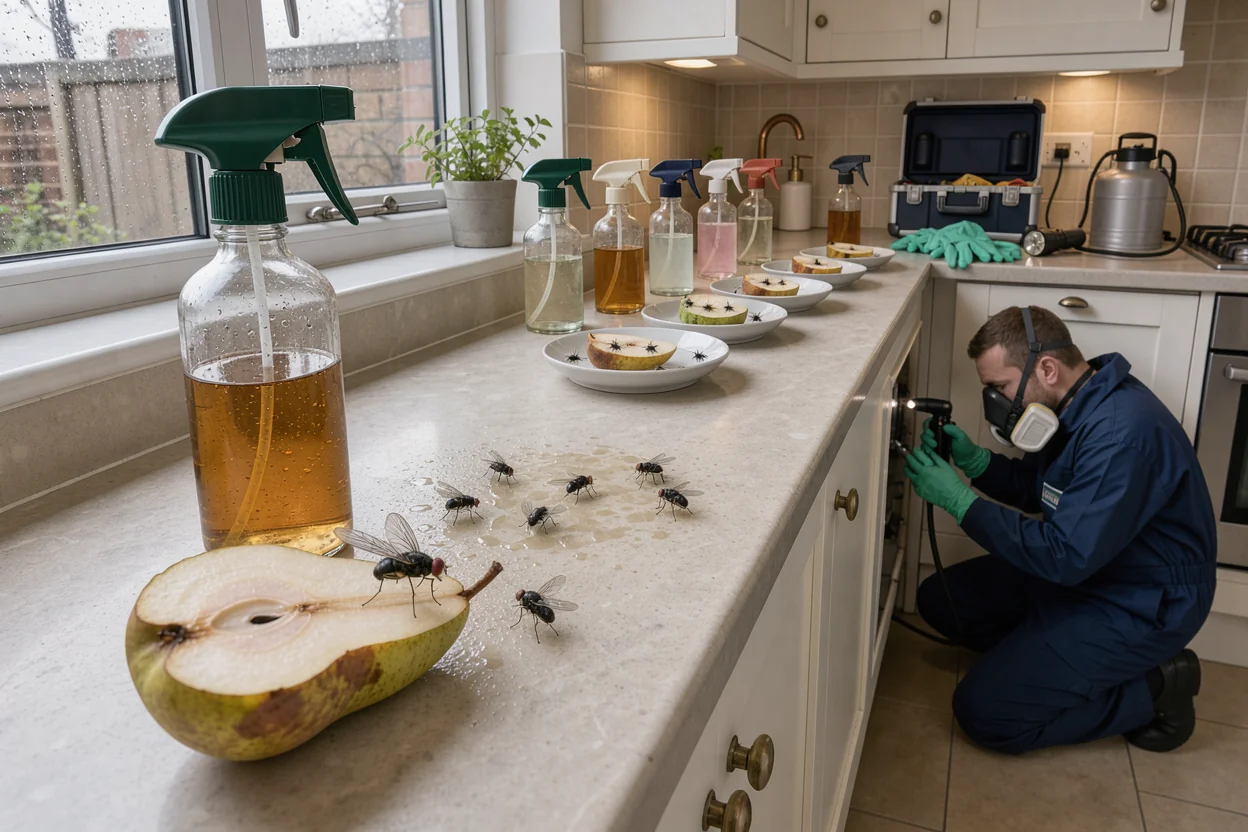
Swatting at small flies hovering over a fruit bowl rarely solves a kitchen infestation. Common fruit flies (Drosophila melanogaster) possess compound eyes sensitive to tiny shifts in air currents, which allows them to dodge an incoming hand with ease. When populations spike indoors, reaching for a homemade spray to kill fruit flies is often the quickest first move.
Commercial fly aerosols frequently rely on synthetic pyrethroids designed to coat surfaces and paralyse insect nerve channels. Spraying those chemicals directly over food preparation counters, cutting boards, or near food waste bins raises valid safety concerns. A targeted liquid spray mixed from household ingredients offers a practical alternative to drop adult flies on contact without chemical residues near food.
Liquid contact sprays only solve half the problem. They drop the adults you see, yet do nothing to halt eggs incubating in a kitchen bin or sink overflow. Below is a practical ranking of five home recipes that drop flies immediately, two widely shared internet mixtures that fail, and the biological reason repeated spraying signals an undiscovered breeding site.
How Liquid Sprays Physically Ground Small Flies
A flying insect does not absorb liquid like a porous sponge. The fruit fly cuticle carries an outer waxy layer of long-chain hydrocarbons that repels water. Because of this natural coating, plain water droplets bead up and roll harmlessly off the insect's wings and body.
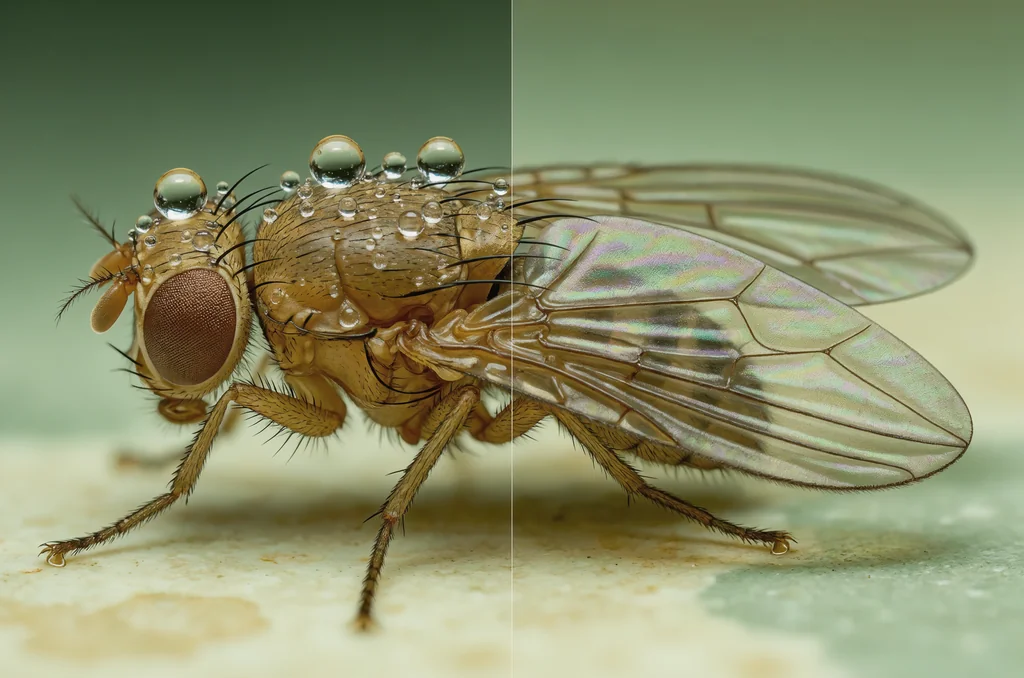
Flies breathe through tiny lateral valves along their thorax and abdomen called spiracles. These openings lead directly into an internal network of tracheal tubes. Because water maintains high surface tension, an ordinary water mist cannot enter these tiny pores. To disable a fruit fly with a liquid spray, a recipe must achieve one of three mechanical outcomes:
- Lower liquid surface tension to wet the waxy cuticle, coat the wings, and block spiracular airflow.
- Dissolve the protective epicuticle directly, causing swift dehydration and systemic shock.
- Deliver a concentrated organic solvent or botanical compound that disrupts insect nerve function on contact.
If a recipe lacks a surfactant or an active solvent, the droplets simply bounce away. When evaluating a homemade spray to kill fruit flies, surface safety matters alongside knockdown speed. A spray that stains stone worktops or leaves oily deposits creates fresh headaches in a busy kitchen.
1. Isopropyl Alcohol (70%) for Instant Direct Knockdown
Standard 70% isopropyl alcohol, sold as rubbing alcohol or technical cleaning alcohol, is the fastest direct contact spray you can keep in a kitchen. It drops adult fruit flies from the air almost instantly.
Alcohol acts as an organic solvent that strips the waxy epicuticle from the insect body within seconds. At a 70% concentration, the liquid enters the spiracles, coagulates cellular proteins, and causes immediate shock. Because the insect cannot shed the fluid, its flight wings stick together, dropping the fly to the surface where it dies within five seconds.
To prepare the spray, pour undiluted 70% isopropyl alcohol straight into a clean spray bottle fitted with an adjustable nozzle. Set the nozzle to a medium-fine mist rather than a narrow jet. A narrow stream blasts flies away on air currents, whereas a fine mist intercepts erratic flight paths.
The main benefit of isopropyl alcohol is cleanliness. It evaporates within two minutes, leaves no sticky film, and sanitises the surface it touches. Research examining diluted alcohol spray methods demonstrates how quickly standard alcohols knock down domestic flies without leaving lingering chemical residues.
The limitation is surface sensitivity. Never apply rubbing alcohol to unsealed timber, varnished dining tables, or finished cabinetry, as it dissolves shellac and clouds polyurethane finishes. It also dries out rubber seals around sink wastes. Keep the spray bottle well away from gas hobs, as atomised alcohol mist is flammable.
2. Washing-Up Liquid and Warm Water for Food-Safe Control
When flies cluster directly over open produce or food preparation counters, alcohol can be too aggressive. A mild detergent solution is the safest and most dependable mechanical killer available for kitchen surfaces.
Washing-up liquid contains anionic and non-ionic surfactants. These molecules possess a hydrophilic head that bonds with water and a lipophilic tail that attaches to oils. Misted onto a fruit fly, detergent molecules latch onto the insect's waxy cuticle, breaking surface tension immediately. Instead of beading, the water spreads across the insect in a continuous sheet.
The fluid covers the spiracles, cutting off oxygen transfer and drowning the insect within ten to twenty seconds. Because the wings become heavily waterlogged, the fly cannot take off once hit.
Mix 250 millilitres of warm tap water with one teaspoon (roughly five millilitres) of standard concentrated washing-up liquid. Swirl the bottle gently to blend the soap without generating heavy foam. Warm water helps the surfactant distribute evenly throughout the mix.
This spray is safe around food prep areas, though counters need a quick wipe with a damp cloth afterward to remove the thin soapy film. The only practical trade-off is knockdown time: while it grounds flies immediately, complete mortality takes roughly fifteen seconds longer than an alcohol spray.
3. Apple Cider Vinegar and Detergent for Combined Attraction
Apple cider vinegar is standard bait for static jar traps, but combining it with detergent in a trigger spray creates a dual-action tool that works on multiple levels.
The acetic acid in cider vinegar releases volatile aromatic compounds that mimic overripe, fermenting fruit. While a fly senses alcohol spray as an irritant and takes flight before you press the trigger, cider vinegar mist does not trigger the same immediate escape reaction. When combined with a surfactant, the acetic acid acts as a mild irritant that speeds up knockdown once spiracles are breached.
Blend 150 millilitres of apple cider vinegar with 100 millilitres of water and half a teaspoon of washing-up liquid. Comparative analysis from testing common household sprays indicates that adding vinegar to surfactant bases improves droplet adherence while drawing nearby flies toward misted zones.
This solution works well when flies settle in dark recesses, under kitchen wall units, or around internal waste bins. Misting the bin rim drops resting flies on contact and leaves an aromatic film that lures stray flies into remaining wet patches.
Take care with acid-sensitive stone worktops. Acetic acid reacts with the calcium carbonate found in marble, limestone, and composite granite, causing dulling or etching within minutes. If your kitchen features natural stone worktops, use the plain washing-up liquid recipe instead.
4. Peppermint and Eucalyptus Botanical Emulsion
Essential oils are often promoted as general insect deterrents, but high-terpene oils deliver genuine contact toxicity when emulsified properly in an alcohol-and-water base.
Peppermint oil contains high amounts of menthol and menthone, while eucalyptus oil contains eucalyptol (1,8-cineole). In concentrated amounts, these botanical compounds act as neurotoxins against small soft-bodied insects, interfering with octopamine receptors that regulate heart rate and movement. The strong aroma also masks the scent of fermenting sugars that flies use to locate food.
Because essential oils do not dissolve in water alone, an emulsifier is necessary. Adding oil straight to water causes it to float on top, leading to bursts of plain water followed by pure oil.
Combine 50 millilitres of surgical spirit or witch hazel with fifteen drops of pure peppermint oil and ten drops of eucalyptus oil. Shake until the liquid looks slightly cloudy, then add 200 millilitres of warm water and three drops of washing-up liquid. The alcohol and soap keep the essential oils dispersed evenly.
Trials assessing natural contact spray recipes show that essential oil sprays offer dual functionality: they ground flies on contact and leave a scent barrier that deters new arrivals from landing on splashbacks or window frames.
Keep this mixture away from household pets. Peppermint and eucalyptus oils contain phenols and terpenes toxic to cats and dogs, who lack the liver enzymes required to metabolise them. Never mist this spray near pet bowls or resting areas.
5. Diluted Hydrogen Peroxide for Surface Yeasts and Larvae
Standard 3% topical hydrogen peroxide is widely known as a mild disinfectant, but it is also an effective spray for interrupting the fruit fly reproductive cycle on hard surfaces.
Sprayed directly onto adult flies, hydrogen peroxide acts as a rapid oxidising agent. It reacts with organic matter to release oxygen micro-bubbles, stripping the insect's outer membrane and causing physical damage that leads to death within ten seconds. More importantly, hydrogen peroxide destroys the microscopic yeasts (Saccharomyces cerevisiae) and acetic acid bacteria that fruit flies feed on and deposit eggs into.
Adult fruit flies do not feed on solid fruit pulp; they feed on yeast multiplying across decaying skins. Misting kitchen tiles, draining boards, and sink rims with hydrogen peroxide strips away this microbial layer, removing the primary food source supporting newly hatched larvae.
Combine equal parts 3% hydrogen peroxide and cold water in an opaque spray bottle. Hydrogen peroxide breaks down quickly when exposed to light, converting into water and oxygen, so a clear bottle causes the solution to lose its strength within days.
This spray is well suited for sanitising food caddies, recycling bins, and the narrow gap between cookers and counters. It leaves no harmful residue, requires no rinsing, and neutralises sour food smells. Avoid applying it to coloured tea towels or silicone mastic joints, as the oxidising action can lighten fabrics and dry out silicone over time.
Two Widely Recommended Homemade Sprays That Consistently Fail
Online forums and social media frequently circulate DIY pest control hacks that sound convenient but fail basic biological and chemical tests. Two widely shared recipes provide zero knockdown and actively harm kitchen hygiene.
Plain White Vinegar Without Detergent
Countless online tips suggest mixing white distilled vinegar and water in a spray bottle to eliminate kitchen flies. This recipe fails because it lacks a surfactant.
Distilled white vinegar contains roughly 5% acetic acid diluted in 95% water. When misted into the air, the droplets retain maximum surface tension. A fruit fly hit by this spray experiences nothing more than a wet shower. The waxy hairs on its cuticle repel the acidic water, allowing the insect to shake off the drops and take flight within seconds.
Spraying plain vinegar across kitchen tiles also deposits a dilute layer of acetic acid. While it does not kill adult flies, the sour aroma acts as an attractant, drawing additional flies into the room from open windows or communal corridors. Findings on vinegar-based spray preparations confirm that without liquid detergent to break surface tension, vinegar simply lures flies rather than killing them.
Boiled Cinnamon, Clove, or Chilli Infusions
Another common recipe involves simmering powdered cayenne pepper, ground cinnamon, or crushed cloves in water, straining the liquid, and misting it around the kitchen. The reasoning claims strong spices irritate the flies' sensory organs.
In practice, capsaicin from chillies and cinnamaldehyde from cinnamon show negligible insecticidal effect on flying dipteran pests at domestic concentrations. Flies easily dodge the heavy droplets, and those hit by the spray remain unharmed once the moisture dries.
Ground spices also leave fine sediment that clogs spray bottle nozzles quickly. Cayenne and cinnamon extracts leave stubborn yellow and brown stains on light grouting, silicone seals, and painted walls. Aerosolising capsaicin mist indoors also irritates human eyes and airways without reducing fly numbers.
Why Persistent Daily Spraying Points to Hidden Breeding Grounds
If you reach for a spray bottle every morning, the fly population is growing faster than your ability to kill adult insects. A single female fruit fly lays up to 500 eggs during her adult life, depositing them in clutches of fifteen to twenty inside fermenting organic matter.
At indoor room temperatures between 18°C and 22°C, eggs hatch into larvae within 24 to 30 hours. The larvae feed on yeast-laden matter for four to five days before entering the pupal stage. The complete development cycle from egg to reproductive adult takes as little as eight to ten days.
Adult flies in your kitchen represent less than 15% of the total infestation. The remaining 85% consists of eggs, burrowing larvae, and pupae tucked out of reach of liquid sprays. If adult flies continue appearing day after day, they are emerging from an uncleaned micro-habitat nearby.
Locating these reservoirs requires inspecting hidden moisture points across the room:
- The dark hollow beneath kitchen base cabinets where liquid spills seep through floorboard seams.
- Condensation drip trays situated on the rear exterior of domestic refrigerators, which collect warm, stagnant water and food dust.
- The internal rubber baffle and overflow channel of the kitchen sink, where fatty grease and biofilm accumulate.
- The base of council recycling containers where unrinsed drink cans, cider bottles, or wine cartons pool liquid.
- The bottom of vegetable baskets where a single soft potato or onion can generate hundreds of flies.
Systematically auditing these fruit fly breeding sites remains the only permanent answer to persistent fly swarms. Homeowners can use a simple inspection checklist to rate each suspect spot by moisture level, food availability, and pupae presence. If you inspect every cupboard and bin but adult flies persist in commercial kitchens, basement flats, or period conversions, arranging professional fruit fly control ensures technicians can deploy targeted growth regulators and inspect sub-floor voids that DIY tools cannot reach.
Distinguishing True Fruit Flies From Lookalike Domestic Species
Many people spend weeks spraying small flies under the assumption they are dealing with fruit flies, only to find the problem unaffected by surface sanitation. Several small domestic fly species share similar sizes and habitats but require distinct treatments.
Drain flies (Psychodidae) are roughly the same size as fruit flies (two to four millimetres) but feature broad, hairy wings and long antennae that give them the silhouette of a tiny moth. They do not feed on ripe fruit or hover over waste caddies; they emerge directly from plugholes, inspection covers, and washing machine waste lines where they feed on gelatinous sewer sludge.
Phorid flies (Phoridae), also known as scuttle flies, are darker, hump-backed insects that run rapidly across worktops rather than flying immediately when disturbed. Phorid flies breed in structural moisture faults, such as cracked sub-floor drainage pipes, saturated soil beneath leaking shower trays, or failing grease traps.
Consulting a drain fly identification guide allows you to verify physical traits under magnification before choosing a treatment. If your pests match the moth-like appearance of psychodids, household contact sprays will not clear the breeding mass inside the pipework, requiring targeted professional drain fly treatments to clear the biofilm. For widespread domestic infestations involving multiple rooms, accessing broader residential fly control services helps identify entry routes and resolve the problem quickly.
Practical Answers to Common Kitchen Spray Questions
Can homemade sprays be applied directly to fresh produce?
Do not spray alcohol, detergent, hydrogen peroxide, or essential oil sprays directly onto fresh produce you intend to eat unpeeled. While washing-up liquid is non-toxic in trace amounts, it alters the skin of the fruit, absorbs into porous rinds, and spoils flavour. Alcohol sprays dehydrate delicate fruit skins, accelerating rotting and attracting more pests. If fruit flies hover directly over produce, wash the fruit thoroughly under cold running water, dry it with paper towels, and store it in a sealed container or inside the refrigerator before spraying the surrounding counter.
Does pouring bleach down the kitchen plughole kill fly larvae?
Bleach is largely ineffective against fly larvae living inside drain pipes. Household bleach runs rapidly down the centre of the waste pipe without clinging to the vertical walls where organic sludge and fly larvae reside. The thick layer of gelatinous biofilm protects the larvae beneath from the chemical. In addition, bleach can corrode older copper or lead waste fittings found in older properties. Removing drain-dwelling larvae requires a stiff drain brush combined with an enzymatic or biological foaming drain cleaner that digests the physical slime layer.
Why do adult flies return hours after using a contact spray?
Contact sprays possess zero residual killing power. Once the alcohol evaporates or the soapy water dries, incoming flies land on the surface completely unharmed. Because the insect pupal stage takes place inside tough, water-resistant puparia attached to dry vertical surfaces, such as the underside of worktop rims or the exterior sides of waste bins, the next generation continues emerging every few hours. Sprays kill only the flies that are airborne or exposed at the exact moment you pull the trigger.
What type of spray bottle produces the best droplet size?
Use a heavy-duty 500-millilitre plastic spray bottle with an adjustable brass or heavy plastic nozzle. Cheap trigger bottles produce an inconsistent stream with large, heavy droplets that generate air displacement, pushing the fly out of the target zone before the liquid touches it. A quality adjustable nozzle tuned to produce an atomised, conical mist blankets the air space evenly, ensuring maximum droplet collision with the insect's wings.