
If you’re asking “how do I permanently get rid of drain flies?”, start by finding where they breed. Lasting control depends on removing the organic breeding material where larvae develop and preventing it from accumulating again. Over the next 30 minutes, photograph a fly, note where adults gather and identify drains to test overnight. Leave drain chemicals alone until you know where the problem starts.
Check that the flies belong to the drain
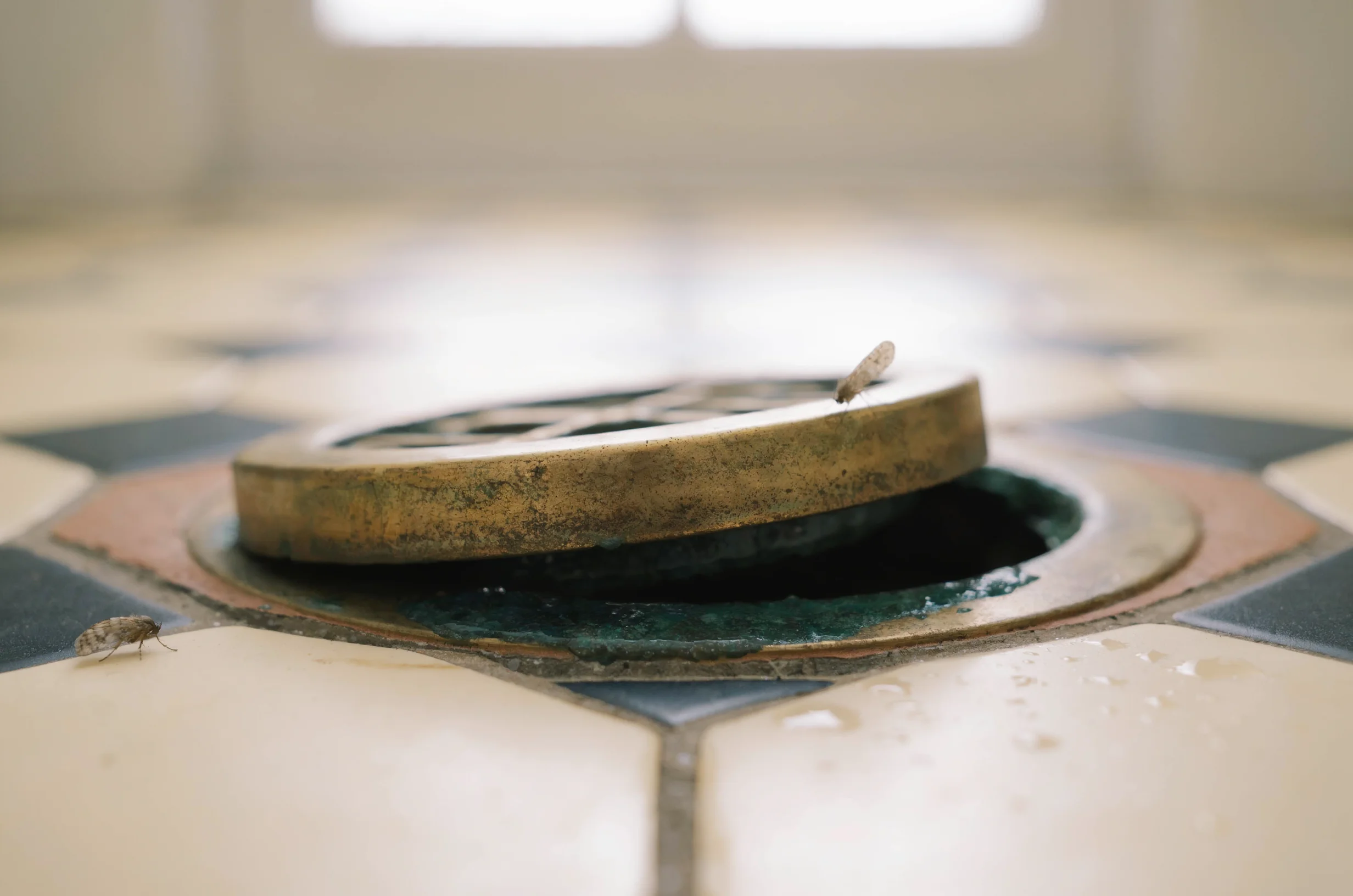
Drain flies have hairy bodies and broad, fuzzy wings that give them the appearance of tiny moths. They often rest on walls near sinks, showers or floor drains. Their flights tend to be short and weak. The University of California’s guidance on identifying moth flies describes these distinguishing characteristics.
Look at a resting insect before choosing a treatment. Use your phone’s close-focus setting, or photograph one beside a familiar object for scale. A clear view of the wings is more useful than a blurred picture of a flying insect.
Several small flies can appear in the same room:
- Fuzzy, moth-like flies near plumbing suggest drain flies.
- Slender flies concentrated around houseplants warrant a check of damp potting compost.
- Small flies gathering around fruit, food waste or drinks warrant an inspection for fermenting residues.
The guide to fungus gnats versus drain flies can help if plant pots and a sink are close together. For suspected fruit fly infestations, include food storage and waste containers in your inspection.
The place where an adult rests is a clue. The breeding source still needs checking. Record sightings by room and photograph the clearest specimen before cleaning.
Trace the breeding site overnight
Drain flies need moist organic material for their immature stages. A sink can look spotless above the plughole while residue remains beneath the stopper, around an overflow or inside the waste pipe.
Start in the room with the most sightings. Check the basin, shower, bath and any floor drain. In a kitchen, include the sink strainer, appliance drip trays and damp areas beneath units. Inspect accessible surfaces without opening sealed plumbing connections.
Set up a tape test on suspect drains
An overnight tape test can help identify flies emerging from an opening. University of Arkansas Extension describes adhesive tape as a way of locating breeding drains.
- Choose a drain that can remain unused overnight.
- Dry its rim so the tape will stay attached.
- Place clear adhesive tape across part of the opening, with the sticky surface facing down towards the drain.
- Leave some of the opening uncovered and tell everyone using the room about the test.
- Check the underside the following morning, then remove the tape before using the fixture.
Test several suspect drains during the same night if practical. Write down which opening each piece of tape covered. Avoid covering a drain that must remain available for normal use or emergency drainage.
Follow the evidence when the tape stays clear
Flies caught underneath the tape point towards that opening as an emergence site. Clean the associated drain and accessible fittings.
A clear strip on one morning does not rule out the drain. Repeat the test over two or three nights if sightings continue. This is a practical checking routine, rather than a guarantee that every active drain will produce a catch.
If all tested drains remain clear, widen the inspection. Look for wet cleaning equipment, forgotten buckets, appliance trays and persistent damp patches. Where flies gather around food waste, inspect the fruit fly breeding spots that can be missed during ordinary kitchen cleaning.
Scrub away the layer that feeds the larvae
Removing the breeding layer is the main cleaning task. Biofilm is a coating of organic residue and microorganisms that sticks to wet surfaces. In drains, it can collect around hair, soap deposits, grease and food debris.
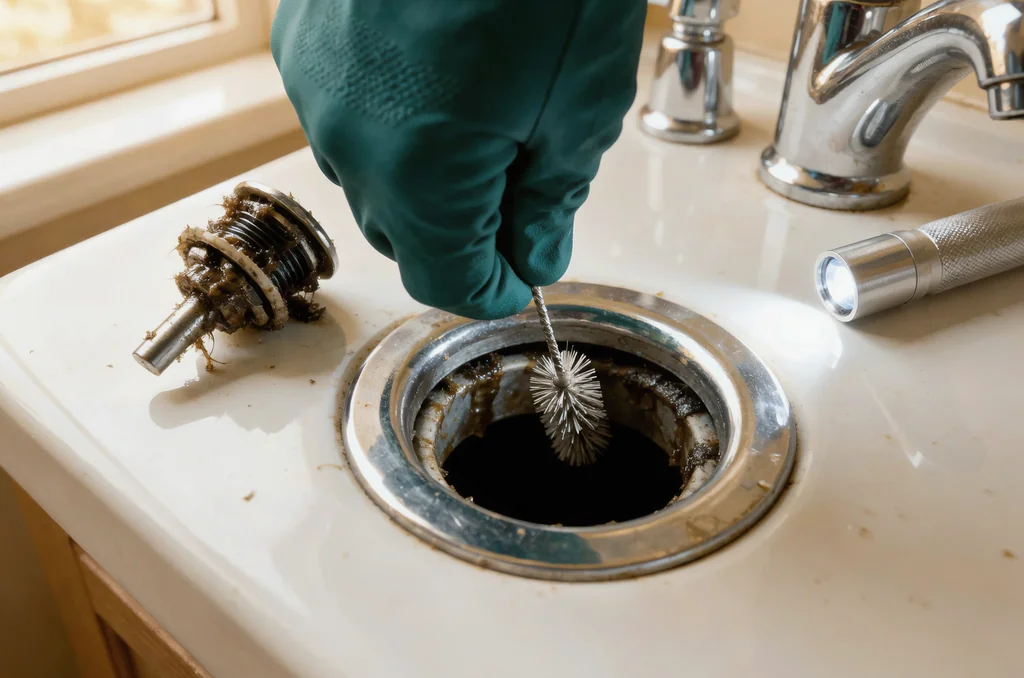
Texas A&M’s guidance on removing drain breeding sites supports thorough cleaning of the material that sustains larvae. Reaching the affected surfaces matters more than making the visible basin shine.
Prepare the drain without exposing yourself to cleaner
Gather household gloves, a torch, a suitable drain brush, paper towels and a rubbish bag. Use a brush intended for the fitting, with bristles that can contact the pipe walls. Keep it separate from brushes used on dishes or food surfaces.
Check whether anyone has recently poured a chemical unblocker into the drain. If liquid containing a corrosive product remains, do not insert a brush or dismantle the trap. Follow the product’s handling instructions and seek plumbing advice if you cannot establish what is present.
Remove only covers and stoppers designed for routine cleaning. Photograph their position first if reassembly may be awkward. Fixed grilles, corroded screws and unfamiliar fittings are reasons to stop and arrange suitable help.
Work through the accessible surfaces
Clean the affected fitting in this order:
- Lift out visible hair, food particles and other loose debris. Put them in the rubbish.
- Scrub the cover, stopper and their undersides, including grooves where residue collects.
- Brush the accessible inside walls of the drain. Rotate the brush so its bristles contact the sides.
- Clean around the opening and any accessible overflow passage using tools suitable for that fixture.
- Rinse with warm tap water, then inspect the surfaces again with a torch.
Repeat the brushing where deposits remain. Flushing loosened material through a blocked pipe can leave the underlying drainage problem unresolved.
A basin overflow can be overlooked because it sits above the plughole. Clean its accessible entrance, but avoid forcing a rigid tool through an unknown passage. Follow the fixture manufacturer’s maintenance advice.
If the basin drains slowly after removing accessible debris, arrange a blockage assessment. A brush can clean surfaces it reaches; deeper deposits may require plumbing access or equipment.
Use drain treatments to support the clean
A suitable drain-cleaning product can help deal with remaining organic deposits after brushing. Choose one labelled for your plumbing and the residue you need to remove. Enzyme or biological cleaners may be appropriate where their instructions specify that use.
Read the label before applying anything. Check the dose, contact time, flushing instructions and compatibility with your drainage system. Plan treatment for a period when the fitting can remain unused for the stated time.
Keep these limits in mind:
- Never mix drain cleaners or other cleaning products.
- Avoid tipping boiling water into household plumbing.
- Keep cleaning products away from children, pets and food.
- Keep household insecticide sprays out of drains.
Bleach, vinegar mixtures and adult fly sprays do not provide a dependable substitute for removing accumulated breeding material. A temporary fall in visible flies can leave the original source in place.
Traps may catch adults and help monitor activity. They do not clean pipe walls or remove larvae’s habitat. Use them alongside inspection and cleaning, where appropriate.
If a product leaves instructions unclear, choose a clearer-labelled alternative or seek advice. Do not improvise stronger concentrations or extend contact times beyond the label.
Track what changes over the next fortnight
The useful measure of progress is whether fresh adults continue appearing after the breeding material has been removed. Drain flies have egg, larval, pupal and adult stages, as Clemson Extension explains in its drain fly life cycle guidance.
A fly seen immediately after cleaning does not establish that treatment failed. Record the pattern over time rather than judging one sighting.
During the first 48 hours
Remove accessible adults with a vacuum where practical, then empty or maintain it according to its instructions. Wipe affected surfaces and keep food covered during cleaning.
Check that the treated fitting drains normally and that any removable parts are back in place. Look underneath for drips. If cleaning exposed a leak, arrange a repair.
Repeat the overnight emergence check once cleaning or product contact time is complete. Note whether catches and wall sightings are falling.
Across the following days
Use a fortnight as a practical observation period, rather than a promised clearance deadline. Record sightings in the same places at roughly similar times. Note new rooms separately.
If activity stays steady, recheck accessible overflows, nearby drains and missed residue. A rise in flies warrants another source inspection.
When indoor fly activity spreads beyond the original room, check identification again. Different small flies may require different inspections.
A useful interactive drain checklist would record each fitting’s tape-test result, cleaning date and later sightings, then flag locations needing another check. A paper record can capture the same information.
Keep water moving and residue out
Preventing another infestation means keeping breeding material from returning. Build drain care into ordinary cleaning, with extra attention to fittings that are seldom used.
The schedule should match the property. A busy kitchen sink and a spare bathroom basin accumulate different residues. Inspect them regularly and clean when deposits begin to collect.
In bathrooms and spare rooms
Remove hair from strainers and clean stoppers before residue builds up beneath them. Include accessible overflow entrances during basin cleaning.
Use little-used fixtures regularly so their water traps remain filled. Do not deliberately dry out a plumbing trap; its water seal has a separate role in containing drain gases. Ask a plumber about fixtures that repeatedly lose their water seal.
Deal with persistent moisture around shower trays, under baths and beneath basin cabinets. A damp patch that returns after wiping needs investigation.
Ventilation helps surfaces dry after use, while repairs address leaking fittings. Check beneath accessible waste connections after cleaning and after anyone has moved stored items around them.
In kitchens and workplaces
Scrape food scraps into a bin and keep fats and oils out of the sink. Clean removable strainers and the surfaces underneath them.
Include mop buckets, cloths, drip trays and accessible floor-drain covers in the cleaning rota. Empty and clean equipment after use rather than leaving dirty water standing.
In a business, assign responsibility for these checks and record completed cleaning. In a shared home, agree who checks the less-used bathroom.
If flies return, compare the new sightings with your earlier record. Test the affected drains again before choosing another treatment.
Questions about drain flies that keep returning
Recurring sightings raise practical questions about timing, household remedies and hidden residue. Use the location and emergence checks to guide each decision.
Can I clear the problem overnight?
You can remove visible adults and begin cleaning today. Confirming that the breeding source has gone takes follow-up checks.
Several affected drains, inaccessible deposits or a leak can extend the work. Watch for a sustained fall in fresh adults, and investigate continued emergence from a cleaned fitting.
Will a vinegar trap finish the job?
A trap can capture some adult flies. The breeding material still needs removing.
A trap’s contents also provide limited evidence about which fly species is present. Photograph a clear specimen and check its appearance before treating the nearest drain. Keep any trap away from food preparation surfaces and children.
Does a clean-looking sink rule out drain flies?
No. The relevant residue can be beneath a stopper, inside an overflow or farther along the waste pipe.
Inspect accessible hidden surfaces and use the overnight test. If the upper fitting is clean but flies continue emerging, deeper access may be needed. Avoid dismantling plumbing you cannot safely reconnect and check for leaks.
Should I keep using stronger chemicals?
Escalating chemical strength can add handling risks while leaving the source unresolved. Return to inspection.
Establish which fitting produces flies, what residue remains and whether water drains properly. If you cannot reach the breeding material, arrange an assessment rather than repeatedly adding products. Keep a record of anything already used.
When persistent flies point to a plumbing fault
Persistent drain fly infestations need a wider investigation when accessible cleaning produces little change. The problem may involve deeper deposits, an overlooked wet area or defective drainage.
Stop DIY cleaning and arrange appropriate help if you find sewage backing up, a leaking waste pipe, persistent foul odours or water collecting beneath fittings. Avoid contact with wastewater and keep children and pets away from the affected area.
A plumber can investigate blockages, leaks and inaccessible pipework. A pest technician can confirm identification and trace breeding activity. Some properties need both assessments.
In flats and rented homes
Flies in several rooms or neighbouring flats warrant checks beyond one basin. Report the pattern to the landlord or managing agent, particularly where shared drainage may be involved.
Supply photographs, the affected drain locations, tape-test results and cleaning dates. Record whether the problem follows periods of vacancy or returns after ordinary use.
Avoid opening boxed pipework, removing toilets or lifting access covers to shared drainage. Ask the responsible person to arrange access and inspection.
In food businesses
Include drain findings in the premises’ pest and cleaning records. Protect exposed food during inspection and keep drain-cleaning equipment separate from food-cleaning tools.
Repeated sightings around preparation areas need prompt investigation, even when traps reduce visible adults. Review accessible floor drains, wet cleaning equipment and drainage beneath appliances.
Give the attending professional your location notes and a list of products already used. Identify which fittings were cleaned and which remained inaccessible. Check the affected area again after any repair or deeper cleaning.