
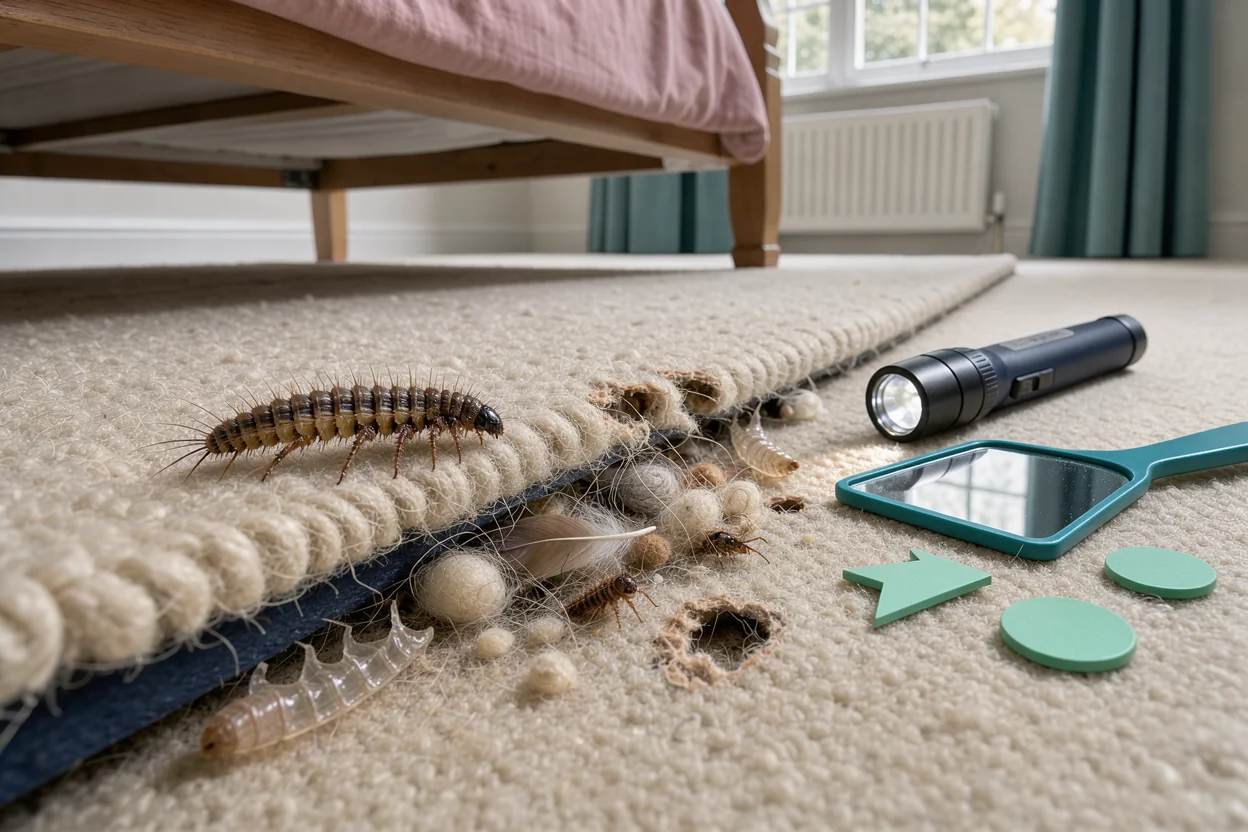
Why do I have carpet beetles in my bedroom? Because something in the room, or just beneath it, is feeding their larvae. The adults drift in from outside, usually through an open window in spring or summer, and lay eggs wherever hair, wool, feathers, lint or dead insects have collected undisturbed. A bedroom holds more of those materials than almost any other room. The speckled adults on the windowsill are the harmless part of the picture. The bristly larvae under the bed, along the skirting boards and inside the wardrobe are the ones that chew holes in wool. Here is what they feed on, how they got in and what to do about them.
What are carpet beetle larvae eating in my bedroom?
Carpet beetle larvae eat animal-based fibres and the debris around them, mainly wool, hair, feathers, silk, fur and dead insects. These materials contain keratin, a protein the larvae are built to digest.
Wool carpets and rugs are the obvious target, especially along the edges and under the bed, where nobody walks. Older houses may also have hair-based underlay beneath a newer carpet, which gives larvae a hidden supply they can reach through gaps at the edge.
Wardrobes and drawers add jumpers, cashmere, wool coats and silk scarves, particularly anything put away unwashed. Cotton and linen are poor food on their own, though body oils, sweat and food stains can make them worth a nibble. Feather pillows, down jackets and worn duvet covers deserve a check too.
Then there is the debris people forget. Human and pet hair collects under beds and in floorboard gaps, and pet beds add fluff and dander of their own. Skin flakes and lint build up behind furniture. Dead flies, wasps and spiders pile up on window ledges and inside ceiling light fittings, and larvae will eat those as well. A small forgotten heap of that material can sustain larvae for months, so check the corners before you blame the carpet.
Why does the bedroom get hit before other rooms?
A bedroom combines food, warmth and quiet, which is everything a slow-growing larva needs.
Most of us shed hair and skin flakes every night, and some of it lands on the floor, in the bedding and under the bed. Central heating then keeps the room warm well into autumn and winter, so larvae keep growing when the weather outside would have slowed them. Their larval stage can last from a few months to a year or more, depending on temperature and food. A female lays dozens of eggs, and in a warm room they can hatch within a few weeks.
Larvae also avoid light. They settle under the bed, behind the headboard, inside the divan base and at the back of the wardrobe, which are the places a vacuum cleaner visits least. A foam or sprung mattress with synthetic filling gives them little to eat, but wool or horsehair fillings and the fabric on a divan base are a different matter.
Boxes under the bed add another layer. Spare blankets, old jumpers and suitcases can feed a colony for months before anyone opens them. Pull out whatever you store under the bed first and check the underside of each item.
How do carpet beetles get into a clean bedroom?
They mostly arrive on their own as winged adults, so a spotless room offers little protection. Adults feed on pollen and nectar outdoors in late spring and summer, then head for light and for somewhere safe to lay eggs. The usual routes are:
- An open window or a loose sash, especially on warm evenings with the bedroom light on.
- Cut flowers or garden plants carried indoors, with adults feeding on the blossom.
- Second-hand furniture, vintage rugs, charity-shop wool and antique upholstery that already hold eggs or larvae.
- Bird nests, wasp nests or a dead pigeon or mouse in the loft, chimney, eaves or a wall void, where larvae can breed and then move into the rooms below.
- Neighbouring flats, through floor voids, service pipes and shared walls.
Timing helps you read the situation. A single adult in late spring points to an outside arrival. Larvae or shed skins in January point to something already living in the room.
Does living in a London period property make carpet beetles more likely?
It can, because older buildings have more places for fibre, dust and dead insects to collect out of sight. That says nothing about how clean the home is.
Gaps between original floorboards trap hair and lint where a vacuum nozzle cannot reach. Chimney breasts and capped flues give birds somewhere to nest, and old nests and fallen birds are a classic food source for carpet beetles. Sash windows let adults in around the frame. Lofts and roof voids can hold pigeon nests or carcasses, and in Georgian and Victorian terraces the roof space can connect to the rooms below through gaps around pipes and cornices.
Converted houses and mansion blocks add shared voids behind skirting boards and around pipework, so one flat's problem can reach the next. If you rent, tell your landlord or agent in writing as soon as you find larvae, so there is a record. If you let a property, ask for the loft and chimney to be checked between tenancies. In a converted house, ask the neighbours above and below whether they have seen beetles or shed skins.
How can I tell carpet beetles from bed bugs and clothes moths?
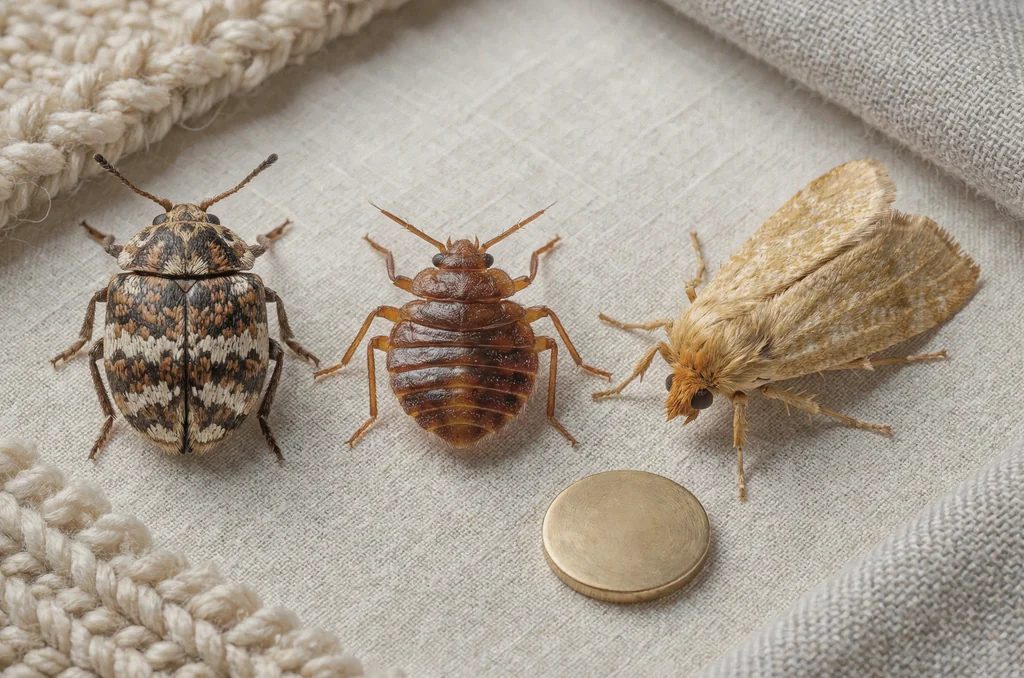
Check the size, the shape and what has been left behind. Carpet beetle adults are rounded and speckled, bed bugs are flat and reddish-brown, and clothes moths are narrow and buff-coloured.
| Pest | What you may see | What it feeds on | Telltale sign |
|---|---|---|---|
| Carpet beetle | Rounded, speckled adult about 2 to 4 mm; hairy, banded larva | Wool, hair, feathers, silk, dead insects | Hollow cast skins and irregular holes in wool |
| Bed bug | Flat, reddish-brown adult about the size of an apple seed | Blood | Itchy bites and dark spots on mattress seams |
| Clothes moth | Small, buff-coloured adult; pale larva inside silk tubes | Wool, silk, fur, feathers | Silky webbing and fine, grain-like droppings |
Carpet beetles do not need you for a meal. They feed on fibres and debris, so you find them in carpet edges, wardrobes and window ledges. Bed bugs live close to where you sleep, in mattress seams, bed frames and headboards, and feed on blood. Clothes moth larvae spin silk tubes and webbing as they feed, while carpet beetle larvae leave bristly, hollow cast skins and no webbing. If you see silk, compare it with the early signs of clothes moths before you decide what you have. A close photo of the insect beside a coin also helps a technician identify it before a visit.
Do carpet beetles bite, and why is my skin itchy?
Carpet beetles do not feed on people. Their larvae shed tiny bristles, though, and in sensitive people those hairs can cause itchy red marks that look like bites.
Bites that appear in lines or clusters, or that arrive overnight, point towards bed bugs, fleas or mites rather than beetles. Check the mattress seams and any pet bedding before you decide. Carpet beetles are not known to spread disease, but if a rash spreads, turns painful or does not settle, speak to a pharmacist or GP.
Washing bedding on a hot cycle removes shed hairs and skins. Then vacuum the mattress surface and the bed base, and note the date each time the itching starts. That pattern helps separate beetle irritation from bites.
Is one carpet beetle in my bedroom an infestation?
Usually a single adult is a sighting rather than an infestation, but larvae or shed skins mean they are breeding nearby.
The life cycle runs from egg to larva to pupa to adult. The larva is the longest and hungriest stage, while adults live only a few weeks. Adults fly in from spring, and one on the windowsill in May tells you little. The next stage matters more. Look for larvae a few millimetres long, with banded, bristly bodies and a tuft at the rear. Look for their cast skins, which appear as tiny, hollow, hairy husks in wardrobe corners, along carpet edges and under furniture. Check wool for small, irregular holes or thin patches, and carpets for bare strips along the edge. Fine dark specks near the damage can be larval droppings.
A separate guide to carpet beetle infestation signs explains how many sightings should worry you. If you find an adult plus larvae or cast skins, treat it as a breeding population, whatever the numbers.
What should I do first to clear carpet beetles from the bedroom?
Find what they are feeding on first, then wash, freeze or remove it and vacuum the edges thoroughly.
Where to look before you clean
Search before you wash anything, because cast skins usually cluster close to the food. Check these spots with a torch:
- The carpet edge and the strip beneath the bed, lifting the edge where it meets the skirting board.
- Behind the headboard and inside the divan base.
- The floor and back wall of the wardrobe, plus any drawers of wool, silk or fur.
- Window sills, frames and light fittings, for dead insects and adults.
- Floorboard gaps and the space behind radiators.
- Boxes, suitcases and blankets stored under the bed.
A simple source finder makes this quicker. List those six spots in a phone note, mark where you find skins or larvae, and the busiest spot usually sits closest to the food.
How to clean and treat what you find
Work in this order so nothing travels between rooms:
- Seal affected clothes, bedding and soft items in bags before you carry them out.
- Wash at the hottest temperature the care label allows, then tumble dry on high for at least half an hour. Freeze delicate items in a sealed bag for two weeks, or have wool and silk dry cleaned.
- Vacuum slowly along skirting boards, carpet edges, floorboard gaps, under the bed and inside the wardrobe, using a crevice tool. Seal the contents in a bag and put it in an outside bin straight away.
- Steam carpet edges and rugs where the fabric allows, holding the head in place for a few seconds.
- Bin heavily eaten items that are not worth saving.
Repeat the vacuuming weekly for at least two months, because eggs and slow-growing larvae you missed will show up later. A fuller guide to getting rid of carpet beetle larvae explains why they return and how to handle the second round.
Where sprays fit in
Sprays kill the beetles and larvae they touch. They do not reach eggs or larvae sheltering under floorboards or inside walls. If you use one, choose a product labelled for carpet beetles, follow the label, ventilate the room and keep children and pets out until surfaces are dry. Never spray bedding, mattresses or clothes that touch skin. This breakdown of carpet beetle insecticide sprays covers what works in UK homes. Spray works best as a supporting step after the washing and vacuuming.
How do I stop carpet beetles coming back?
Remove the food, close the gaps and keep checking the quiet corners.
Vacuum the carpet edges and the space under the bed every week or two, and pull furniture out a few times a year. Wash or air wool items before storing them, and keep clean woollens in zipped bags or sealed boxes. Avoid putting worn clothes straight back beside good knitwear. Wash pet bedding regularly, because pet hair is food too. Shake cut flowers outdoors before bringing them in, and inspect second-hand rugs, upholstery and clothes before they enter the bedroom.
Close the gaps adults use. Fit fine mesh screens to windows you open in summer, draught-proof loose sashes and fill floorboard gaps where you can. If you suspect a nest or carcass in the loft or chimney, ask a professional to deal with it, since birds may still be using the nest.
If beetles reappear every spring even after a thorough clean, the source is probably outside the room. Set a date each spring to vacuum the edges, empty the wardrobe and wipe the window ledges before the adults start flying.
When is a carpet beetle problem a job for a professional?
Call a professional when the beetles are in more than one room, when they return after a thorough clean, or when you suspect a source you cannot reach. These situations usually justify a visit:
- Larvae or cast skins in more than one room.
- Beetles back within a few weeks of two rounds of washing and vacuuming.
- A suspected nest, carcass or debris in the loft, chimney, eaves or a wall void.
- Valuable wool rugs, antiques or heirlooms at risk.
- Itchy skin that keeps returning with no other cause found.
- A rented or let property, where the landlord or agent needs a written inspection report.
Professional carpet beetle pest control starts with an inspection to identify the species and trace the source. The technician then treats carpet edges, wardrobes and voids with products suited to a bedroom and advises on storage and cleaning. Expect a follow-up visit, since eggs laid before treatment hatch afterwards. Before the visit, bag affected items, keep a few cast skins in a sealed bag as samples and note where you have seen adults.
If you can point to one source and a handful of cast skins, start with the cleaning plan above. If the larvae are in several rooms or the beetles keep coming back, that is the moment to book a visit.